Friday Vocabulary

1. raptus — seizure; ravishing, rape; medieval form of marriage by abduction

Of course the most famous person accused of raptus is last week’s featured poet, Geoffrey Chaucer.


2. posture chair — office chair designed to support and conform to natural human form

Ryback leaned back in the dark wooden posture chair which was as emblematic of his new rank as the words “Editor In Chief” upon his frosted glass door.


3. scotophilic — of or related to that which thrives in darkness

Renny turned his back upon family, friends, church, in fact all society he had heretofore known, and allowed himself to fall prey to his most vile scotophilic impulses towards perversion, fascism, and narcissistic misanthropy.


4. bund — causeway, embankment; secondary retaining wall surrounding tank for fluid

Though the bund was well-constructed and of an evening one could see locals promenading along it in the cooling air, still the judge observed that the structure had caused hardship to several towns downstream, and he ordered it cut or opened.


5. flash spoon — spoon-shaped metal fishing lure designed to attract through visual action

I prefer a trusty flash spoon to a rattle spoon in most cases, especially in clear water.


6. azan (also adhan) — Muslim call to prayer

We reached the abandoned pavilion just as the azan sounded from a distant minaret.


7. whoozit (also whosit) — thing, whatchamacallit; person

“Hand me that whoozit over there, that’s right, the one with the weird gray tendrils still dangling from the blade.”


8. prepotent — superior in power or authority; possessing genetic material more likely to predominate

Here in this stuffy chamber, finally before the prepotent minister, I found my anxiety and paralyzing abasement replaced by a firm conviction in the rightness of the action I proposed.


9. proctalgia — rectal pain

The third morning I almost hesitated before the troop when getting in the saddle, so vivid were my memories of my proctalgia from yesterday’s ride.


10. tarmac — Tarmacadam; asphalt; airport runway

The petrol gave out just as we cleared the last obstruction and we hit the tarmac with a bone-crunching bang.


Bonus Vocabulary

(US slang, from Fr. for mackerel = pimp)

mack daddy — successful pimp; playa with the ladies

“You wouldn’t think it to look at him now,” Tony said, pointing to the shuffling janitor, “but he was a real mack daddy back in the day.”

Book List: 1000 Books

As I’m trying not to procrastinate quite as much as I did last time I finished a tranche of one hundred books, let’s get right down to the listing of all those last books read, from #901 through my thousandth (!) book read since beginning this silly little book tracking project back in the two-thousand-teens. Whereas last time I only completed the listing of books #801 – #900 well after I’d already read another two-thirds of the next century, this time I hope to give you the full listing of the last hundred read before I get out of the low teens in the next hundred. (I just finished #1009 yesterday, so we’ll see where I’m at when I finish writing this out.) I hope to get around to fleshing out this barebones listing with some data—after all, one thousand books seems like there ought to be some ‘statistically significant’ stuff to blather on about—but … well, first things first.
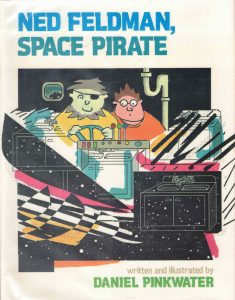
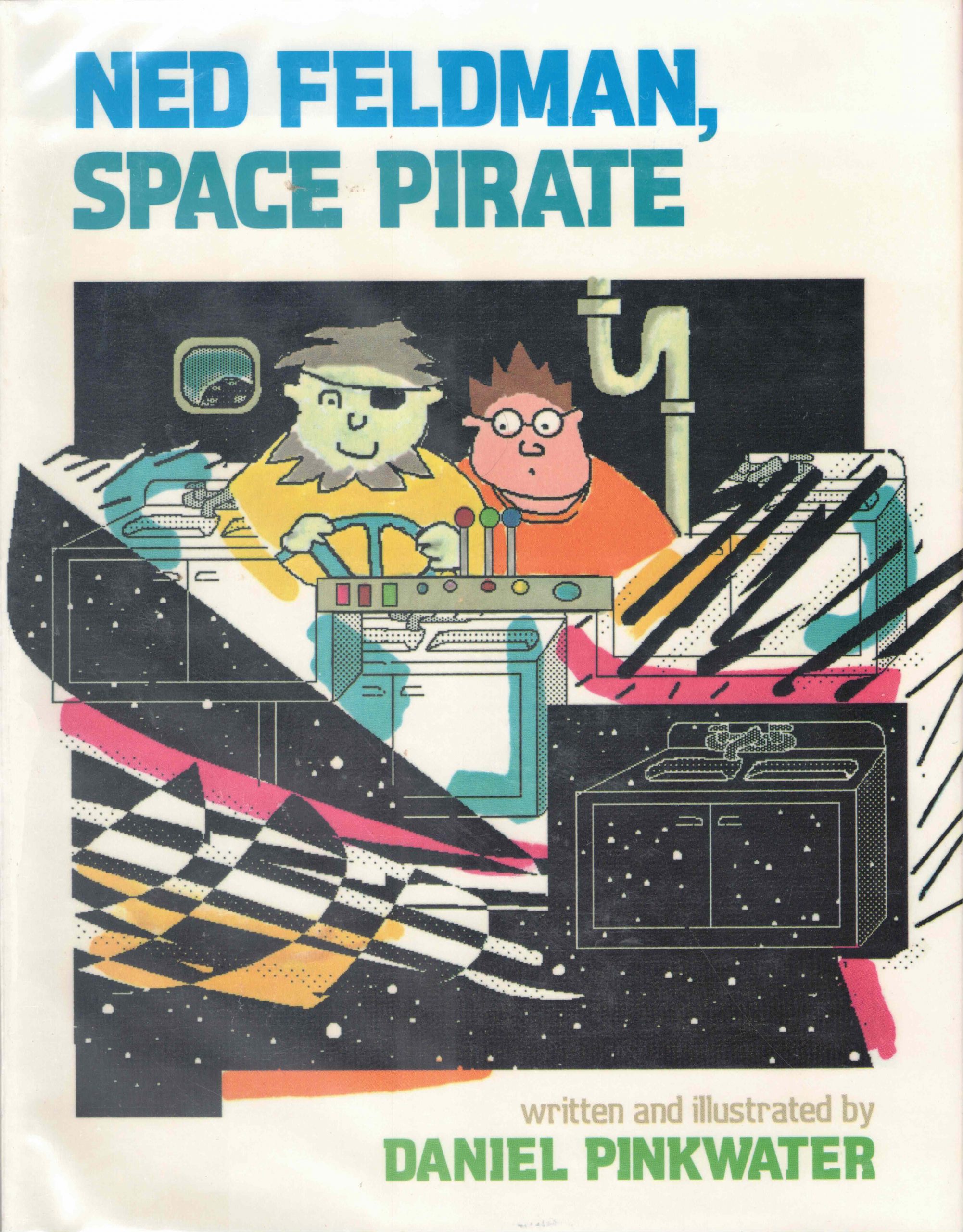
I began the final hundred books of my first thousand with another of the delightful crazy kids’ books by Daniel Pinkwater. Ned Feldman, Space Pirate is another one of Pinkwater’s paeans to creativity, accompanied by his usual barely sketched-out drawings, which is part of his charm. The drawings inspire the reader to think “I could do that!”, which (I think) is exactly what the mischievous author wants us to think, wants us to do. I read a fair number of Pinkwater books in the last 100, such as the fantastic I Was A Second Grade Werewolf, also in this first ten books of the last century—one of the reasons my average page count dropped by about forty pages per book.
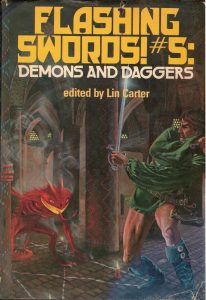
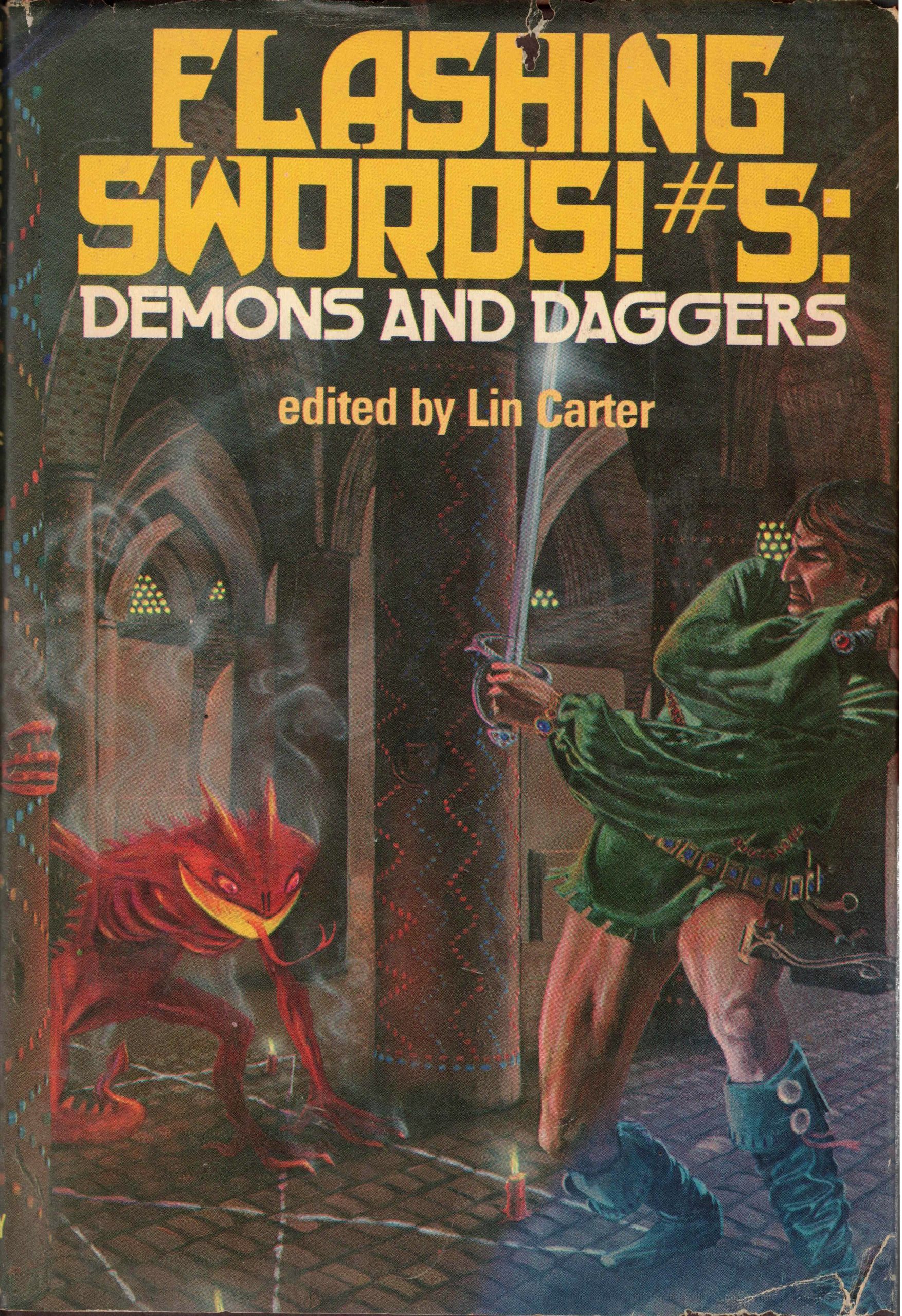
One thing to note about this last century of books is that I resolved after reaching Book Read #900 to lay off the mysteries for a while, specifically deciding to forego books in that genre (including so-called ‘thrillers’) for the next hundred books. They had made up almost half of all books read in both of the preceding sets of a hundred, so … well, we can always use a break, see what happens when we mix things up. And what happened was that I read more science fiction and fantasy books, beginning with the truly exceptional fantasy anthology Flashing Swords #5: Demons and Daggers, edited by Lin Carter. Now my taste may not be your taste (like as not you are nowhere near so pitifully bourgeois and arrière-garde as I), but I found these stories simply marvellous, with the possible exception of Tanith Lee’s contribution. But then, I have had my troubles with Lee in the past. But the stories by Zelazny, Cherryh, Craig Shaw Gardner were all excellent, and I found myself weeping at the close of Diane Duane’s contribution, “Parting Gifts”, which was a fantastical vision of old age, a better shorter version of what No Country For Old Men had hoped to be.


# Read Author Title Genre
901 2/26/23 Daniel Pinkwater Ned Feldman, Space Pirate Children’s
902 2/28/23 A. W. Moore The Infinite Philosophy
903 3/1/23 Daniel Pinkwater The Werewolf Club #2: The Lunchroom of Doom Children’s
904 3/3/23 Daniel Pinkwater The Werewolf Club #3: The Werewolf Club Meets Dorkula Children’s
905 3/5/23 Kurt Vonnegut Jailbird Fiction
906 3/6/23 Brad Warner Don’t Be a Jerk: And Other Practical Advice from Dogen, Japan’s Greatest Zen Master Spirituality
907 3/6/23 Daniel Pinkwater I Was a Second Grade Werewolf Children’s
908 3/8/23 Daniel Pinkwater Fat Men From Space Children’s
909 3/12/23 Lin Carter, ed. Flashing Swords #5: Demons and Daggers SF & Fantasy
910 3/17/23 Barbara Ras One Hidden Stuff Poetry


I see that in my haste to get right into the actual book listing, I’ve forgotten to give you my usual caveats and explanations about books read and numbers and all that, so I’ll just get rid of that here. First off, when I say I’ve read a thousand books, I mean since beginning to track my actual books completely finished, which I started doing away back in June of 2015. I’d been gifted book tracking software by my wife for my birthday two years prior, so that now I’ve had a database of all of my many (many) volumes for nigh on a full decade now. Also, back in 2015, I decided not to count comic books and graphic novels against my total number of books read, so they are exempted from the ‘thousand’ books I’ve completed. (If we add them in, The Lord Of The Rings was Book Read* #1131 … with the asterisk.) Okay, with that business taken care of, back to the book listing.
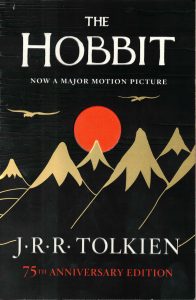
The first book read of the next ten books was a return to the delights of Tolkien’s The Hobbit, the reading of which inspired me to finally finish The Silmarillion and to dive once more into the wonderful Lord Of The Rings. Some books of youth you turn back to with a hint of trepidation, lest your memory play you false and you realize just how juvenile your taste and how misremembered the actual text and how apparent the failings of the work are now to your more mature, wiser eye. The Hobbit is not one of those books. Those who loved it in youth will I daresay always love it, and those who do not love it ever are entitled to their entirely wrong-headed opinion. Re-reading this lyrical work of pastoral fantasy brings home just how far from the tree the apple of Peter Jackson’s film fell. This is a truly wonderful book. The movie makes no sense to me at all.
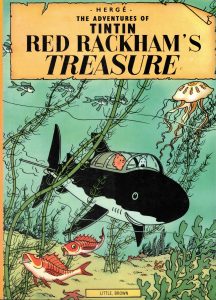
The first work of the comic arts that I read in that last hundred books was another delightful adventure of that ace boy reporter Tintin, Red Rackham’s Treasure. The story itself is a fairly thin tale, true … and little is made of the escape of the arch-criminal from the prequel. But the lush drawings of underwater exploration more than make up for the bare bones of the plot, and that skeleton is hung with all the ebullience and incident we love from the books of Hergé.


# Read Author Title Genre
911 3/18/23 J. R. R. Tolkien The Hobbit SF & Fantasy
912 3/18/23 John Daishin Buksbazen Zen Meditation In Plain English Spirituality
913 3/21/23 Florence King With Charity Toward None: A Fond Look At Misanthropy Essays
914 3/24/23 Sergei Lukyanenko Night Watch SF & Fantasy
915 3/25/23 Daniel Pinkwater Spaceburger: A Kevin Spoon and Mason Mintz Story Children’s
3/26/23 Hergé Red Rackham’s Treasure Comics
916 3/27/23 Neil Patrick Harris Neil Patrick Harris: Choose Your Own Autobiography Biography
917 3/27/23 Joey Green, Tony Dierckins, & Tim Nyberg The Warning Label Book: Warning: Reading This Book May Cause Spontaneous, Uncontrollable Laughter Humor
918 3/28/23 André Maurois Disraeli Biography
919 3/29/23 Barbara Ras Bite Every Sorrow Poetry
920 3/30/23 Richard Armour The Medical Muse, or What to Do … Until the Patient Comes Humor


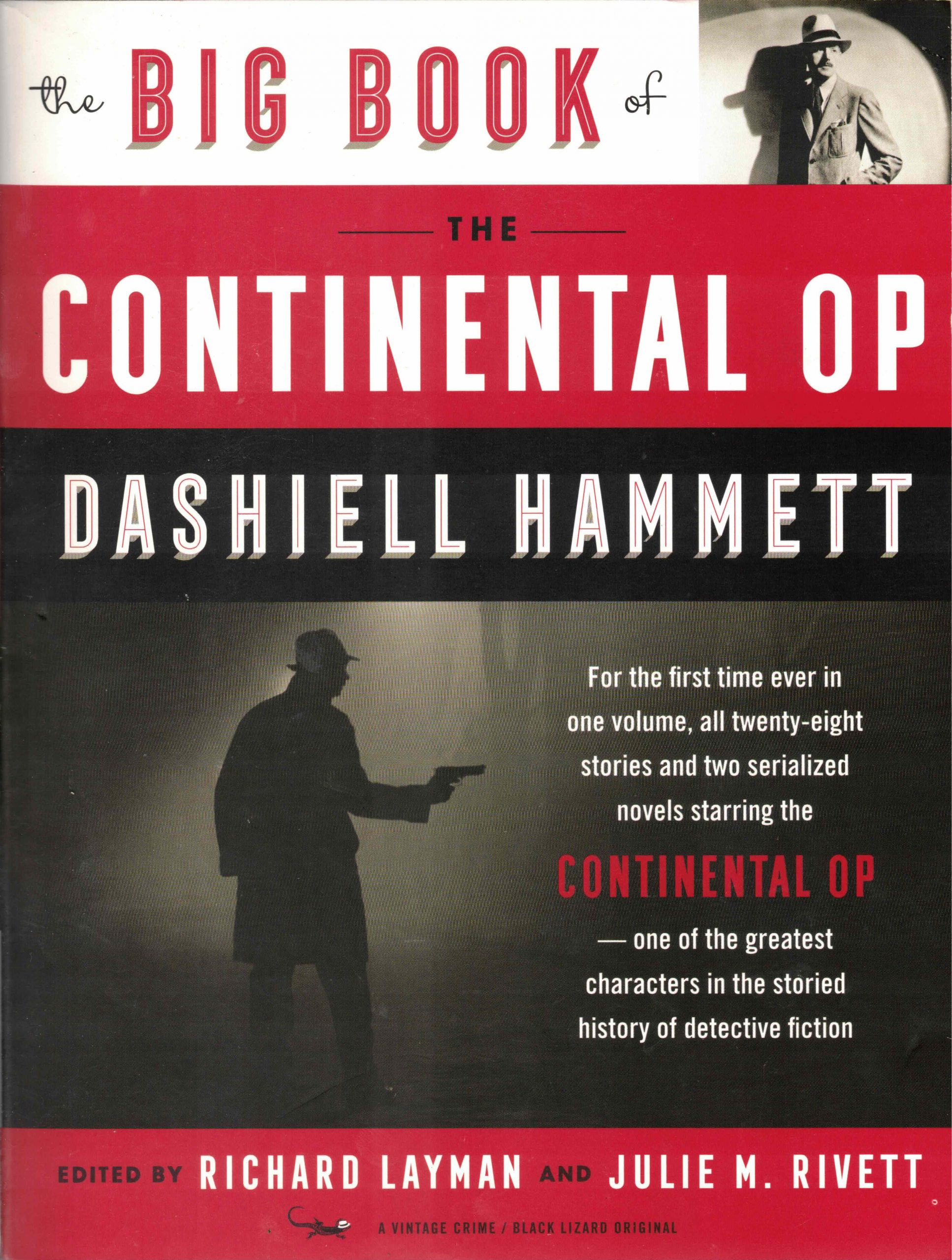
Okay, you know how I said I wasn’t reading any mysteries in this set of a hundred books? Well, I made an exception for this, The Big Book of the Continental Op, because I was in the midst of reading it when I hit Book Read #900. This volume, edited by Richard Layman and Julie M. Rivett, brings together all of the stories of the corporate private eye working for the nationwide Continental Detective Agency, just as they were published originally in Black Mask (and a few other locales). And how do these stories hold up, after nearly a hundred years? They are amazing, fantastic, and all those other superlatives. Sure, not every story is a smash hit winner—The Dain Curse isn’t all that, though it has a great tête-à-tête between the Op and the dame—but for sheer brilliance over the long haul you won’t find many competitors to the Op stories. The charm of ‘20s San Francisco is nothing to sneeze at either, as the current ‘20s seem like to put paid to that old City by the Bay. The footnotes range from mildly interesting to pointless, but Dashiell Hammett’s taut prose obviates that and other design defects of this collection.
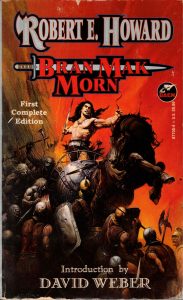
I find myself sneaking up to Robert E. Howard’s best-known fantasy hero, having long ago pledged my allegience to Solomon Kane and puzzling whether any figure could ever oust that strange battling puritan from his position as my favorite. So I have yet to read any of the Conan tales, saving that for a future pleasure or disappointment. But I did condescend to read Bran Mak Morn, this paperback collection of tales about the eponymous last king of the Picts. I use the word ‘about’ in double sense here, as Bran Mak Morn is often only a peripheral figure in these tales, not quite a bit player, but only rarely the primary protagonist. But Howard’s prose is vivid and bracing, though we so very enlightened moderns may find issues with some of the racial material intrinsic to these tales (along with so much fantasy and science fiction of the ’20s and ’30s of the last century). The doom of being the last of a once mighty race among the degraded remnants of humanity, however, conjures up resonances with a much more modern champion—though admittedly aging now—, that of Moorcock’s albino prince Elric of Melniboné.
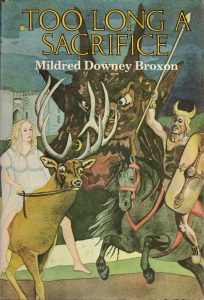
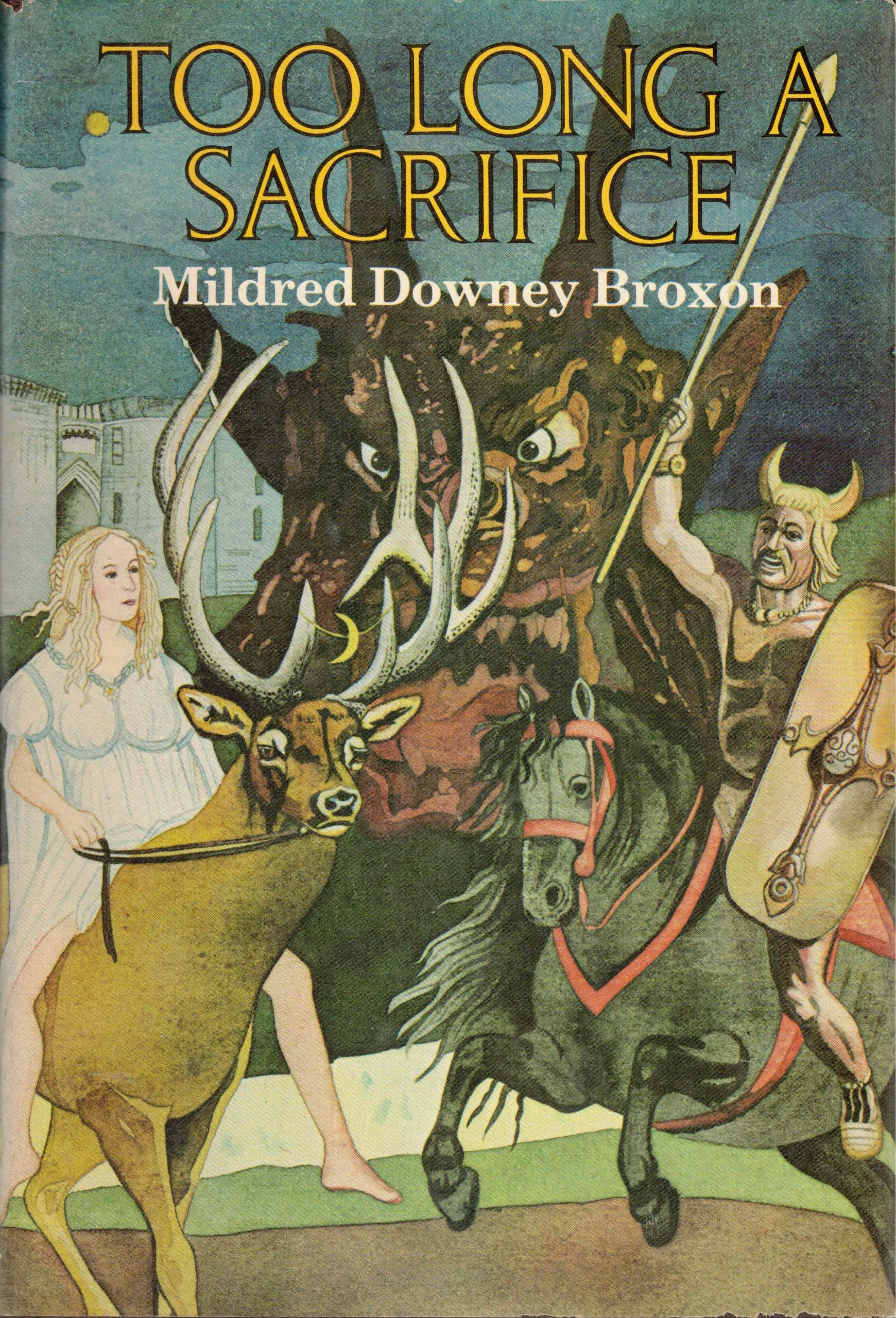
(Special shoutout to Too Long A Sacrifice by Mildred Downey Broxon, a fairly mediocre tale of Irish fantasy superimposed upon ‘The Troubles’ in that country. But it’s not the story I wish to call to your attention, but the truly awful cover art, at least on this the book club edition. The dust jacket art wraps entirely around the back of the book, and the back is ten times worse than the front, shown here. And that front cover drawing is terrible. Truly terrible.)


# Read Author Title Genre
921 3/30/23 Mildred Downey Broxon Too Long A Sacrifice SF & Fantasy
922 3/31/23 Daniel Pinkwater Uncle Melvin Children’s
923 4/2/23 Dashiell Hammett The Big Book of the Continental Op Mystery
924 4/6/23 Tony Hillerman Seldom Disappointed: A Memoir Biography
925 4/7/23 Sigmund Freud Beyond The Pleasure Principle Psychology
926 4/10/23 Robert E. Howard Bran Mak Morn SF & Fantasy
927 4/12/23 Whodini The Information Inferno Computers & Internet
928 4/12/23 Neil Postman Amusing Ourselves To Death: Public Discourse in the Age of Show Business Essays
929 4/20/23 Frank X. Gaspar A Field Guide to the Heavens Poetry
4/20/23 Carl Barks The Best Of Walt Disney Comics: From the Year 1947 Comics
930 4/20/23 Richard W. De Haan Look Up! Christ Is Coming Spirituality


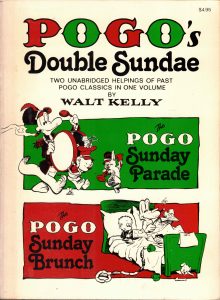
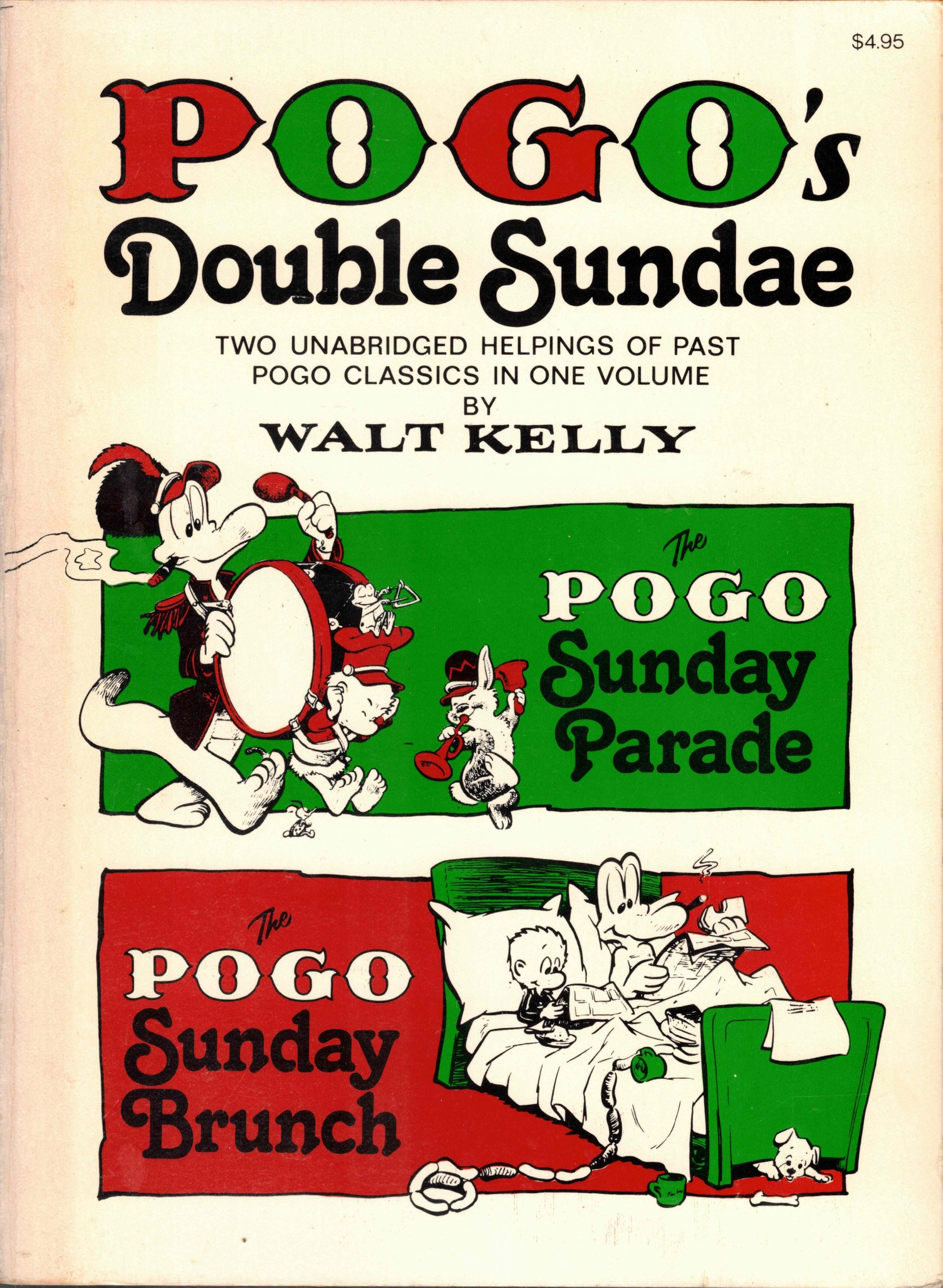
I’m sure other people can tell you better than I about Pogo, Walt Kelly’s masterful possum and his long-running comic strip. Heck, a friend of mine even wrote a whole book on the subject. And I have to confess I didn’t care for the cartoons when I was a kid, looking over my grandfather’s shoulder as he read them avidly. Even now, some of the contemporary allusions would probably need footnotes for me to understand the intricacies of Kelly’s plots and kookiness. But Pogo’s Double Sundae—which republishes two collections of Pogo sunday strips—is a delight, no critical apparatus needed. I’m not entirely enamored of the ‘poetry’, but the comics themselves are very surreal, and very funny.
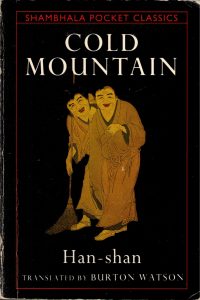
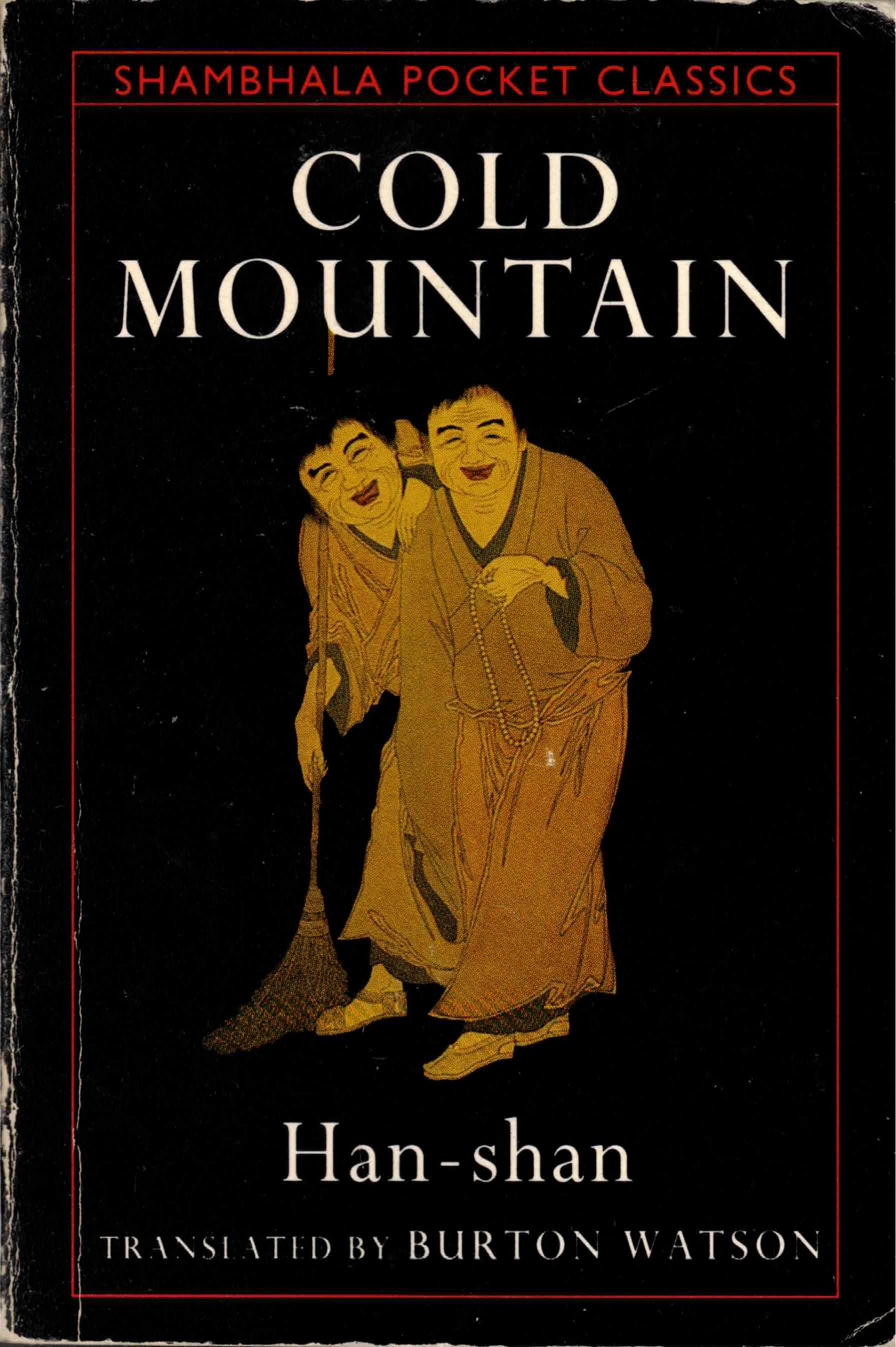
Speaking of poetry: I’ve been trying to dip my toe into the waters of current poetry, under the gentle guidance of my aunt, who is sort of an expert at this sort of thing, but I have to admit that I’ve yet to find any poetry of the past forty years that moved me as much as these strange little verses from a quasi-anonymous poet of long ago China, Han-shan. The translations by Burton Watson are spare (and I’m guessing fairly literal, given a Watson translation of Chuang Tzu I’ve read), but a poignant aloneness of the aging poet comes through in Cold Mountain, this tiny little collection of some of this perhaps fictional poet’s best work. Any pretence to enlightened wisdom is undercut by the plaintive all-too-human cries in other poems, and it is this very humanity that makes the verse work so well and so hard.


# Read Author Title Genre
4/20/23 Walt Kelly Pogo’s Double Sundae Comics
931 4/21/23 Daniel Pinkwater Aunt Lulu Children’s
932 4/21/23 Richard Moyer, Lucy Daniel, Jay Hackett, H. Prentice Baptiste, Pamela Stryker, & JoAnne Vasquez McGraw-Hill Science Grade 1 Student Edition Children’s
933 4/22/23 Omori Sogen An Introduction to Zen Training: A Translation of Sanzen Nyumon Spirituality
4/22/23 Subba Rao The Pandavas In Hiding: Retold from The Mahabharata Comics
934 4/22/23 Bhagat Singh Krishna Children’s
935 4/23/23 Daniel Pinkwater The Hoboken Chicken Emergency Children’s
936 4/23/23 Edward Gorey The Utter Zoo Humor
937 5/1/23 Truman Smith; Robert Hessen, ed. & intro. Berlin Alert: The Memoirs and Reports of Truman Smith History
938 5/2/23 Gerald Speedy The Den Mother’s Den-Book Outdoors & Nature
939 5/4/23 Han-shan; Burton Watson, trans. Cold Mountain Poetry
940 5/8/23 Will Carleton City Ballads Poetry


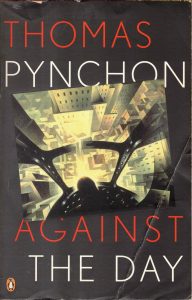
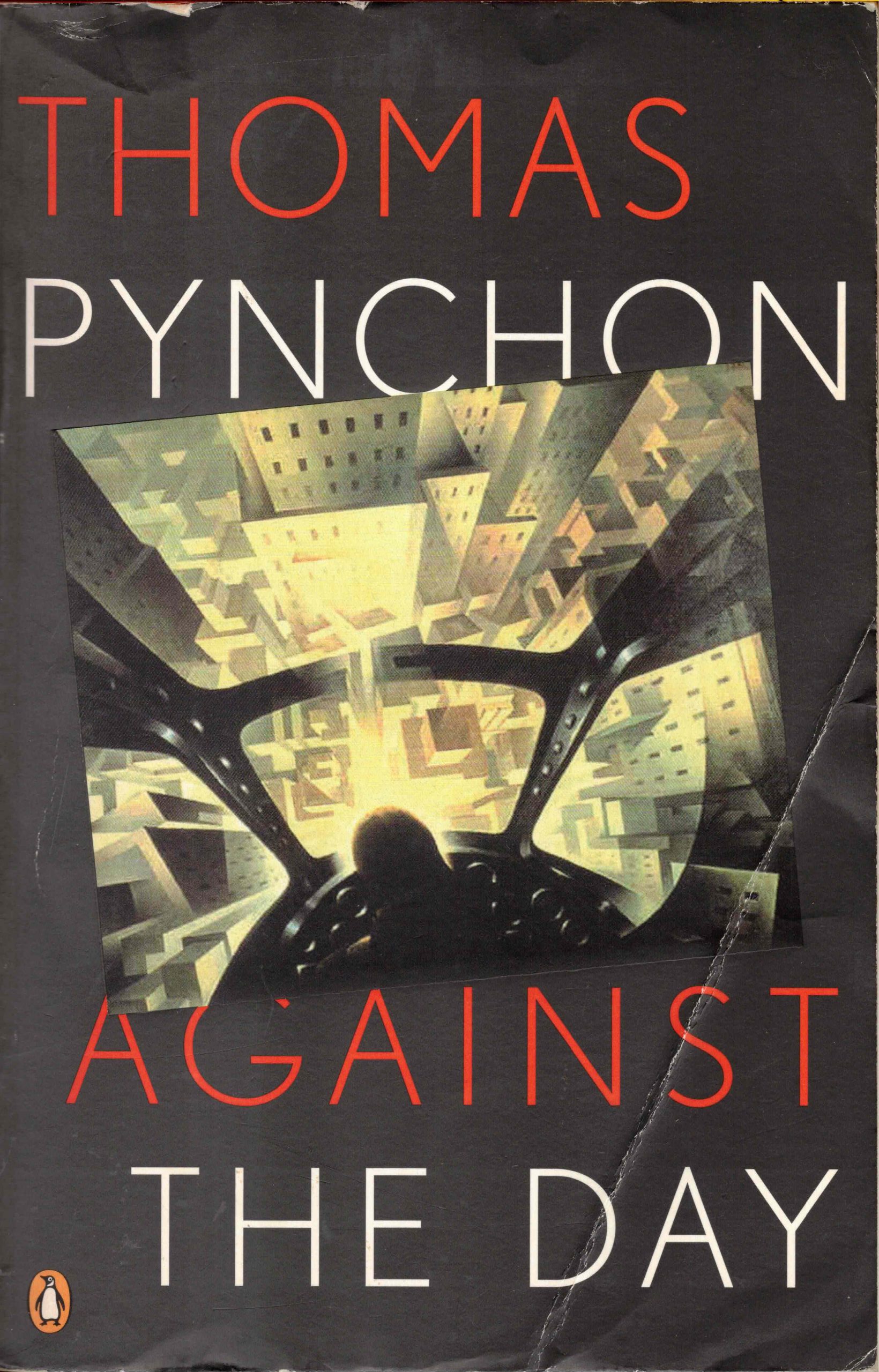
Reading Thomas Pynchon reminded me why I love this most mysterious of American authors (putting aside for the moment the assertion that B. Traven was born in Chicago): imaginative reworking of immensely broad stretches of history as seen through the kaleidoscope of coexistent countercultures and just hinted at overarching dark forces behind the overt facts printed in the newspapers and textbooks. It also reminded me why Pynchon can be so frustrating. Against The Day has so many many many themes and characters and events and parallel plots and counterplots and fictions and facts that you feel you need to take a hit of meth just to keep pace. (Don’t try it, kids. Speed kills.) But I was hooked by the opening pages as surely as a swordfish on the line of Anthony Quinn. If you don’t get the reference, then you know how it feels to read Pynchon without a guide; sometimes the allusions are almost entirely personal, too idiosyncratic. Reading the various online helps was as frustrating as it was helpful, sort of like the annotations to Grateful Dead lyrics I was reading a while back. And so, just as with Ulysses, the reader begins to wonder if the candle is worth the prize, or something like that. But I read it, and I loved it, and I wished that there’d been some sort of tying up of all the loose ends, or something. But then, what did I expect? Too much, I’m sure.
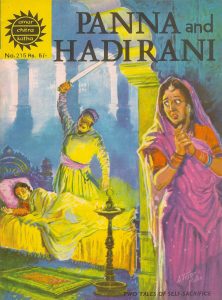
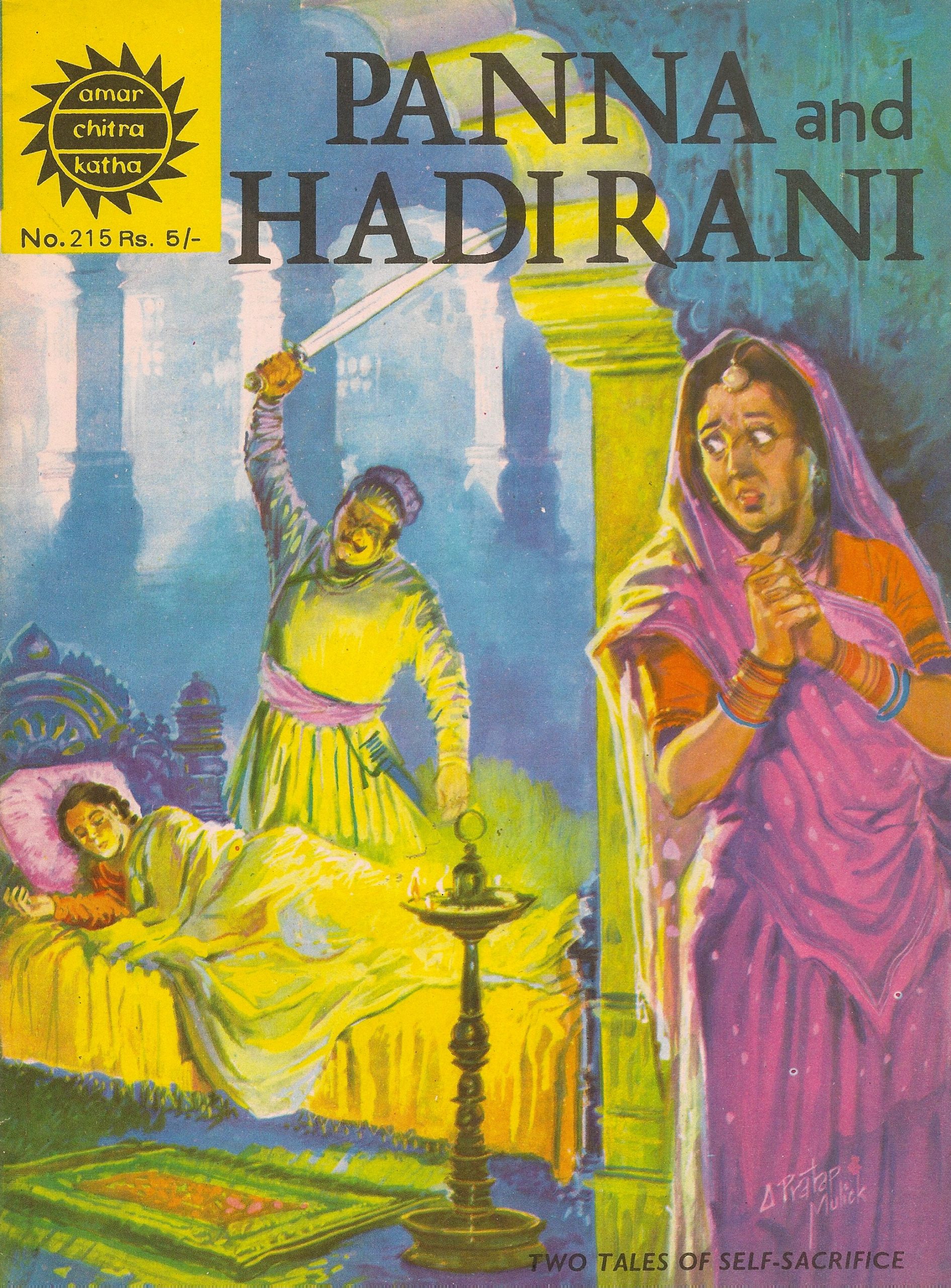
I really did not like all that very much most of the books I read in this particular set of ten, I must confess. Except for the Fletcher Pratt and this comic from Amar Chitra Katha, Panna and Handi Rani: Two Tales of Self-Sacrifice, in fact, not one other volume got better than three stars on my 5-star scale, and more than half of this set of ten found their way into boxes heading out the door for donation or sale. Otherwise, I might not have called out this work from the best publisher of comic books devoted to Indian subjects, because …. Well, let’s just put it this way: The tales presented here turned out to be two of the most fucked up stories I’ve read outside of the Bible.


# Read Author Title Genre
941 5/8/23 Thomas Pynchon Against The Day Fiction
942 5/10/23 Marion Nestle Safe Food: Bacteria, Biotechnology, and Bioterrorism Politics
943 5/12/23 George Sarton Galen of Peramon Medicine
944 5/12/23 Fletcher Pratt Alien Planet SF & Fantasy
945 5/14/23 Will Carleton City Legends Poetry
946 5/14/23 James William Coleman The Criminal Elite: Understanding White Collar Crime True Crime
947 5/15/23 Robert Silverberg / William F. Temple The Silent Invaders / Battle On Venus [Ace Double F-195] SF & Fantasy
948 5/16/23 Mevlana Jalaluddin Rumi; James Cowan, intro. & versions Rumi’s Divan of Shems of Tabriz: Selected Odes Spirituality
5/17/23 Meera Ugra & Dinanath Dube Panna and Hadi Rani: Two Tales of Self-Sacrifice Comics
949 5/22/23 Richard Dawkins The God Delusion Spirituality
950 5/23/23 Robert Saffron Is The United States Ready for Self-Government Fiction


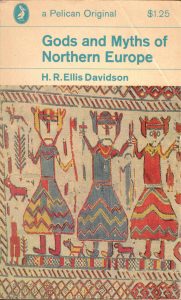
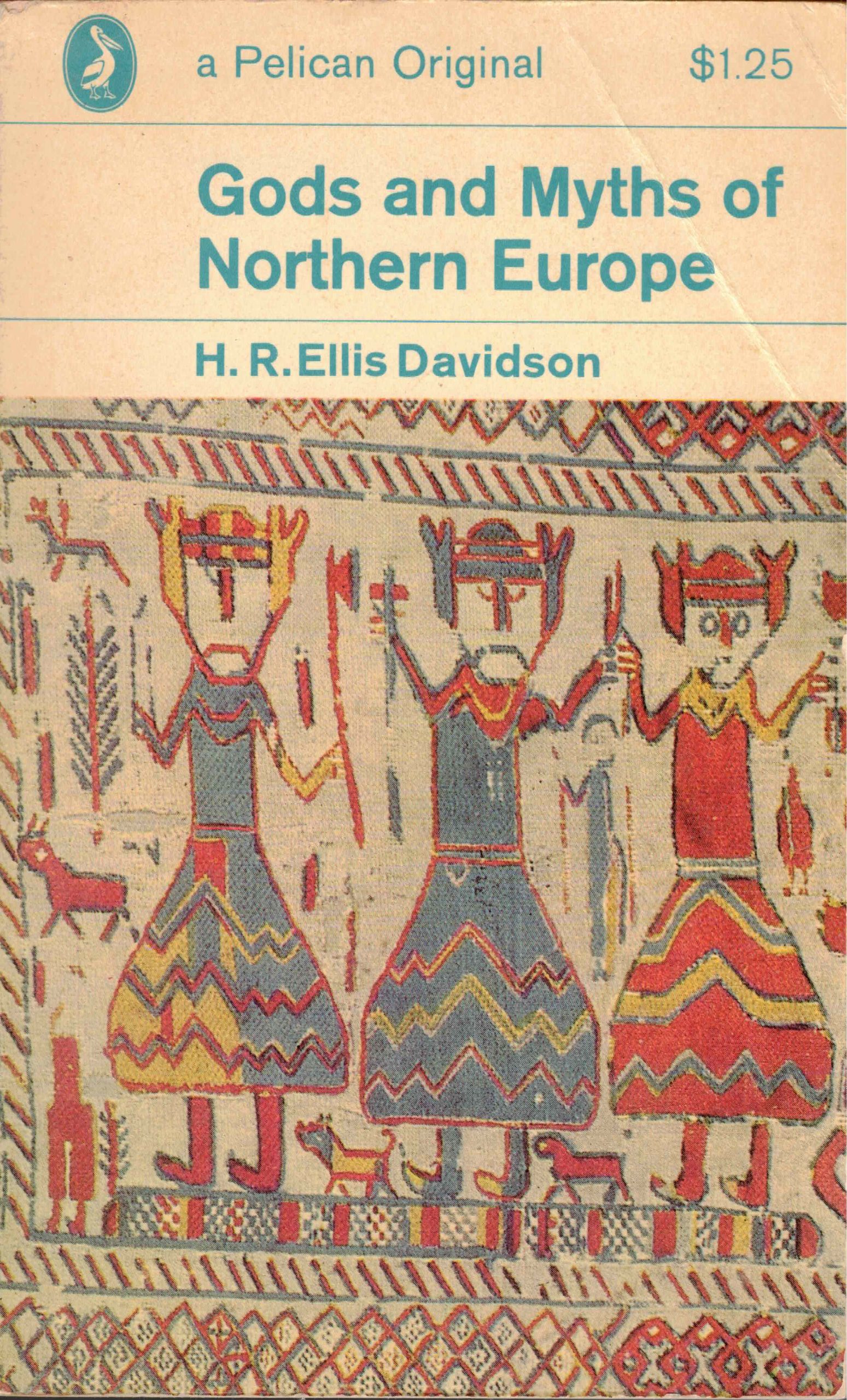
Doubtless you already know the fine work of H. R. Ellis Davidson, and you’ve probably already read Gods and Myths of Northern Europe. But this book, one of the fine Pelican Originals published by Penguin during one of those infrequent attacks that afflict the print industry of the strange idea that the ‘masses’ might be interested in something besides bomb threats and bodice rippers. I am grateful, so very grateful. This very well written book of Norse and adjacent mythologies turned out to live up to its reputation, which is very high. Davidson’s work was excellent, not only for its clear elucidation of what we know (and what we don’t) about the original Scandinavian beliefs, nor just its deep understanding of the whole gamut of German etc. mythology, but also for the fine glossary of names and sources at the rear of the book. Of course, the book is nearly sixty years old now, so caveat lector and all that.
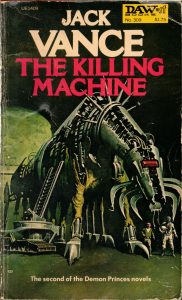
It is always a delight to find the sophomore effort in a series as good as the first, and even moreso when the author is Jack Vance. The second book in his rightly vaunted Demon Princes series, The Killing Machine, lives up to the high expectations created by the excellent series opener, Star King. In this brilliant space opera tale of breath-taking revenge, the excitement builds and the action accelerates as …. Well, I reallly do not want to say anything that might give away the surprises in store for a first time reader of this teriffic tale.


# Read Author Title Genre
5/24/23 Russ Cochran, ed. Weird Fantasy No. 9 Comics
951 5/27/23 Eihei Dogen; Kazuaki Tanahashi, ed. Moon In a Dewdrop: Writings of Zen Master Dogen Spirituality
952 5/27/23 Niels Mulder Mysticism in Java: Ideology in Indonesia Sociology
5/27/23 Subba Rao Paurava and Alexander: The Story of the Encounter Between a Great Conqueror from the West and a Brave King from the East Comics
953 5/28/23 Knock Knock In My Humble Opinion Humor
954 5/31/23 Malcolm Green Book of Lies Humor
955 6/1/23 Frank X. Gaspar Late Rapturous Poetry
956 6/1/23 M. Vassiliev Sputnik Into Space Science
957 6/6/23 R. B. Thieme, Jr. Demonism Spirituality
958 6/7/23 H. R. Ellis Davidson Gods and Myths of Northern Europe Mythology
959 6/9/23 Jack Vance The Brave Free Men SF & Fantasy
960 6/12/23 Jack Vance The Killing Machine SF & Fantasy


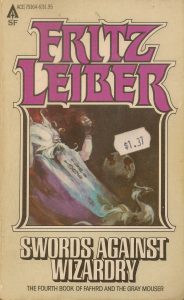
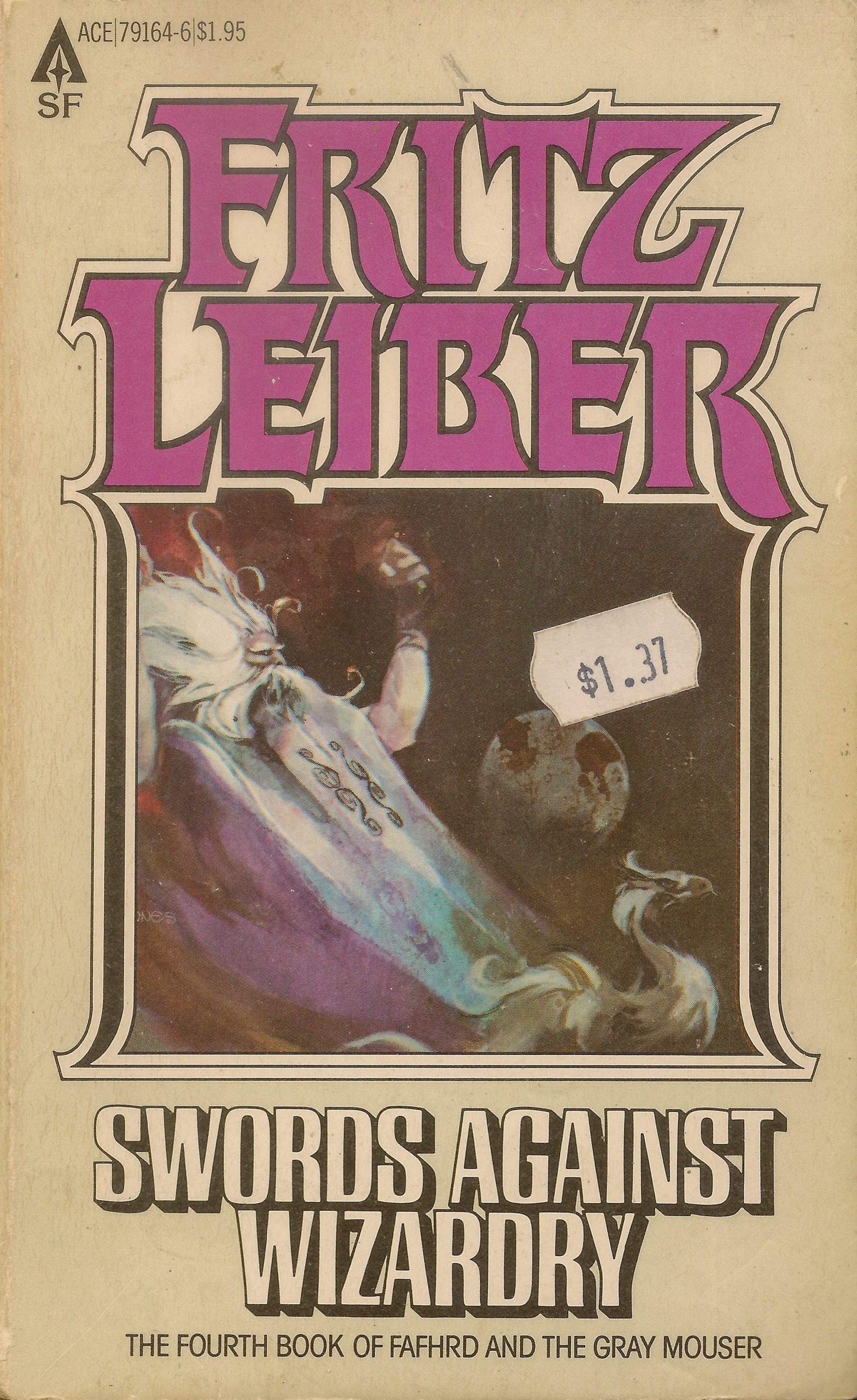
Another wonderful set of tales of the best barbarian & thief pair extant, Swords Against Wizardry glues together a couple of longer stories with some newer writing (this was published in 1968) to make a chronological narrative out of what were originally just standalone adventures written by Fritz Leiber for the digests, as is usual in the book editions of these short stories. The two primary tales—“Stardock” and “The Lords Of Quarmall”—show Fafhrd and the Gray Mouser in finest form. The first demonstrates the wide scope of fantasy, as it’s basically The Eiger Sanction without the boring bits (apologies to Trevannian; I speak only of the movie), while the Quarmall tale is redolent with the chill musty air of ancient stone inhabited by dark sorceries and the memories of the eldest, evil gods.
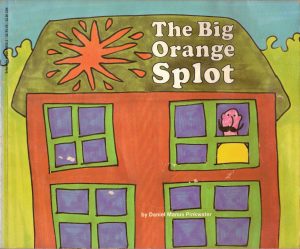
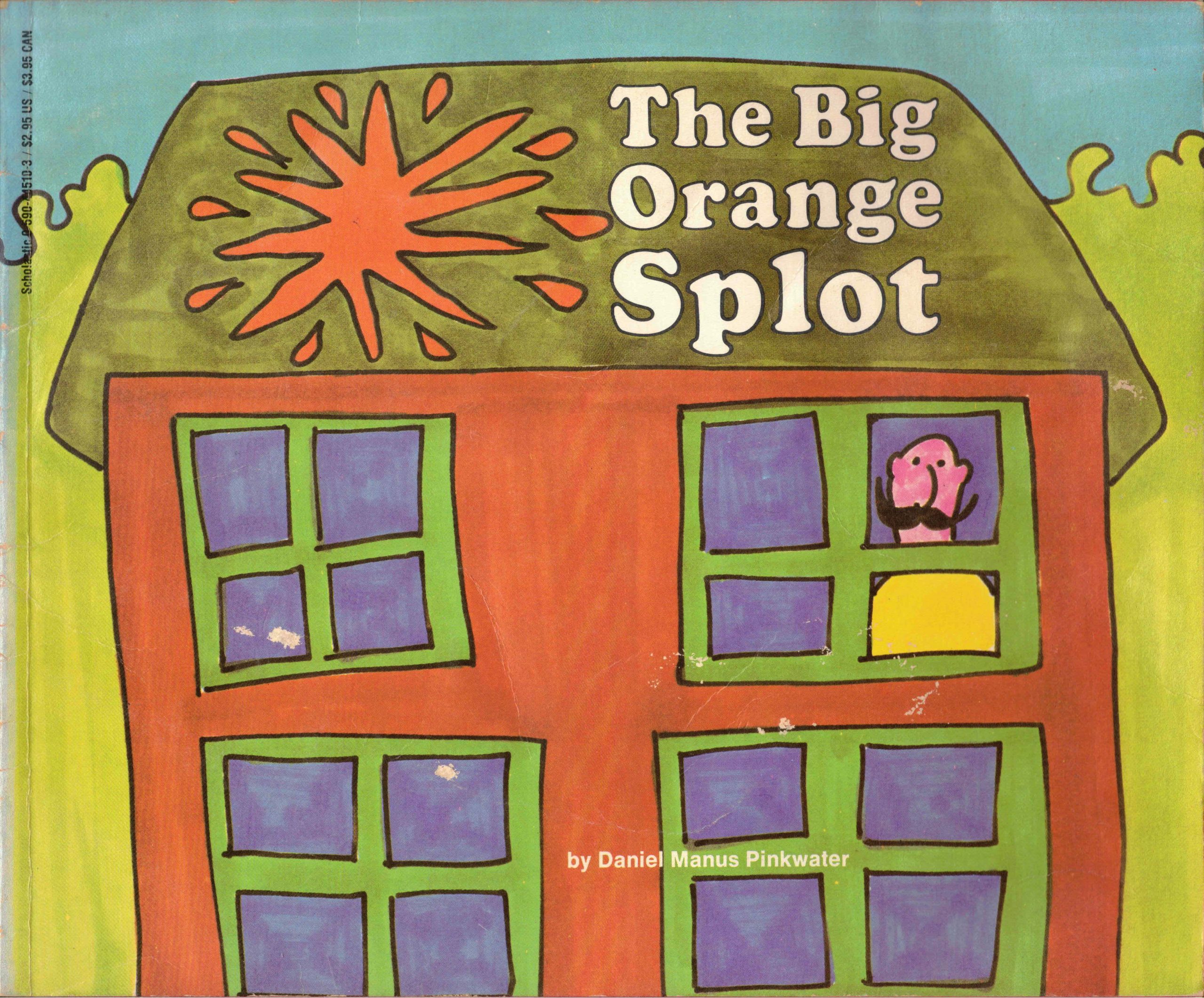
Perhaps my favorite Daniel Pinkwater story of all—and that’s really saying something, when you think of The Hoboken Chicken Emergency or Lizard Music—is this slim volume that I used to read over and over to my own daughter, The Big Orange Splot. Though the story is quickly told of a happenstance (the titular Splot) which becomes the impetus for real creativity and self-expression, any words I might offer cannot compare with the words and (especially) the crude drawings of Mr. Pinkwater, whose childish pictures are the perfect way to tell this tale. Any person who has been subject to an HOA will truly appreciate this little fable.


# Read Author Title Genre
6/12/23 Amamt Pai, ed. Paramahansa Yogananda: A Saint for East and West Comics
961 6/14/23 Theodore Sturgeon The Worlds of Theodore Sturgeon SF & Fantasy
962 6/15/23 Emmet Fox The Sermon on the Mount: The Key to Success in Life & The Lord’s Prayer: An Interpretation Christian
963 6/15/23 R. B. Thieme, Jr. Satanic Plot Christian
964 6/17/23 Pamela Paul Pornified: How Pornography Is Transforming Our Lives, Our Relationships, and Our Families Pornography
6/17/23 Mike Baron Badger [First] #6 Comics
965 6/18/23 Randy Petersen Beliefs to Beware Of: Straight Answers about Cults Christian
966 6/20/23 J. R. R. Tolkien The Silmarillion SF & Fantasy
967 6/22/23 Frank L. Britton Behind Communism Wacko
968 6/22/23 Ed Strosser & Michael Prince Stupid Wars: A Citizen’s Guide to Botched Putsches, Failed Coups, Inane Invasions, and Ridiculous Revolutions Militaria
969 6/25/23 Fritz Leiber Swrods Against Wizardry SF & Fantasy
6/26/23 Russ Cochran, ed. Weird Fantasy No. 4 Comics
970 6/26/23 Daniel Pinkwater The Big Orange Splot Children’s


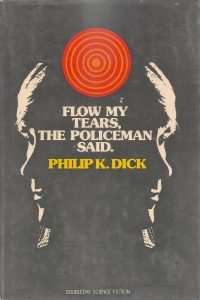
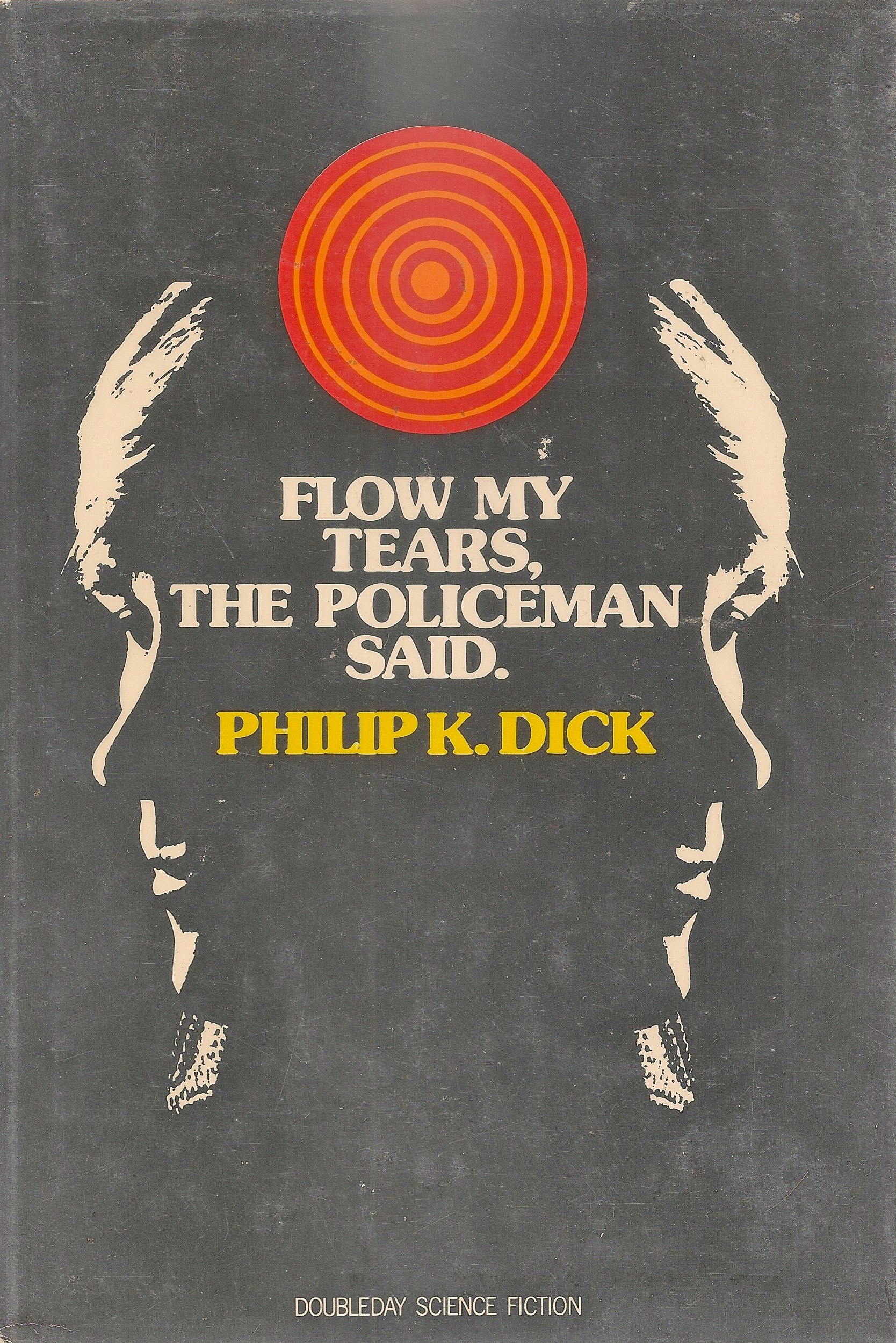
I think Flow My Tears, The Policeman Said is my favorite Philip K. Dick novel, though it is not perfect: he never wrote perfect. (Did the snitch leave Kathy’s lair on p. 27 or not? I guess not, but it sure seems like he did.) But for a few hours, I’m transported to a place where thoughts and words have power both beyond and of everyday life, with internal monologues and dialogues that are both impossibly unlike actual human thinking and speaking and also exactly like that. Dick’s neuroses and failings are right there on the page, and there’s a reason for Jason Taverner’s ultimate fate, but perhaps psychological failings are a small price to pay for even a small grasp upon reality and identity. You can make a case for other novels; heck, I may plump for Confessions or Scanner or even the High Castle when next I read them. But in Flow My Tears PKD does what he does best: take a staggeringly simple and yet potent conceit—What if one of the elites had to live like the rest of us schlubs for just one day?—and turns it into a deceptively simple rumination on the flaws of society and psychology, a catalog of moral failings where transcendence is only another way to get over it and back to work.

To be fair, I didn’t have high hopes for The Annotated Waste Land with Eliot’s Contemporary Prose, edited by Lawrence Rainey. I mostly wanted to reacquaint myself with T. S. Eliot’s deathless poem, which I’d not really immersed myself in since long ago days in college. I am certainly no critic, no person capable of scintillating insights into literature; no, I’m a rather pedestrian example of the worst sort of bourgeoisie poser, garnering all his comments on prose or poetry from others. So I’d hoped at best to get some bon mots from the material surrounding Eliot’s groundbreaking poem. But, in this case, the literary apparatus drags down the poem, rather than raising it in our consciousness. Oh, it’s good enough, and helpful at many points. And the literary articles Eliot penned at this time show off his erudite, snobbish, insightful intellect. But Rainey doesn’t add all that much to the main feature, which is as always “The Waste Land”, which is still great, but a bit bogged down among all this churned up detritus.


# Read Author Title Genre
971 6/27/23 Daniel Pinkwater Roger’s Umbrella Children’s
972 6/28/23 Daniel Pinkwater Blue Moose Children’s
973 7/1/23 Fritjof Capra The Tao of Physics: An Exploration of the Parallels between Modern Physics and Eastern Mysticism Bad Science
974 7/3/23 Philip K. Dick Flow My Tears, The Policeman Said SF & Fantasy
975 7/3/23 Richard Brautigan The Pill Versus the Springhill Mine Disaster Poetry
976 7/4/23 Louise V. Gore & Marcy Heathman Meet the Pug: For Years of Happiness Outdoors & Nature
977 7/5/23 Kurt Vonnegut Timequake Fiction
978 7/6/23 T. S. Eliot; Lawrence Rainey, ed. The Annotated Waste Land with Eliot’s Contemporary Prose Poetry
7/6/23 Russ Cochran, ed. Weird Fantasy No. 1 Comics
979 7/7/23 Kenneth Bulmer / Poul Anderson The Wizard Of Starship Poseidon / Let The Spacemen Beware! [Ace Double F-209] SF & Fantasy
980 7/8/23 Daniel Pinkwater Guys From Space Children’s


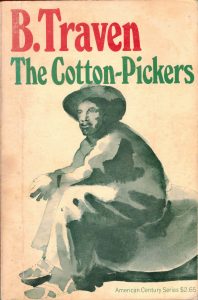
My first time reading B. Traven ensures that it won’t be my last. What a voice! Though I told myself during the middle section of The Cotton Pickers that the book was beginning to drag, I should have known, even at that time, after that simply perfect first opening section, that my mysterious author was simply setting things up for the simply perfect ending. Wow. For all the hype about who and whether B. Traven really was, it all boils down to the writing, which is inimitable. (Though perhaps I should be careful saying that: I would have though Jack Black’s You Just Can’t Win was inimitable, too, and we all know how that turned out.) Besides the engaging reality of Traven’s story, there is a singular lack of bitterness to the bitter taste left in the narrator’s mouth, and that last page perhaps sums up how the author himself felt about all the tales that others wanted to tell about him. On the other hand, this is his first book, so I may be full of it.

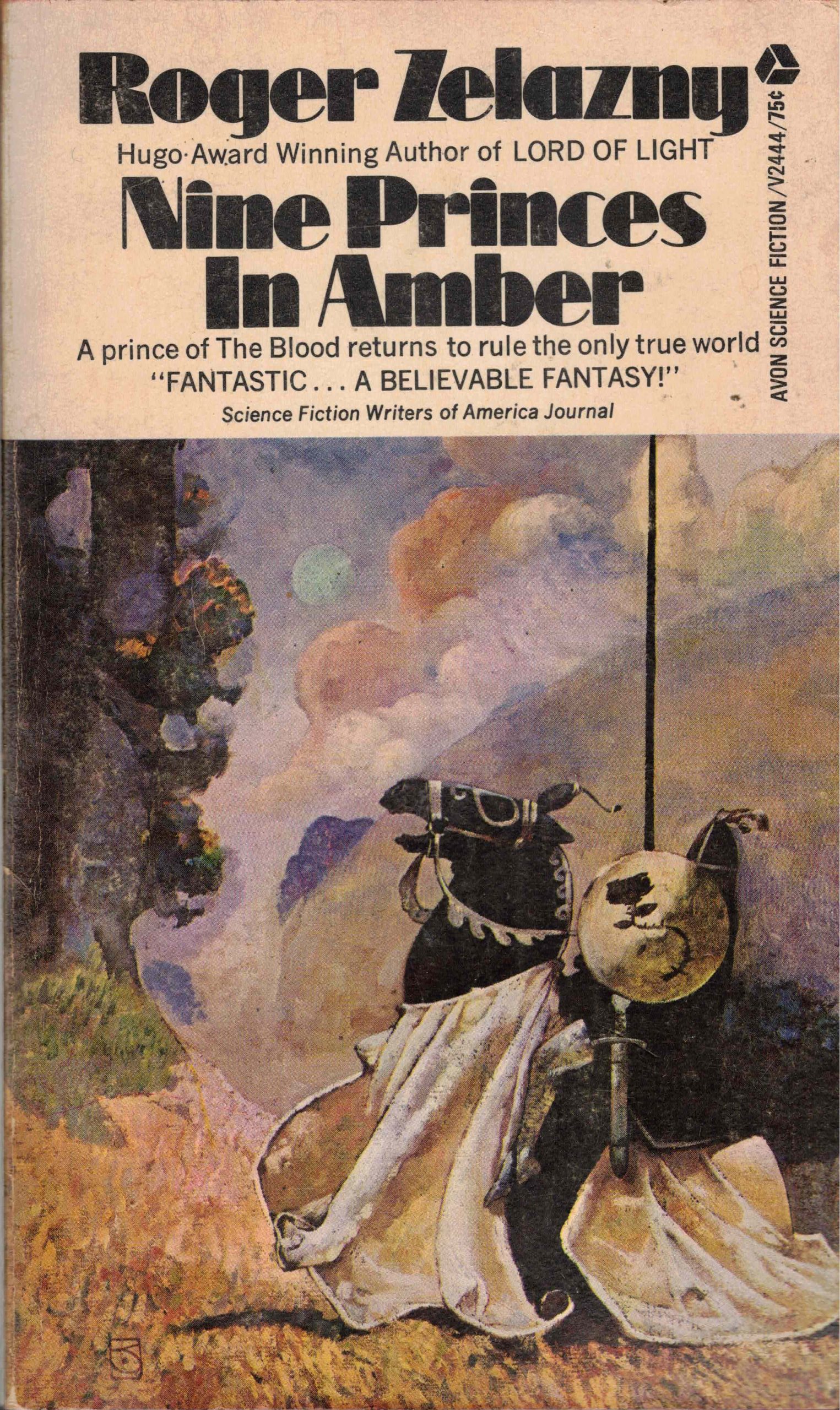
Roger Zelazny uses the tried and true hook of the amnesiac protagonist to build slowly to the final confrontation in Nine Princes In Amber, only to fake us out as the story keeps unspinning after the putative hero lies blinded and hopeless in a forgotten dungeon. But of course the tale’s not over, not even at the end of this, the first in the pentalogy. I was pleased by Zelazny’s ability to keep me on tenterhooks until the very end, after that grabber of an opening. Now I’ve read these books before, some of Zelazny’s best work (well, we all have a soft spot for Jack Of Shadows, don’t we?), but am agreeably unsurprised to find this premier novel in the series as good as I remember.


# Read Author Title Genre
981 7/11/23 B. Traven The Cotton Pickers Fiction
982 7/11/23 E.C. Tubb / Alex Dain Kalin / The Bane Of Kanthos SF & Fantasy
983 7/15/23 Immanuel Velikovsky Worlds In Collision Bad Science
984 7/17/23 Jordan Spencer Small Town You/SA Other
7/17/23 Russ Cochran, ed. Tales From The Crypt Presents The Vault Of Horror No. 4 Comics
985 7/17/23 Martin Olson The Adventure Time Encyclopædia: Inhabitants, Lore, Spells, and Ancient Crypt Warnings of the Land of Ooo Circa 19.56 B.G.E. – 501 A.G.E. Humor
986 7/18/23 Lewis F. Presnall Search For Serenity Spirituality
987 7/19/23 Roger Zelazny Nine Princes In Amber SF & Fantasy
7/24/23 Harvey Kurtzman The Nostalgic Mad #3 Comics
988 7/25/23 David Edmonds & John Eidinow Wittgenstein’s Poker: The Story of a Ten-Minute Argument Between Two Great Philosophers Philosophy
989 7/28/23 Constance Cumbey The Hidden Dangers of the Rainbow: The New Age Movement and Our Coming Age of Barbarism Wacko
990 7/29/23 Billy Collins Sailing Alone Around the Room: New and Selected Poems Poetry


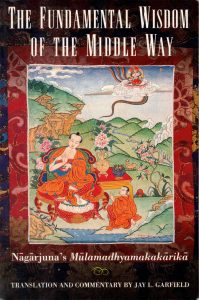
After reading the sparse straight translation of Nagarjuna’s classic Buddhist treatise, The Fundamental Wisdom Of The Middle Way, I feared that the expanded notated and commented treatment of that text that followed was going to suffer from a pedantic know-it-all-ness of the admittedly Western philosophically focused translator. I was wrong to worry. Though the notes of Jay L. Garfield are certainly very academic at times, and may put off readers not used to that formal style of writing, he is an honest academic, being sure to bring out contrary interpretations even as he makes his strongest case for his own interpretation. His particular focus upon the four-fold logic of Nagarjuna (‘not this, nor not-this, neither both, nor neither neither’) hammers home the skillful means with which the powerful teaching of this sage from the 2nd Century of the Common Era eludicates the inner teachings of Buddhism. And Garfield’s background in regular old Western philosophy enables him to bring up the important parallels and contrasts in that canon, from Kant to Wittgenstein. Definitely worth deep study.

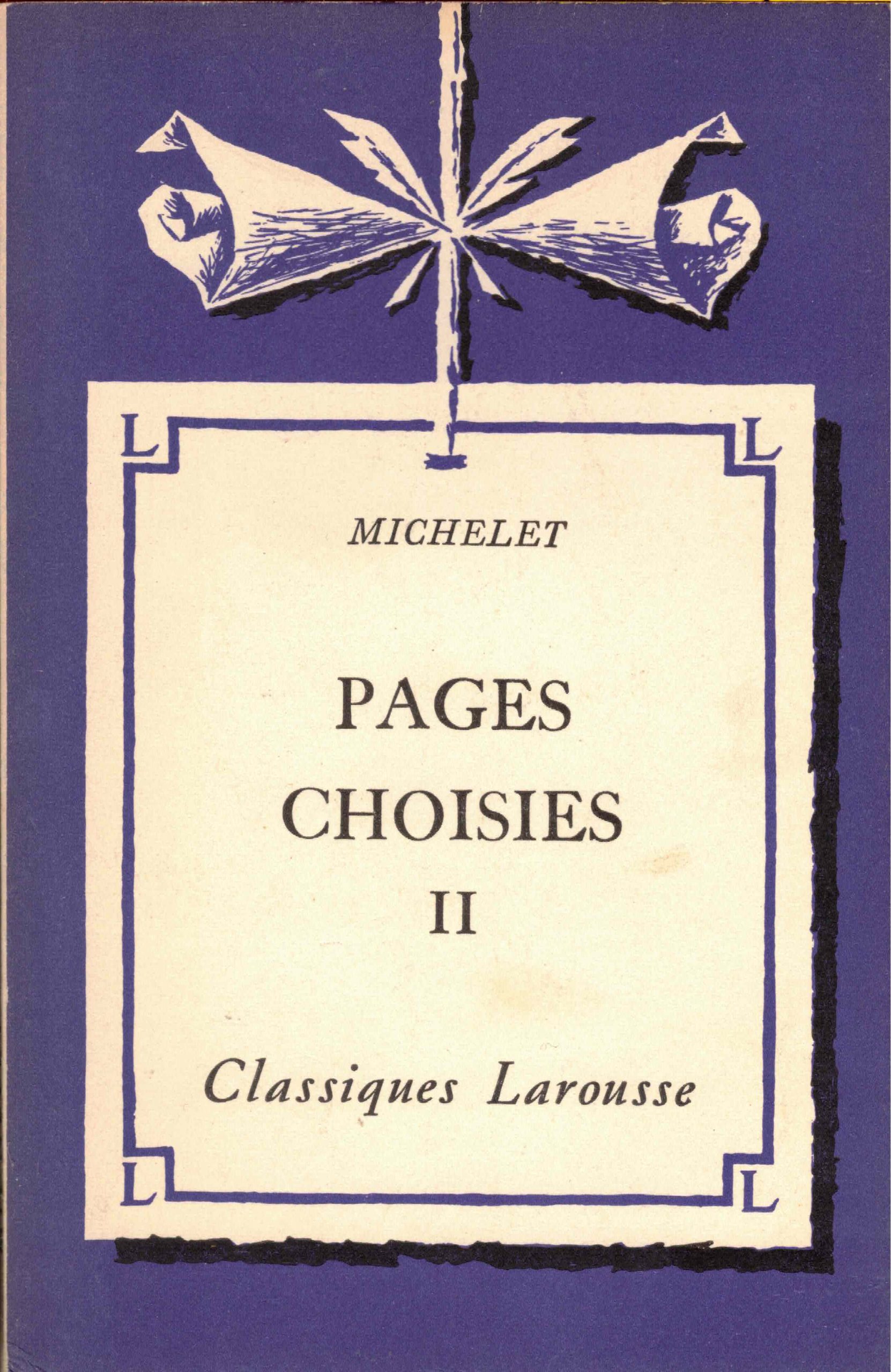
Since we’re already had a shoutout to Lord of the Rings, let me take a moment to speak of the incomparable French prose of Jules Michelet. I’m not sure where I picked up this slim volume of extracts from the historian’s works, Pages Choisies II, and I have to confess that I mainly wanted to test whether I remembered even a smidgen of my French language skills, but I was staggered to read the words of this author, one of the most powerful voices in French historical writing. Certainly his vignettes from the French Revolution truly bring those days to life, and of course when he was writing he could still speak to eyewitnesses to some of those earth-shaking events. But even his other work, his odd asides about the Renaissance, for example, have verve and power—even if perhaps some of his conclusions are a bit, let’s just say, wrong. But Michelet sees always the poetry in history and personages, and much more besides. The pieces pulled from his natural history of the sea, or his bizarre but affecting anthropomorphising of moutains and weather, these words show an author who is able to do that most impossible thing: make us see the world in a wholly new light.


# Read Author Title Genre
991 7/29/23 John Scalzi The Android’s Dream SF & Fantasy
992 7/30/23 Nagarjuna; Jay L. Garfield, trans. & commentary The Fundamental Wisdom of the Middle Way: Nāgārjuna’s Mūlamadhyamakakārikā Spirituality
993 8/4/23 Bob Shaccochis The Immaculate Invasion Militaria
994 8/8/23 Sergei Lukyanenko Day Watch SF & Fantasy
995 8/8/23 Mike Capozzola Self Defense For Time Travelers Humor
996 8/9/23 Martin Amis Time’s Arrow Fiction
997 8/10/23 Jules Michelet Pages Choisies II Foreign Language
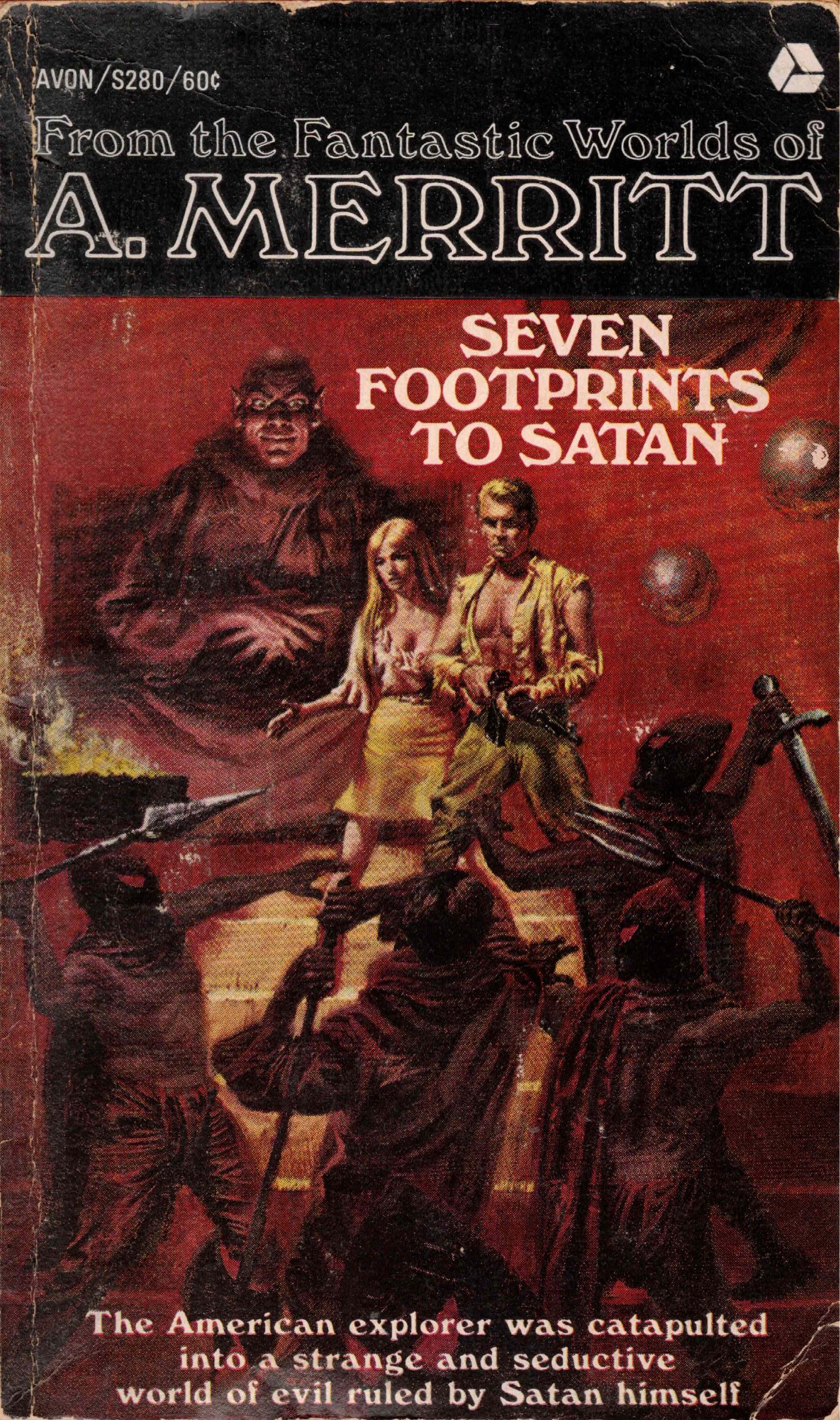
998 8/11/23 A. Merritt Seven Footprints To Satan SF & Fantasy
999 8/12/23 Karen Wynn Fonstad The Atlas of Middle-Earth SF & Fantasy
1000 8/12/23 J. R. R. Tolkien The Lord Of The Rings SF & Fantasy


One last apologia here at the end. I’ve told you that I resolved not to read any mysteries in this last set of one hundred books (save for the Continental Op volume we’ve already discussed, but some of you purists may question the presence of Seven Footprints To Satan in that last set of ten books. True, the even-more-pure may reasonably say that it’s not exactly a mystery, more of an adventure story. And I confess that I’m not entirely sure just where to put A. Merritt’s books, nor am I entirely consistent in my own classification into this or that genre. For example, I put the Fu Manchu books into my mystery shelves, and Doc Savage within the Science Fiction & Fantasy—though both series have attributes associated with the other genre; as I say, I struggle for no petty consistency. And certainly in the case of Seven Footprints the fantastical elements are at a minimum, more trappings than actuality. And though I can plead that it’s merely an old-fashioned adventure yarn, those I usually place within the Mystery domain (hence the full title of the genre in my own classification system, ‘Mystery & Thriller’). But … well, let’s just let it be, shall we? I’m happy to have finally reached one thousand books no matter what petty and silly foibles I’ve inserted into the process, and look forward to reading more mysteries, of whatever stripe, in the next set of one hundred books. (Though, truth be told, I have reached Book Read #1016 as I finish this listing, and only two of those are in the ‘Mystery & Thriller’ genre, and the only pure mystery is actually a re-read of Book Read #95!) Ah, me. More will be revealed, I’m sure. Until then, ciao, and good reading.


The lists of previously read books may be found by following the links:

Friday Vocabulary

1. williwaw (also williwau) — savage squall off cragged coasts in near-polar waters

Never have I viewed a sudden storm with such joy as I did when I saw the dark clouds rage behind us in what had been clear waters as the williwaw arose suddenly to confound our pursuers.


2. sere — dry, dried out; barren

Carefully Tom cleared a large circle around the campfire, knowing that the sere grass could catch instantly ablaze from even the merest spark.


3. mythopoesis — myth creation

In the epics, of course, nothing would be said of terrible headache Arthur had that morning from the moment he awoke, nor of the midges that pestered friend and foe alike in that swampy morass, but mythopoesis of course has its own laws of poetry and artistic license.


4. commissure — joint between bones; tissue of nerve fiber joining right and left sides of spinal cord or brain; point where lips or eyelids join

Painful vesicles appeared at the right commissure of the lips five days after the first symptoms were noted.


5. overprocrastination — overindulgence in putting things off

And this morning we suffered the consequences of my neurotic overprocrastination, as the front porch slid off the foundations down the hill to rest upon my neighbor’s gazebo.


boscage (also boskage) — thicket or grove of trees or shrubs

The morning haze lay heavy upon the dark boscage at the foot of the hill, though we could hear rustling amidst the bushes.


6. seel — to sew a hawk’s eyes shut for training purposes

And now like a seeled falcon this young warrior is blinded by love.


7. theomachy — fight against or among gods

Nor was Ajax spared in this terrible theomachy, though Athena’s illusion kept him from destroying his fellows before he destroyed himself.


8. analphabetic — not alphabetic; illiterate

At the estate sale I found the books sold in an analphabetic manner, prices being based solely upon the material in which the volumes were bound, so that a (faux) leather hardback reprint of Louis L’Amour cost ten times what they charged for a vintage paperback.


9. serac (also sérac) — irregular towers of glacial ice

Carefully we picked our way past the rocks and seracs which cluttered this saddle of the glacier, nearly tumbling into a hidden crevasse in spite of our caution.


10. fylfot — swastika

The spines of the complete edition of Kipling were decorated with the fylfots typical of so many early versions of his works.


Bonus Vocabulary

(Northern dialect)

cat’s ice — very thin ice, layer of ice formed over puddles from which water has receded

Suddenly I was a child again, delighting in each step upon the cat’s ice and the satisfying crunch beneath my warm weather boots.

Friday Vocabulary

1. corybantic — crazed, wild, frenzied, orgiastic

We have no need for corybantic preaching and unbridled emotional appeal, for our program is a sane and reasoned approach of proven value.


2. spencer — short tight jacket of 19th century, often trimmed with fur when worn by women and children

Not even taking time to button my spencer, I flew out the door and into the waiting coach.


3. decrepitate — (of minerals) to crackle when heated

The hunchback left the pan over the fire until the salts had completely decrepitated, sluicing the remaining slurry through a fine sieve.


4. slate — [British informal] to criticize severely

But no previous work of the Cambridge playwright had been slated so unanimously by the critics; indeed, the naysayers had been almost silent heretofore.


5. deturgescence — relative dehydration by which the cornea is maintained in a transparent condition

The results of our study of the effects of temperature upon corneal deturgescence were ambivalent, at best.


6. oneirophrenia — hallucinatory state of dreamlike perception, often caused by severe sleep deprivation

Often an episode of oneirophrenia will be mistaken for schizophrenia, due to observation of obvious hallucinatory episodes.


7. homogamy — inbreeding

Though the weak chins and drooping eyes we saw in all the villagers proved the deleterious effects of the homogamy that held this remote valley in its vile grip, hidden from view was the loathsome effects of this horrid inbreeding upon this group’s moral sense, which suffered a deficiency far greater than the receding lower jaws.


8. parsec — unit of astronomical distance equal to about 3.26 light-years, the distance to a star which has an apparent heliocentric parallax of one second when viewed from earth

Antares—the supposed locale of Dray Prescot’s adventures—lies some 170 parsecs distant from Earth.


9. futurity — horse competition in which contestant horses must be nominated to the event long before it is held

He couldn’t attend the reunion as he had a two-year-old in the weekend’s futurity in Lansdowne, but Figgers promised to get in touch the week after.


10. imbricate — to overlap, as in roof tiles

But Dr. Whelan had imbricated the damaged tissues with such care that there was never any weakness along that side of the leg, although the scar was plainly visible.


Bonus Vocabulary

(British derogatory slang)

slapper — prostitute; woman of bad morals, woman with many sexual partners

I got out of bed where the slapper still slept, lit a cigarette, and looked out the window to the street where I saw the same blue Lancia I’d noticed following me the day before.

Friday Vocabulary

1. loathe — to detest, to feel disgust for or towards

I simply loathe the new branding, and don’t even get me started on what they’ve done to the mascot.


2. loath — unwilling, averse, reluctant

Loath as I was to bring the bad news to Elsa, I realized that it was, after all, my painful duty.


3. tomnoddy — fool, dunce; puffin

Now Kelvin may have convinced all the other tomnoddies at the pub with his fancy talk and bold assertions, but he’d have to go a spell further to convince me.


4. ululate — to howl or wail, esp. by alternating loud high-pitched sounds

But at the outskirts of town we were beset by a crowd of ululating termagants who stopped our progress and beset our carriage like a flock of maddened crows attacking a wounded falcon.


5. cumulet — white domesticated pigeon

But Bertha found that he had no love to give her, for his devotions were all to his racing pigeons, and one pretty cumulet in particular, which he had named Laurie.


6. limen — threshold of perception or response

By constant application of this method it was believed that the limen of physical sensitivity to small changes in temperature could be sharpened to mere tenths of a degree, but modern instrument readings of actual nerve responses have cast doubt upon these self-reported successes.


7. milt — fish semen; spleen of a breeding animal

As we flew north along the coastline I could just make out in the sun’s last rays a yellow cloud of milt a mile or so offshore, evidence of the spawning herring our fishing fleet was searching for.


8. belomancy — divination using arrows

Just as the ancient Persian was paralyzed at each crossroads by his bizarre belomancy, trying to scry the future by the fall of arrows, so Lievenpatten became transfixed in his attempts to use the Chinese art of the I Ching, casting his yarrow stalks time after time in some misguided belief that that ancient text would reveal the next correct action, the next choice he must make.


9. commonplace book — personal notebook into which quotes and memoranda were written

But as fascinating as these nostalgic items from fifty years ago were, I was much more interested in what had been written upon the two pages of my uncle’s commonplace book which he’d torn out roughly leaving a jagged remnant upon which I convinced myself I could just make out a few stray letters, suggestive of … well, I wasn’t sure what they were suggestive of.


10. jiggery-pokery — [British] trickery; manipulation

Though nothing was proven, many on The Street believed that Rosen had achieved his immense success through some sort of jiggery-pokery or sharp dealing—though as I say, nothing was ever proven and no person ever came forward to accuse him of any particular act.


Bonus Vocabulary

(San Francisco Bay Area slang)

bip — to steal from a car by smashing a window and taking items left on the seats

Hell, they were just cruising down the avenue, bold as brass, one of ’em hopping out of the Lexus (a Lexus!), checking the window of each parked car, and bipping any that had anything inside.

1000 Books! (!)

It gives me very great pleasure to announce that late last night (that is to say, early this morning) I finished reading my 1000th book since I began tracking my reading, way back in 2015.

My wife actually gave me as a birthday gift ten years ago the book database software (along with a barcode scanner) that I use, and she has always been happy to have found such a perfect gift for my continued enjoyment. As stated above, I only began tracking my reading through the database in 2015, and so it’s taken slightly over eight years to read these thousand books.

Now, when I say that I’ve read a thousand books … well, of course I’ve read many more. But these are just the ones for which I can affirm positively that, yep, I read that sucker, read it from cover to cover. I have many books in my collection which I know that I’ve read—that Frances Yates book on memory, or all those PKD short story collections—but which I have not ‘officially’ read since beginning this silly project. Also, as long-time readers of this blog might know (which population approaches zero if we discount myself), I resolved long ago not to include in this ‘official’ book count any comic books or graphic novels, fearing that they might stretch the curve in weird directions. However, since I never have decided just what to do with children’s books or such works as Edward Gorey or those Far Side collections, perhaps my concerns were misplaced or just plain wrong. But that’s the way it is. If we include those discounted comic works, my total runs up to 1131, but who’s counting?

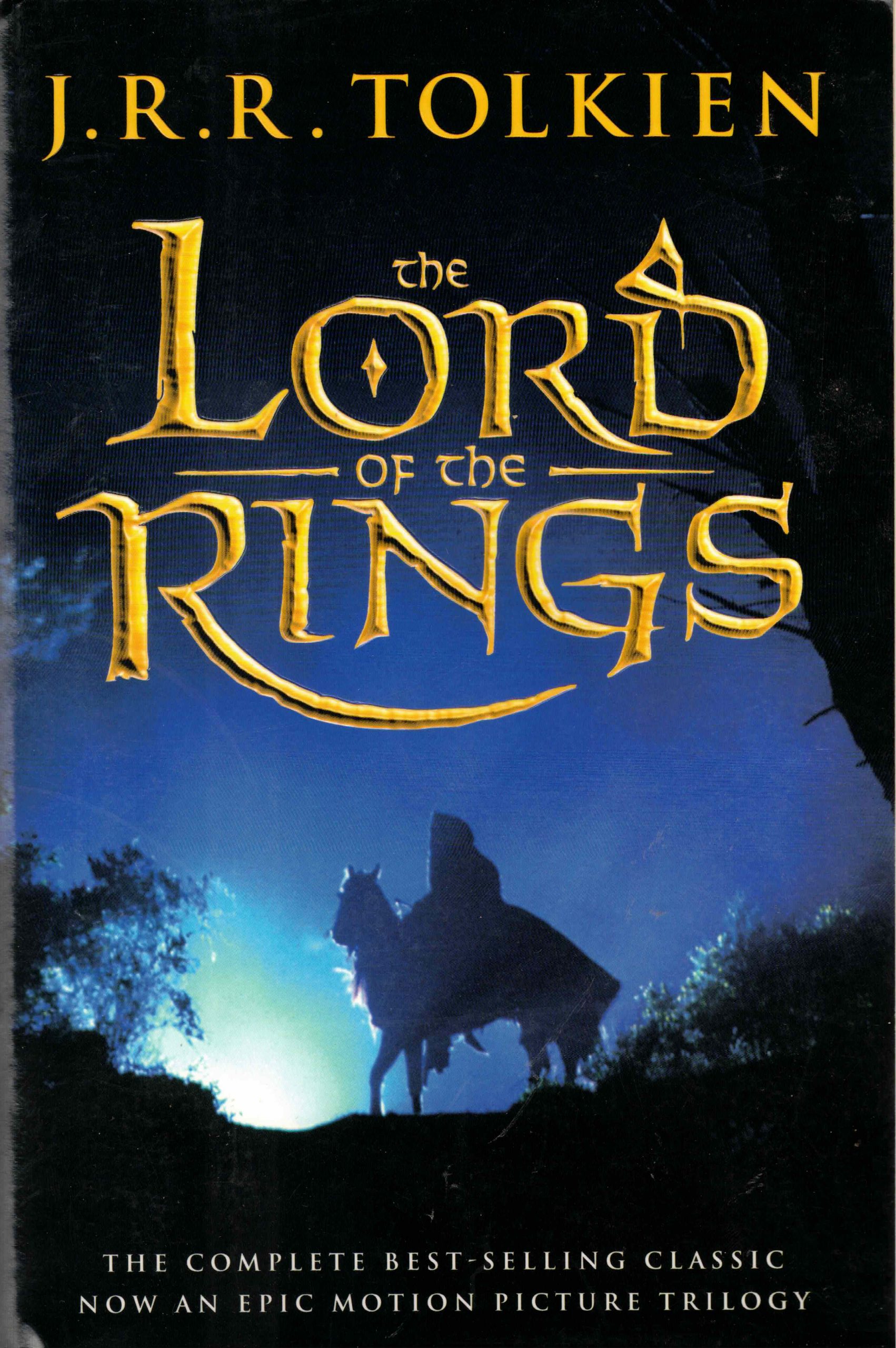
My 1000th book was a single-volume edition of Tolkien’s The Lord Of The Rings, which really is the only way to read the book, having at hand all of the appendices and maps and the index. After all, as everyone knows, J. R. R. Tolkien’s great ‘trilogy’ is really no trilogy at all, but simply a very long book divided into three parts for ease of reading. (And that’s the counterargument to my assertion just above; having the whole work in a single tome does tend to press down upon the chest when reading in bed, which is where most of my reading of this epic was done.) And I confess that I manipulated my reading to enable this fantasy masterwork to be book #1000; it’s not hard to read it fast or slow as one desires. But we should never underestimate Tolkien’s achievement, and it is salutary to compare and contrast the original with the films which threaten to overtake the written fiction in our collective memory. (I do not speak of the films purportedly made of The Hobbit, save to mention that I started this Tolkien kick about ninety books ago just to remind myself of how wonderful that endearing work of pastoral fiction was, and how utterly Peter Jackson missed its point.) But, though I found myself time and again rediscovering the differences, significant or minor, between the book and the films, the biggest revelation (‘re-revelation’?) was the sheer power of Tolkien’s prose. I had recently read (and finally completed) The Silmarillion [Book #966] and, truth be told, found some of that background book ponderous and, dare I say it, dull. But in The Lord Of The Rings, the kindly looking Oxford professor scales once more and surpasses the heights he reached in The Hobbit. Many other words, much better than any I might offer, have been written on Tolkien’s magnum opus, so I will merely advise you to turn once again to the scene at Orthanc when Saruman makes his last stand against the assembled forces of good. The delicate handling of dialogue there, as the quondam White Wizard attempts once more to cast his spell upon the host below him, the nuanced words and the sheer skill with which Tolkien gives letter perfect language to Saruman shows a writer at the top of his game, a man who has the ability to summon the discourse of silky evil, of cultured pleading, of imperious mastery, and then shows us the rough speech of Gandalf dispersing the miasma of doubt engendered by such language. True, nobody ever speaks like that—at least not in these latter days of the world—, but nobody spoke as Philip K. Dick wrote dialogue either, which makes neither author’s works any less compelling and truthsome.

Well, I’ve gone on at greater length than is my wont when giving you these summary announcements of my putative reading progress. But I should get back to the parts where I assure you that I’ll write up the data for this last set of books, or at least promise you a complete listing of the books read. In addition to those not-quite-made promises, I will mention that in this last ‘century’ of books, I resolved not to read any mysteries (save for on collection of the Continental Op stories that I was in the middle of when I finished Book #900), so I’m curious to see what difference that made to my reading patterns. I had found that nearly half the books I was reading were mysteries—mostly because I need some light reading to peruse while taking my lunch break at work, and those fit the bill. But while I did read a good bit of science fiction and fantasy (about 20% of the last hundred books), there doesn’t seem to be any other genre which had any such preponderance in the last tranche of reading.

My reading pace was much faster than the hundred books before, as I took only 167 days to read this century of books, as opposed to 258 days for Books # 801 – 900. This is because—despite a few massive tomes such as The Lord Of The Rings—the average book length was down significantly. (In other words, I read a bunch of shorter books.) I really should do a full analysis of both this last set of a hundred books as well as the whole set of one thousand … but whether I do or not only time will tell. (I’ve learned not to make rash (or any) promises.) I do promise, however, to (eventually) get around to giving you a full listing of the last set of books read. So you can’t ask for fairer than that, can you?

With the thousand books per eight years pace (very roughly), I now can contemplate reading every book I own … assuming I live to be 140 years old! … and that I cease acquiring more books. Neither of which is going to happen.

   1 Book per 1.67 Days   

Hoping to hit you soon with some real data, some real book lists….

Friday Vocabulary

1. tropopause — atmospheric boundary layer between troposphere and stratosphere

The air temperature will be at a minimum, ceteris paribus, at the tropopause, rising as the descent is made through the troposphere to the ground.


2. ovinity — the state of sheep, sheep-like nature

Hengval believed that most humans lived always in a wretched mire of ovinity, their potential for active resistance or even awareness of their oppressive surroundings abandoned from their earliest youth.


3. deracinate — uproot

The disbelieving officer then grabbed viciously at my beard, thinking it false, and deracinated a large portion of the facial hair I’d devoted entirely too much attention to in my effort to win the heart of Miss Kinsey.


4. famulus — servant or assistant, esp. of magician or scholar of the occult

Whether he was a charismatic con man or another in the long line of the self-deluded is not always clear, but certainly Edward Kelley was no mere famulus to Doctor Dee.


5. sockdolager — knockout blow, decisive argument or reply; unusually heavy or large thing

Finally tiring of our pointless sparring, I grabbed my shotgun from the wall and, when he seemed all-fired to have me shoot him, I gave him a real sockdoloager with the gun butt across his skull.


6. narghile — hookah

I smiled with happy expectation as I caught sight of the fine narghile in the corner, but was disappointed to learn that Henry displayed the hookah only as decoration, a nod to his time in the fusileers.


7. crannog — artificial island used as fortification or dwelling in ancient Ireland and Scotland

Draining the lake revealed the remnants of a drowned crannog that once protected the rude inhabitants of this green land from foes also long disappeared from history.


8. Corfiot — of or related to Corfu or a native of Corfu

Her magisterial debunking of Professor Plangeton’s standard history of the Corfiot Jews brought her great renown.


9. campanile — bell tower, often freestanding

The campanile of Pisa Cathedral, of course, is more commonly known as the Leaning Tower of Pisa.


10. grizzle — to make or become gray

But I found that whatever answers he’d found in that lonely town on the moors had grizzled my former school roommate, who had seemed so young and enthusiastic as he left to take up his duties as parish priest.


Bonus Vocabulary

(history)

Nansen passport — passports issued under the auspices of the League of Nations for stateless persons after World War I

But after the Second World War there was not the same impetus to issue a new version of the Nansen passport, which had primarily been necessitated by Bolshevik Russia’s rescission of citizenship for all Russians living abroad.

Friday Vocabulary

1. casern — garrison lodging, barracks

I tied my horse to one of the pillars holding up a sort of porch roof before the unimpressive casern of the Trebitsch regiment, for I saw no stables.


2. gangrel — [Scots] tramp, vagabond; gangling person

“Don’t try to cheer me with your gangrel wisdom, for I’ve known house and home and—aye—family too, a loving wife and two children who would weep to see their father reduced to this state.”


3. Glagolitic — now unused alphabet used for certain old Slavic languages

The words in the painting, however, were written in Glagolitic characters, and though I could puzzle out some of the letters which had similarity to the Cyrillic, I could make no guess at what sounds many of the strange curvy shapes might represent.


4. leaguer — siege; one who besieges

Preparations for the leaguer of Stuymesand continued apace, and everywhere I saw men felling the tall trees of the peninsula, shaping them into fell engines of war.


5. scalene — [mathematics] having sides of unequal length

The production of a six-sided scalene pyramid from the rhomboid is left as an exercise for the reader.


6. laund — glade, grassy pasture amidst woods

There among the saplings bordering the laund of sedge, they spied their quarry, the sly fox standing alert yet apparently unconcerned.


7. must — new wine, not yet fermented fruit juice

Only a few handfuls of must remained now at the bottom of the damaged vats.


8. semiosic — of or related to semiotics

Though we had been told very clearly to fix firmly the semiosic plane before moving on to the mimetic plane, Hodges was sick of the whole thing and punched a hole right through the physical plane of the painting.


9. furlong — 220 yards, 1/8 of a mile

And then the two great armies stopped still, with perhaps only a single furlong separating the vanguards of the mighty horsemen.


10. abaft — aft of, behind; towards the rear

Abaft the cargo hold was the single barrel of fresh water aboard, filled with slimy grossnesses of which it was best not to think as you swallowed.


Friday Vocabulary

1. parallax — apparent difference in position due to change in location of observation point

Before adjusting for parallax in your rifle scope, make sure that your reticle is properly focused.


2. bursary — [British] college scholarship; institutional treasure, esp. for ecclesiastical institutions

Some say that Lord Peter only funded the bursary to make up for the harm he’d done to the seamstress, but more cynical wags opined that the great lord wouldn’t give a fig for any problems the ‘lowers’ had in any event.


3. vacuously — emptily

The argument hinged upon whether the statement “Abraham Lincoln’s psychic powers could have stopped Booth’s bullet” was only vacuously true, or whether some actual positive meaning could be found for the contrapositive sentence.


4. stithy — anvil; forge

He learned all his horselore at the stithy of Master Brummond, and could tell you stories for hours, though he couldn’t sit in the saddle for as long as it’d take to say his name.


5. avidin — protein in white of eggs which prevents action of vitamin B

Cooking eggs neutralizes the avidin within, which otherwise can make biotin unusable by the digestive system.


6. gnomon — part of sundial which casts the shadow by which time is determined

But the gnomon of the garden sundial had been stolen, probably for its copper, and we had no means of solving the next puzzle left behind by the eccentric millionaire.


7. cairn — mound of rough stones heaped up as a grave marker or landmark

Though many clever explanations have been given, no one is certain just what purpose the cairns now called the Nine Standards originally served, though some believe them to have been constructed in the Pennine Hills over 800 years ago.


8. rescript — formal response to legal question written by monarch, pope, etc.; clarification of law, esp. canon law; rewritten document; act of rewriting

The fawning toadies of the press have claimed that the Emperor’s rescript demonstrates once more the kindly attention of the throne to the problems of the common people.


9. delectation — pleasure, delight

And now for your rapturous delectation, our three lads will perform a pantomime of King Lear, with Tony taking on all of the female parts.


10. ambigram — representation of a word in calligraphy or type which, when rotated or inverted, displays either the same or a different coherent word

Only some palindromes, and only in specific typefaces or styles, are also ambigrams, as when ‘NOON’ is rotated about its center (though it’s clear that if normal casing is used this is no longer true).


Bonus Vocabulary

(British idiom)

Buggins’s turn (also Buggins’ turn) — possession of office by rotation or seniority rather than merit

“I’m not sure why I happened to be secretary when the brouhaha broke out, just Buggins’s turn, I suppose.”

Book List: 900 Books

After finally getting around to giving you the listing for books #701 – #800, I managed to place my brain into a state of suspended animation, going through the motions and going to work, and completely neglecting the fact that I’d also promised to give you the Book List for #801 – #900. So here we are, more than three months after I’d finished reading book #900 (pictured just to the left), and only now am getting around to promulgating the full book list for that last century of reading. In fact, I’ve taken so long that we’re more than halfway through the next 100 books at this point. Ah, life … or whatever it is I’m living while waiting for life to arrive.

I began the last hundred of books with an investigation into the Varieties Of Unbelief by a noted American scholar of Christianity, Martin Marty. Though he makes a few interesting points—especially his comments about medieval accidie—most of what he says of interest is actually something somebody else says; quotations from others express more insight than any Marty shows. Plus, I didn’t like his framing of the whole question (or is it multiple questions?), and the book is more boring than not. But then again, what should I expect, looking to a religious author for judgment of disbelief? (His nomenclature of ‘unbelief’ is only one of the unhelpful quirks he displays in this work.) One might as well look at the works of major atheists for discernment about Christianity.

In this first set of ten (10) books from the past hundred, I read two standout volumes, two of the fantastic Charlie Chan mystery stories by the oddly named Earl Derr Biggers. Both The Chinese Parrot and Behind That Curtain are well worth a read, even nowadays (perhaps especially now) almost a century after they were first published. Besides a view of a Hawaii and a San Francisco that is so lost to time as to be mearly purest fantasy, the characterization of the plump and plodding Chinese detective is almost as distant from the portrayal in the various movies that have made the name of Charlie Chan synonymous with the worst anti-Asian prejudice. Though the actual mysteries may be fairly easy to guess (especially The Chinese Parrot), the lyrical unfolding of these tales of a time when travel to Hawaii meant an ocean voyage will leave you wanting more.


# Read Author Title Genre
801 6/11/22 Martin E. Marty Varieties Of Unbelief Philosophy
802 6/13/22 Earl Derr Biggers The Chinese Parrot Mystery
803 6/14/22 Richard S. Prather The Kubla Khan Caper Mystery
804 6/17/22 Jack Vance City of the Chasch SF & Fantasy
805 6/19/22 Earl Derr Biggers Behind That Curtain Mystery
806 6/21/22 Jack Vance Servants of the Wankh SF & Fantasy
807 6/23/22 Jack Vance The Dirdir SF & Fantasy
808 6/24/22 William Watson The Last of the Templars Fiction
809 6/25/22 John R. Pierce An Introduction to Information Theory: Symbols, Signals and Noise Mathematics
810 6/26/22 Kenneth Bulmer / Mack Reynolds The Key To Venudine / Mercenary From Tomorrow [Ace Double H-65] SF & Fantasy


To kick off the next ten books, I was lucky enough to enjoy the wonderful Freaks: We Who Are Not As Others by the interesting writer Daniel P. Mannix. This wonderful edition from the masters of the outre at RE/Search Publications includes many fascinating photographs (for which I admit a voyeuristic, not to say prurient, fascination) of the aforementioned freaks, many from the author’s personal collection. Mannix writes with humane insight into these outsiders most outside our ‘normal’ society, having spent many obviously happy days with and among them in the various freak shows and carnivals which used to be a staple of the American scene. I knew Mannix from his other, more historical, works upon subjects such as the Hell-Fire Club, gladiators, and (always a favorite) torture. In Freaks, the author is, as ever, an engaging raconteur with a flare for the perfect detail. His intimate knowledge of this now long-gone subculture shines through the book, plus the odd insights into Anton LaVey are an added bonus.

I usually try to stay clear of negative mentions of books read (so we won’t speak of what utter garbage The Soft Edge is), and I already told you to check out the Charlie Chan mysteries, but I also try to highlight the actual books as opposed to the comics (and graphic novels et al. blah blah blah) that I’ve read. But really, there are some graphic works which pack as emotional a punch as any ‘great’ literature. The interconnected and disturbing stories by Marc Hempel in Gregory are some of the sweetest, most brutal gutpunches in the black-and-white world of comic art. These tales center about a very difficult child, the titular character, who can only communicate (if that is what he does) by screaming at the top of his lungs, “I, Gregory!” Which he does. I’d read this when it first came out in the late 80s, and it was even better, more poignant, more heartbreaking than I remembered.


# Read Author Title Genre
811 6/29/22 Daniel P. Mannix Freaks: We Who Are Not As Others Sociology
812 7/2/22 Boris Akunin Sister Pelagia and the White Bulldog Mystery
813 7/6/22 Jorge Cham & Daniel Whiteson We Have No Idea: A Guide to the Unknown Universe Science
814 7/7/22 Earl Derr Biggers The Black Camel Mystery
815 7/9/22 Earl Derr Biggers Charlie Chan Carries On Mystery
7/12/22 Goscinny & Uderzo Asterix In Corsica Comics
816 7/14/22 Otis Adelbert Kline The Port Of Peril [Ace F-294] SF & Fantasy
7/15/22 Ray Willner & Reed Crandall The Adventures Of Robin Hood Book No. 2 Comics
7/16/22 Luis M. Fernandes Hanuman to the Rescue: Retold from the Krittivasa Ramayana Comics
817 7/17/22 Paul Levinson The Soft Edge: a Natural History and Future of the Information Revolution Computers & Internet
7/19/22 Marc Hempel Gregory Comics
818 7/20/22 Åke Edwardson Death Angels Mystery
7/22/22 Russ Cochran, ed. Tales From The Crypt Presents The Haunt Of Fear No. 5 Comics
7/23/22 David Gerstein, ed. Disney Masters: Donald Duck & Co. (Free Comic Book Day 2022 Special Edition) Comics
7/26/22 Roger Slifer, ed. World’s Finest Comics No. 295 Comics
819 7/29/22 John D. MacDonald The Deep Blue Good-By Mystery
8/2/22 Neil Gaiman; Leslie S. Klinger, ed. The Annotated Sandman Vol. 1 Comics
820 8/7/22 Jonathan Eisen Suppressed Inventions and Other Discoveries Bad Science


Note to self (and everyone else who reads this page (so … Note to self)): The Calculus really is drop-dead easy. And Quick Calculus: A Self-Teaching Guide by Daniel Kleppner & Norman Ramsey is the easiest, best guide for quickly learning the basics of the most powerful mathematical tool invented after Pythagoras and Euclid started messing about with plane figures. Sure this self-guided book is short on theory and proofs, but if you just want to learn to really use your basic derivatives and integrals—or just remind yourself what those words mean—you cannot find a better, nor quicker, course anywhere. This is the book I learned calculus from my first time around, later supplementing with the also excellent Schaum’s Outline. Of course, you can go on from here to almost infinite levels of complexity, but the mere fact that this subject can be so simply codified shows its potency in a very persuasive way … as opposed to, say, *shudder* Set Theory.

Among the many excellent books in this third decade of the last hundred (Who knew that L. Frank Baum made gender bending central to an Oz book written in 1904? But there you are.), I feel I really have to give a shout-out to Six Problems for Don Isidro Parodi, a half dozen mystery vignettes from the pseudonymous H. Bustos Domecq—a fig leaf author behind which are hiding Jorge Luis Borges and Adolfo Bioy-Casares. The conceit is a fascinating one, an idea I’m surprised has not been copied extensively: the detective Don Isidro Parodi is an inmate imprisoned for a crime he did not commit, who solves mysteries while incarcerated, merely from information given him by visitors to his cell. In fact, Parodi sees beyond the specious ‘facts’ given him by his various interlocutors to easily uncover the ‘real’ tales which usually are unrolling before the very eyes of his visitors, though they often are quite clueless as to the actual happenings until and unless Don Parodi deigns to reveal the truth. The language is difficult, though the translation by Norman Thomas Di Giovanni was excellent (to my untutored and un-Spanish-speaking eyes). I came to these tales after reading an essay by Eco praising them, and am very grateful to the Italian academic for his recommendation.


# Read Author Title Genre
821 8/8/22 Michael Innes Death at the President’s Lodging Mystery
8/8/22 Cary Bates DC Comics Presents No. 11 Comics
822 8/14/22 Daniel Kleppner & Norman Ramsey Quick Calculus: A Self-Teaching Guide (2nd Edition) Mathematics
823 8/14/22 Earl Derr Biggers Keeper Of The Keys Mystery
824 8/22/22 Jorge Luis Borges & Adolfo Bioy-Casares [as H. Bustos Domecq] Six Problems for Don Isidro Parodi Fiction
825 8/22/22 Louis Relin A Doctor Discusses Narcotics and Drug Addiction Drugs
826 8/25/22 Åke Edwardson The Shadow Woman Mystery
827 8/27/22 Umberto Eco The Limits of Interpretation Linguistics
828 9/1/22 Boris Akunin Murder on the Leviathan Mystery
829 9/1/22 L. Frank Baum The Land Of Oz Children’s
830 9/9/22 E. Kamke Theory of Sets Mathematics


Too often, it seems, one finally gets around to reading a series that rabid fans have been promoting ad nauseum to such an extent that perhaps one is bound to be disappointed, for nothing could possibly live up to the hype of an army of hype-men and -women. I often disdain almost all book recommendations, in fact, because I have odd tastes (if taste it can be called) and also because I just never know …. How happy I was, then, to discover the ribald wonder of George MacDonald’s Flashman, the first volume of the putative “Flashman Papers”. Somehow this historical fiction of an unrepentant coward and rapist manages to be quite engaging and entirely believable. (Which is perhaps merely an anachronistic view of our more ‘modern’ age gazing at the British disaster that was the retreat from Kabul.) My view of military biography and history will never be the same.

Here’s an example of the sort of thing I mean in the last paragraph. I know that many many people love Inspector Morse, both on the telly and in his original incarnation in the Colin Dexter novels. But … well, he’s always left me a bit cold. I get it that he’s ridiculously smart, that he has had abysmal luck in his love affairs, that he desperately wants to not be non-U and all that, but …. I mean, after all, you don’t actually have to have a reason to be a harsh-talking heavy drinker, so I suppose that’ll do as well as any other. But I persevere, especially if I’ve already stocked up on the books, and so I was happy to find that with The Wench Is Dead I finally found a Morse mystery that I enjoyed thoroughly from start to finish. This is the eight in the series. Caveat lector.


# Read Author Title Genre
831 9/10/22 George MacDonald Flashman Fiction
832 9/13/22 Isaac Asimov Tales Of The Black Widowers Mystery
833 9/21/22 Chris Abani The Secret History Of Las Vegas Mystery
834 9/22/22 Willard Van Orman Quine Elementary Logic Philosophy
835 9/24/22 Colin Dexter The Wench Is Dead Mystery
94* 9/28/22 Tony Hillerman Listening Woman Mystery
836 10/2/22 David Dodd, annotator The Complete Annotated Grateful Dead Lyrics Music
837 10/3/22 Will Cuppy How to Be a Hermit, or a Bachelor Keeps House Humor
838 10/8/22 Manning Coles Drink To Yesterday Mystery
839 10/12/22 Philip Kerr Berlin Noir: March Violets / The Pale Criminal / A German Requiem Mystery
840 10/13/22 Georg Cantor Contributions to the Founding of the Theory of Transfinite Numbers Mathematics

* I re-read this book to refresh my memory and persuade myself that the novel was unencumbered by the many problems which plague the AMC miniseries based upon it, Dark Winds.


For some time now I’ve been telling you how incredibly good Gavin Black (pseudonym for Oswald Wynd) is. I’m not going to stop now. In The Eyes Around Me, his fourth thriller featuring Paul Harris, the anti-communist businessman who seems to attract trouble just as his boat engines attract customers and competition, Black evokes a long-gone Southeast Asia where mysterious motives hide behind every glance and no one is quite what they seem to be. Once again Mr. Harris finds himself accused of a crime he didn’t commit (I’m beginning to sense a theme here), and has to find the actual killer while avoiding the legal consequences of that other evildoer’s actions. It’s a fun, quick read, and proves once again Joan Kahn’s ability to pick great writers and nurture them. Top marks.

Like me, you probably know Ron Goulart most for his science fiction stories, especially those great (if overly pun-filled) tales in the DAW paperback series. Heck, I think After Things Fell Apart is definitely among the top 10—maybe Top 5—post-apocalyptic California SciFi novels. (Do not confuse with Achebe’s book of almost the same name.) But Goulart also writes mysteries (seems to be what he mostly writes nowadays, when he’s not ghosting for Shatner et al.), and wrote them even back in the wild crazy days of the ’70s. In the case of If Dying Was All, the cover does really tell you most of what you need to know (at least the cover of my version; it’s not all that often that you see a man and a woman modeling the same pants). It’s a perfect little quick read with almost no pretensions save the strange mise en scène of 1972 Los Angeles. Oh, yes, and those puns. Goulart just can’t help himself, I suppose.


# Read Author Title Genre
841 10/14/22 Gavin Black The Eyes Around Me Mystery
842 10/15/22 Ron Goulart If Dying Was All Mystery
843 10/17/22 August Derleth The Return Of Solar Pons Mystery
844 10/19/22 R. T. Campbell [Ruthven Todd] Unholy Dying Mystery
845 10/23/22 Robert Barnard A Little Local Murder Mystery
846 10/23/22 Leslie Charteris Enter The Saint Mystery
847 10/24/22 Erle Stanley Gardner The Case Of The Sulky Girl Mystery
848 10/27/22 Erle Stanley Gardner The Case Of The Stuttering Bishop Mystery
849 10/29/22 Josephine Tey The Man In The Queue Mystery
850 10/30/22 Jack Vance Son Of The Tree / The Houses Of Iszm [Ace Double 77525] SF & Fantasy


You probably noticed in that last set of ten books that I’ve been heavily reading mysteries (9 out of the last ten), and I didn’t stop in this second half of the hundred books. But one of these still sticks and sticks in my mind, and perhaps the mystery is whether it’s a mystery at all. I’m speaking, of course, of Gertrude Stein’s posthumously published Blood On The Dining Room Floor, which is … something. I originally bought it because I was filling out some of the Black Lizard titles I was missing, and I read it because it claimed to be a mystery, and was short, and …. Do I like Gertrude Stein now? Not exactly. But this little set of words is one of the most intriguing befuddling and deep artifacts I’ve immersed myself in in quite some time. She really is a genius, and like many geniuses, I have a hard time understanding her without a guide to dumb it down for my plebian brain and taste. (The afterword by John Herbert Gill is a big help.) I know that I must read this one again, preferably aloud this next time. And so I invite all y’all (ha!) to read this as well, so that you can join me in rereading it some time in the future.

Possibly one of the most fascinating books in the entire last hundred is Confessions Of A Trivialist, by Samuel Rosenberg. Originally published as The Come As You Are Masquerade Party, which terrible name is explained but not expiated in the book itself, this volume is a beguiling and original set of essays by a strange polymath who takes a subject and runs with it to all sorts of interesting places, just as Greil Marcus took punk and delved deep into Dada in his Lipstick Traces. I can do little better to describe the scope of this book than to quote the blurb on the cover, that it consists of “Investigations of Santa Claus, Frankenstein’s monster, Herman Melville, Lot’s wife, Albert Schweitzer, and the world’s greatest peridromphile”. Rosenberg’s ‘investigation’ of Frankenstein is one of the most original pieces I’ve read on Mary Shelley’s creation, save the original itself. And the “peridromophile” essay is one of the most heartbreaking insights into the world of true genius that I’ve ever stumbled upon. Even the weakest essay, that on Schweitzer, manages to bring a fresh perspective to what was once an overdone subject, and all of the other essays are excellent excellent excellent.


# Read Author Title Genre
10/30/22 Bob Haney Worlds Finest Comics No. 241 Comics
11/3/22 Edmund Hamilton, Bill Finger, & Dave Wood World’s Finest Comics: Archives Vol. 2 (DC Archives Edition) Comics
851 11/4/22 C. R. Wylie, Jr. 101 Puzzles in Thought and Logic Mathematics
852 11/7/22 Freeman Wills Crofts The Pit-Prop Syndicate Mystery
853 11/9/22 Robert Baden-Powell Rovering To Success Nature
854 11/13/22 Erle Stanley Gardner The Case Of The Roving Bones Mystery
855 11/17/22 Gertrude Stein Blood On The Dining Room Floor Mystery
856 11/18/22 Erle Stanley Gardner The Case Of The Dangerous Dowager Mystery
857 11/20/22 Paul Anthony Jones The Accidental Dictionary: The Remarkable Twists and Turns of English Words Language
858 11/25/22 Stephen King [as Richard Bachman] The Running Man SF & Fantasy
859 11/26/22 Erle Stanley Gardner The Case Of The Lame Canary Mystery
860 12/3/22 Samuel Rosenberg The Confessions Of A Trivialist Essays


Though I often say (seriously; it’s exactly the sort of thing that I often say) that I re-read the Alice books every hundred books or so, I recently did the math and realized that in fact I’ve been returning to those most delightful pastoral dreams of youth only every 200 books or thereabouts. All the same, I once again found much joy returning to Alice’s Adventures In Wonderland and Through The Looking Glass. I suppose if you don’t ‘get’ these books … well, nothing I can say can ever change that. But for those of us who love this best creation of the sorta weird math professor at Oxford, I can only say that I’m already looking forward to reading these books again!

Moving from the sublime to the not quite ridiculous, Doctor No is almost the perfect James Bond book, or as perfect as Fleming’s strange hero is ever likely to be. Although the classic first film in the eternal string of movies replicates much if not quite almost all of the book’s plot and action, I found myself wishing that we had a film of just this version, straight from these pages. The strangely tender chauvinism, the sado-masochist bent, the casual racism (“Chigroes” for Chinese negroes? Seriously?), it’s all here, along with a story devoid of explosions, a pacing that includes two lengthy ocean journeys in a canoe—though one only happens in [spoilers] flashback. Both thumbs up.


# Read Author Title Genre
861 12/6/22 Chu Hsi Learning To Be A Sage Philosophy
862 12/8/22 James McNeill Whistler The Gentle Art Of Making Enemies Essays
863 12/11/22 Lawrence Block The Girl With The Long Green Heart Mystery
12/11/22 Bob Kahn, ed. Silver Age Classics Detective Comics 225 Comics
864 12/14/22 Brad Warner Zen Wrapped in Karma Dipped in Chocolate: A Trip Through Death, Sex, Divorce, and Spiritual Celebrity in Search of the True Dharma Religion & Spirituality
865 12/14/22 Lewis Carroll Alice’s Adventures In Wonderland Fiction
866 12/17/22 Lewis Carroll Through The Looking Glass and What Alice Found There Fiction
867 12/18/22 Erle Stanley Gardner The Case Of The Substitute Face Mystery
868 12/27/22 Ian Fleming From Russia With Love Mystery
869 12/31/22 Ian Fleming Doctor No Mystery
870 12/31/22 Karen McCosker & Nicholas Albery, eds. A Poem A Day Poetry


After the sublimity (if that’s what it has) of Doctor No, a book like Goldfinger makes us realize that Ian Fleming had very little idea of what an actual secret agent actually does. The whole plot bounces from happenstance to coincidence and so on to improbable blind luck. Does the trope of having the villain explain the otherwise inexplicable machinations to our hero originate here? (Dr. No does detail his nefarious scheme, but reluctantly and much more plausibly.) In this story, Bond survives merely because Goldfinger has no trustworthy henchmen with rudimentary secretarial skills. And of course the evil plot is ludicrous, as Sean Connery points out in the movie. (Not to mention that the counterplot, involving wholesale acting by a cast of thousands with even the slightest mistake revealing all to our criminals, is even more implausible, if such a thing can be imagined.) However, Bond is Bond, and the moments of conceited foodie snobbery, or nostalgically quaint sexual fantasizing, or his ‘insights’ into the issue of gays and lesbians, not to mention the mostly interesting golf and card games, make it still worth reading, get it over the middle-of-the-road hump to just barely achieve (for this reader) real likability.

Also during this stretch of reading I finally finished Robert Aitken’s wonderful Taking The Path Of Zen, which to my mind (assuming I have one) is one of the best introductory books on the nuts and bolts of Zen practice, which is to say stupid sitting. I had read the first few chapters many many years ago, when first I attempted to sit stupid for a few minutes each day, only to stop cold once I hit the chapter on sangha. (My current sangha consists of one guy I’ve seen twice, plus the two people on the video call introduction to … ah, sorry to digress.) Aitken’s real mastery is to make simple what is at its core very simple indeed, which sounds so simple as to be tautological, but …. Well, I’ve read quite a few books on Zen, and Buddhism, and some other stuff, and I can say that the lucidity Mr. Aitken brings to the printed page is a very rare commodity indeed.


# Read Author Title Genre
871 1/8/23 Ian Fleming Goldfinger Mystery
872 1/12/23 Robert Aitken Taking The Path Of Zen Religion & Spirituality
144* 1/13/23 Camden Benares Zen Without Zen Masters Religion & Spirituality
873 1/13/23 Chuck Palahniuk Fight Club Fiction
874 1/15/23 Chuck Palahniuk Invisible Monsters Fiction
875 1/15/23 Jorge Luis Borges Ficciones Fiction
1/15/23 Mike Baron & Steve Rude Nexus: Two Comics
1/16/23 Mike Baron Badger #5 [First] Comics
1/17/23 Hergé The Shooting Star Comics
876 1/17/23 Chuck Palahniuk Diary Fiction
1/18/23 Hergé The Secret Of The Unicorn Comics
877 1/19/23 Chuck Palahniuk Choke Fiction
878 1/20/23 Sharon Wegscheider Another Chance: Hope & Health for the Alcoholic Family Alcoholism
879 1/21/23 R. T. Campbell [Ruthven Todd] Death For Madame Mystery
880 1/22/23 The Research Department of the White Power Movement China, The Jews, and WWIII Wacko

* I re-read this book not realizing I’d already read it as part of my stupid book-tracking project, and am glad I did, because re-reading it allowed me to part with it forevermore.


One of my last year’s projects was to read the Holy Bible from start to finish, mostly so I could say I had done it, but also because the King James Version is not only one of the fundamental sources of our shared literary heritage in English, but also because so much of it is breathtakingly beautiful in its own right. I highly recommend the project for anyone who has even the slightest inclination, though I have to confess that it took me more than a year, reading a few pages each day and then some. As well, I’ll admit that there are long stretches where beauty is in short supply, but I do have a full notebook now of quotes I grabbed along the way. (My favorite Bible quote remains, however, Job 6:6, to wit, “Is there any taste in the white of an egg?” Truly a question for the ages.) What strikes me most about the King James Bible, though, is that it must be the most beautiful work in any language which is the product of a large committee. Something must have been magic in the air of early 17th Century England to permit such wonderful language to flow so easily from the pens of earnest academics.

Why is it that sociologists (with some rare exceptions who go on to become giants (viz. Durkheim, Mauss, etc.)) as a group are some of the worst writers ever? Why is there no sociological study of this? Alas, this sociological study of drunk driving sucks in many of the usual ways, though also in some ways of its own. Take, for example, the neologism Joseph R. Gusfield coins to cover the act his book is about with a veneer of objectivity, seen in the title (or is it the subtitle?), Drinking-Driving And The Symbolic Order. Gusfield then spends hours of our time telling us about the ‘themes’ of the work, and also has pretensions to being ‘literary’. The entire last section claims to be homage to Kenneth Burke (may his name be ever blessed), but instead is a very defensive attempt to define ‘irony’. Oh, the irony. Certainly the idea of … well, whatever is meant by ‘drinking-driving’ … has changed since this book was released in 1984, and a study could certainly be made of how we as a society have made the idea of driving even after just ‘one for the road’ strictly taboo. That study, however, is not this book.


# Read Author Title Genre
881 1/22/23 Joseph R. Gusfield The Culture of Public Problems: Drinking-Driving and the Symbolic Order Sociology
882 1/25/23 Åke Edwardson Sun And Shadow Mystery
883 1/26/23 August Derleth The Reminiscenses of Solar Pons Mystery
884 1/26/23 The Holy Bible in Giant Print – King James Version, Red Letter Edition Bibles
885 1/27/23 Chuck Palahniuk Lullaby Fiction
886 1/29/23 Chuck Palahniuk Make Something Up: Stories You Can’t Unread Fiction
887 1/30/23 Hodding Carter Robert E. Lee and the Road of Honor Children’s
888 1/31/23 Raymond Chandler Marlowe [The Little Sister] Mystery
2/1/23 Andrew Galitzer Torah Comics: Comic Strips Summariaing the Weekly Parsha Comics
889 2/2/23 Åke Edwardson Never End Mystery
890 2/3/23 Elizabeth Linington Greenmask! Mystery


Well, I’ve already recommended a James Bond book in this listing, though For Your Eyes Only, one of Ian Fleming’s collections of short stories, was more literate and literary than most other Bond tales. And I’ve also mentioned the Gavin Black thrillers about Paul Harris, the businessman in southeast Asia who keeps getting into trouble. So I won’t go on about the 898th book in this list, A Wind Of Death, which sees my favorite anti-communist in another excellent adventure. So once again I find myself breaking my rule of calling out only the ‘good’ books I’ve read, and will instead implore you not to read Starship Orpheus #1: Return from the Dead, by the pseudonymous Symon Jade [Michael Eckstrom]. I would love to give you some delicious cutting remarks about its many (I’m sure) failings, but all I find in my notes is the following comment: “Just not very good.”

Terrible in quite a different way is Changed, a self-published (and distributed) tract about how one Jewish man found escape from degradation through his encounter with a good Christian woman. To call it a Christian tract may be bending the language a bit far, because I’m not so sure how doctrinally sound some of his musings are. But then again, the great tragedy in his life is that his wife-to-be was assaulted before they met. The book was mailed anonymously to me, and … well, I can’t pass up reading something like this, and … it exceeded my (extremely low) expectations immeasurably. If you get a copy (you can actually read the whole thing online, though it seems as if somebody with some skills in using English as an actual language has cleaned up and edited some of the most egregious errors in syntax et cetera), you might want to read it alone, else you’ll find yourself importuning your friends with this or that terrible extract, and likely end up just reading almost the whole thing out loud. It belongs in that “So Bad It Almosts Becomes Good” category. I laughed very hard and very often, especially at the end—though likely that’s just me—which end I totally did not see coming.


# Read Author Title Genre
891 2/3/23 Symon Jade Starship Orpheus #1: Return from the Dead SF & Fantasy
892 2/5/23 Dick Francis Smokescreen Mystery
893 2/8/23 Dick Francis Knockdown Mystery
894 2/8/23 Ian Fleming For Your Eyes Only Mystery
895 2/10/23 Chaung Tzu; Burton Watson, trans. Chuang Tzu: Basic Writings Religion & Spirituality
896 2/12/23 Tom Cantor Changed Christian
897 2/15/23 Michael Crichton The Venom Business Mystery
898 2/17/23 Gavin Black A Wind Of Death Mystery
899 2/18/23 Robin Williams The PC Is Not A Typewriter Computers
2/18/23 Sergio Cariello, illus. The Action Bible: God’s Redemptive Story Christian
900 2/24/23 A. E. Stallings Hapax: Poems Poetry


One last book before I go, a favorite, A Doctor Discusses Narcotics And Drug Addiction, a work I’ve carried with me close to my heart since I was first given it by my father in the early ’70s. Reading this over-the-top work as a pre-teen sparked a lifelong interest in the world of dangerous drugs. So to speak. My favorite part of the book is the Glossary at the back of common drug slang. Keep an eye out for the B-dacs until my next listing when I finally finish my next hundred books—which won’t be that long now, as I only have sixteen books left to go!


The lists of previously read books may be found by following the links: