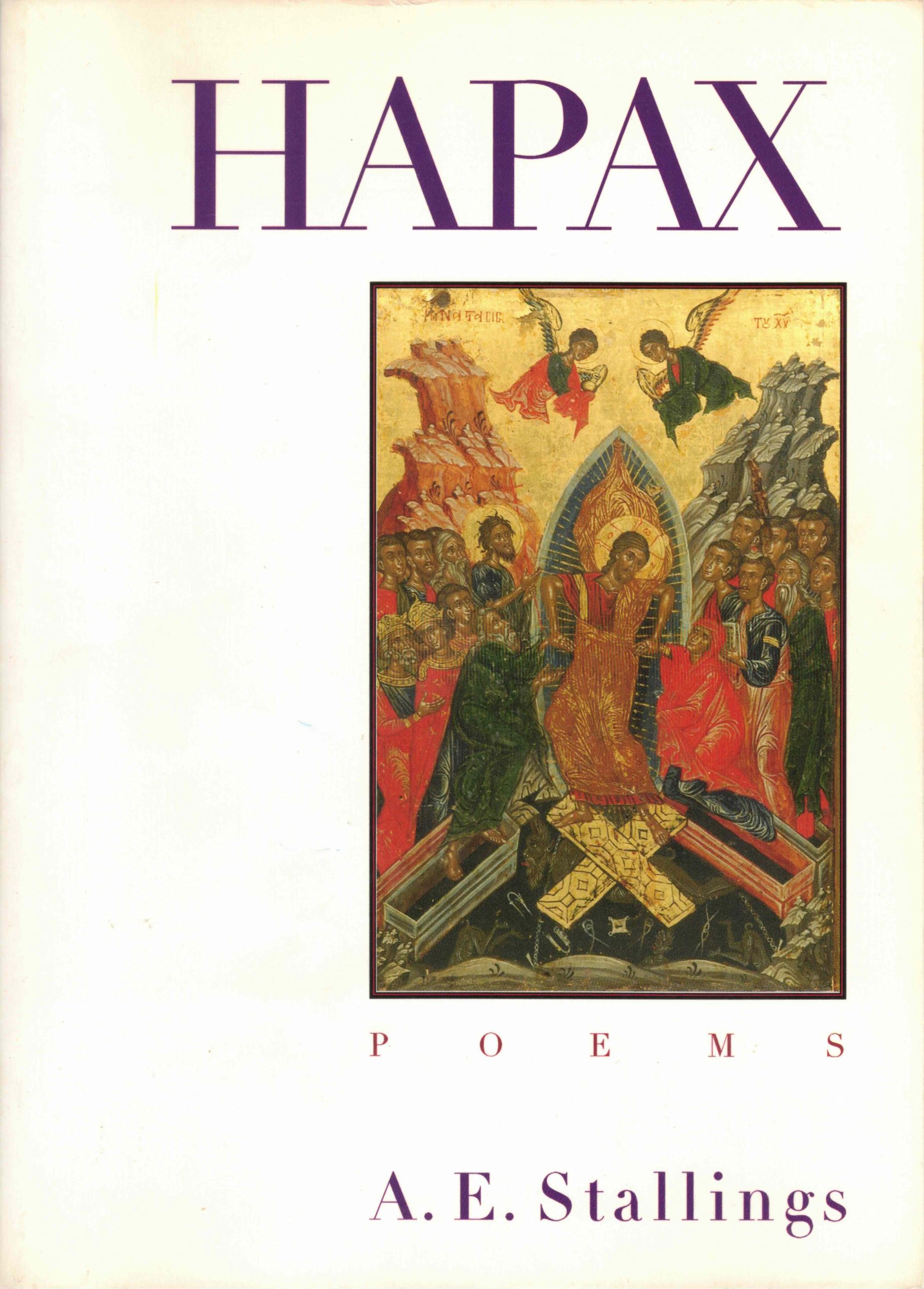
After finally getting around to giving you the listing for books #701 – #800, I managed to place my brain into a state of suspended animation, going through the motions and going to work, and completely neglecting the fact that I’d also promised to give you the Book List for #801 – #900. So here we are, more than three months after I’d finished reading book #900 (pictured just to the left), and only now am getting around to promulgating the full book list for that last century of reading. In fact, I’ve taken so long that we’re more than halfway through the next 100 books at this point. Ah, life … or whatever it is I’m living while waiting for life to arrive.

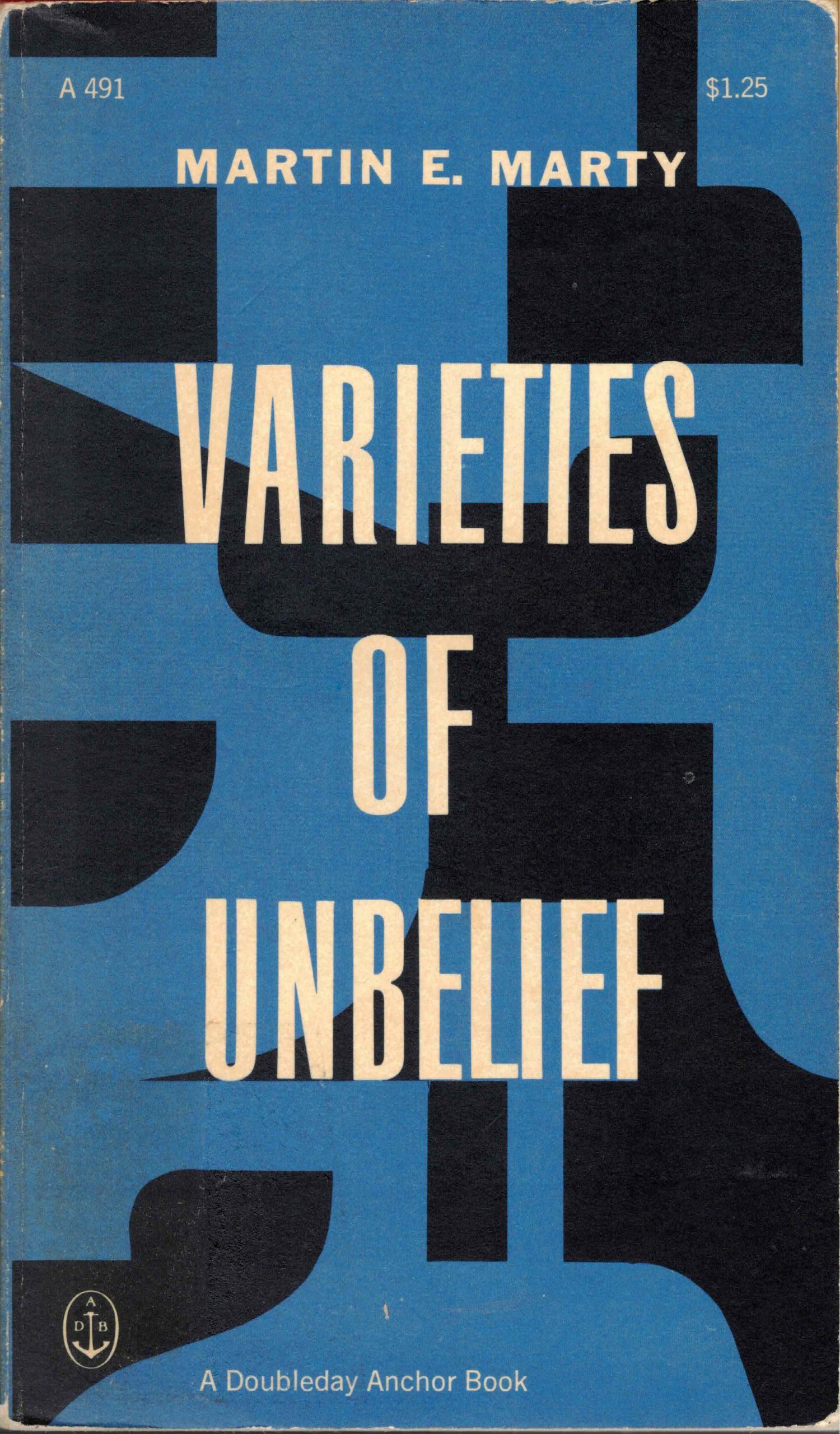
I began the last hundred of books with an investigation into the Varieties Of Unbelief by a noted American scholar of Christianity, Martin Marty. Though he makes a few interesting points—especially his comments about medieval accidie—most of what he says of interest is actually something somebody else says; quotations from others express more insight than any Marty shows. Plus, I didn’t like his framing of the whole question (or is it multiple questions?), and the book is more boring than not. But then again, what should I expect, looking to a religious author for judgment of disbelief? (His nomenclature of ‘unbelief’ is only one of the unhelpful quirks he displays in this work.) One might as well look at the works of major atheists for discernment about Christianity.
In this first set of ten (10) books from the past hundred, I read two standout volumes, two of the fantastic Charlie Chan mystery stories by the oddly named Earl Derr Biggers. Both The Chinese Parrot and Behind That Curtain are well worth a read, even nowadays (perhaps especially now) almost a century after they were first published. Besides a view of a Hawaii and a San Francisco that is so lost to time as to be mearly purest fantasy, the characterization of the plump and plodding Chinese detective is almost as distant from the portrayal in the various movies that have made the name of Charlie Chan synonymous with the worst anti-Asian prejudice. Though the actual mysteries may be fairly easy to guess (especially The Chinese Parrot), the lyrical unfolding of these tales of a time when travel to Hawaii meant an ocean voyage will leave you wanting more.
| # |
Read |
Author |
Title |
Genre |
| 801 |
6/11/22 |
Martin E. Marty |
Varieties Of Unbelief |
Philosophy |
| 802 |
6/13/22 |
Earl Derr Biggers |
The Chinese Parrot |
Mystery |
| 803 |
6/14/22 |
Richard S. Prather |
The Kubla Khan Caper |
Mystery |
| 804 |
6/17/22 |
Jack Vance |
City of the Chasch |
SF & Fantasy |
| 805 |
6/19/22 |
Earl Derr Biggers |
Behind That Curtain |
Mystery |
| 806 |
6/21/22 |
Jack Vance |
Servants of the Wankh |
SF & Fantasy |
| 807 |
6/23/22 |
Jack Vance |
The Dirdir |
SF & Fantasy |
| 808 |
6/24/22 |
William Watson |
The Last of the Templars |
Fiction |
| 809 |
6/25/22 |
John R. Pierce |
An Introduction to Information Theory: Symbols, Signals and Noise |
Mathematics |
| 810 |
6/26/22 |
Kenneth Bulmer / Mack Reynolds |
The Key To Venudine / Mercenary From Tomorrow [Ace Double H-65] |
SF & Fantasy |

To kick off the next ten books, I was lucky enough to enjoy the wonderful Freaks: We Who Are Not As Others by the interesting writer Daniel P. Mannix. This wonderful edition from the masters of the outre at RE/Search Publications includes many fascinating photographs (for which I admit a voyeuristic, not to say prurient, fascination) of the aforementioned freaks, many from the author’s personal collection. Mannix writes with humane insight into these outsiders most outside our ‘normal’ society, having spent many obviously happy days with and among them in the various freak shows and carnivals which used to be a staple of the American scene. I knew Mannix from his other, more historical, works upon subjects such as the Hell-Fire Club, gladiators, and (always a favorite) torture. In Freaks, the author is, as ever, an engaging raconteur with a flare for the perfect detail. His intimate knowledge of this now long-gone subculture shines through the book, plus the odd insights into Anton LaVey are an added bonus.

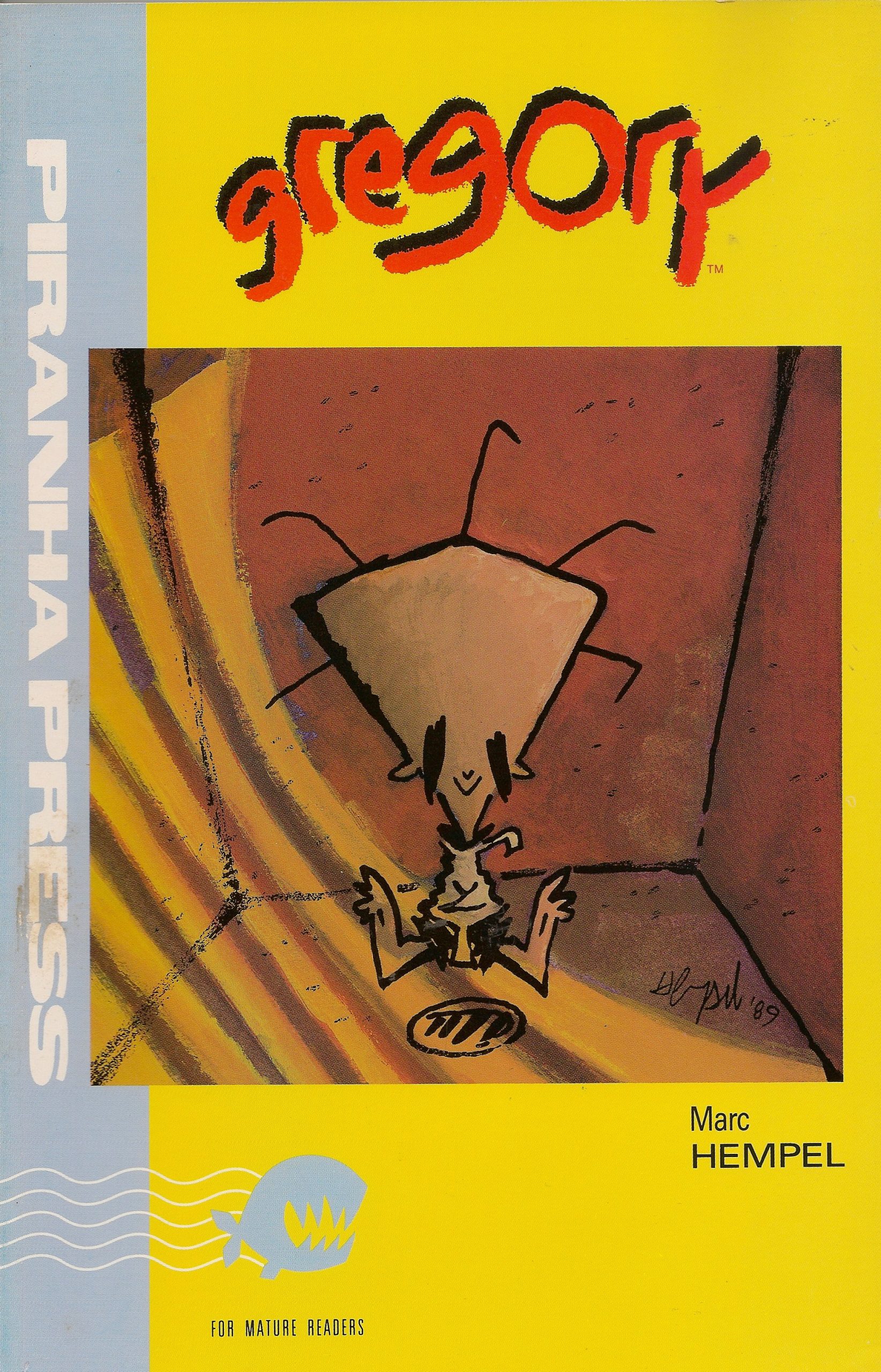
I usually try to stay clear of negative mentions of books read (so we won’t speak of what utter garbage The Soft Edge is), and I already told you to check out the Charlie Chan mysteries, but I also try to highlight the actual books as opposed to the comics (and graphic novels et al. blah blah blah) that I’ve read. But really, there are some graphic works which pack as emotional a punch as any ‘great’ literature. The interconnected and disturbing stories by Marc Hempel in Gregory are some of the sweetest, most brutal gutpunches in the black-and-white world of comic art. These tales center about a very difficult child, the titular character, who can only communicate (if that is what he does) by screaming at the top of his lungs, “I, Gregory!” Which he does. I’d read this when it first came out in the late 80s, and it was even better, more poignant, more heartbreaking than I remembered.
| # |
Read |
Author |
Title |
Genre |
| 811 |
6/29/22 |
Daniel P. Mannix |
Freaks: We Who Are Not As Others |
Sociology |
| 812 |
7/2/22 |
Boris Akunin |
Sister Pelagia and the White Bulldog |
Mystery |
| 813 |
7/6/22 |
Jorge Cham & Daniel Whiteson |
We Have No Idea: A Guide to the Unknown Universe |
Science |
| 814 |
7/7/22 |
Earl Derr Biggers |
The Black Camel |
Mystery |
| 815 |
7/9/22 |
Earl Derr Biggers |
Charlie Chan Carries On |
Mystery |
|
7/12/22 |
Goscinny & Uderzo |
Asterix In Corsica |
Comics |
| 816 |
7/14/22 |
Otis Adelbert Kline |
The Port Of Peril [Ace F-294] |
SF & Fantasy |
|
7/15/22 |
Ray Willner & Reed Crandall |
The Adventures Of Robin Hood Book No. 2 |
Comics |
|
7/16/22 |
Luis M. Fernandes |
Hanuman to the Rescue: Retold from the Krittivasa Ramayana |
Comics |
| 817 |
7/17/22 |
Paul Levinson |
The Soft Edge: a Natural History and Future of the Information Revolution |
Computers & Internet |
|
7/19/22 |
Marc Hempel |
Gregory |
Comics |
| 818 |
7/20/22 |
Åke Edwardson |
Death Angels |
Mystery |
|
7/22/22 |
Russ Cochran, ed. |
Tales From The Crypt Presents The Haunt Of Fear No. 5 |
Comics |
|
7/23/22 |
David Gerstein, ed. |
Disney Masters: Donald Duck & Co. (Free Comic Book Day 2022 Special Edition) |
Comics |
|
7/26/22 |
Roger Slifer, ed. |
World’s Finest Comics No. 295 |
Comics |
| 819 |
7/29/22 |
John D. MacDonald |
The Deep Blue Good-By |
Mystery |
|
8/2/22 |
Neil Gaiman; Leslie S. Klinger, ed. |
The Annotated Sandman Vol. 1 |
Comics |
| 820 |
8/7/22 |
Jonathan Eisen |
Suppressed Inventions and Other Discoveries |
Bad Science |

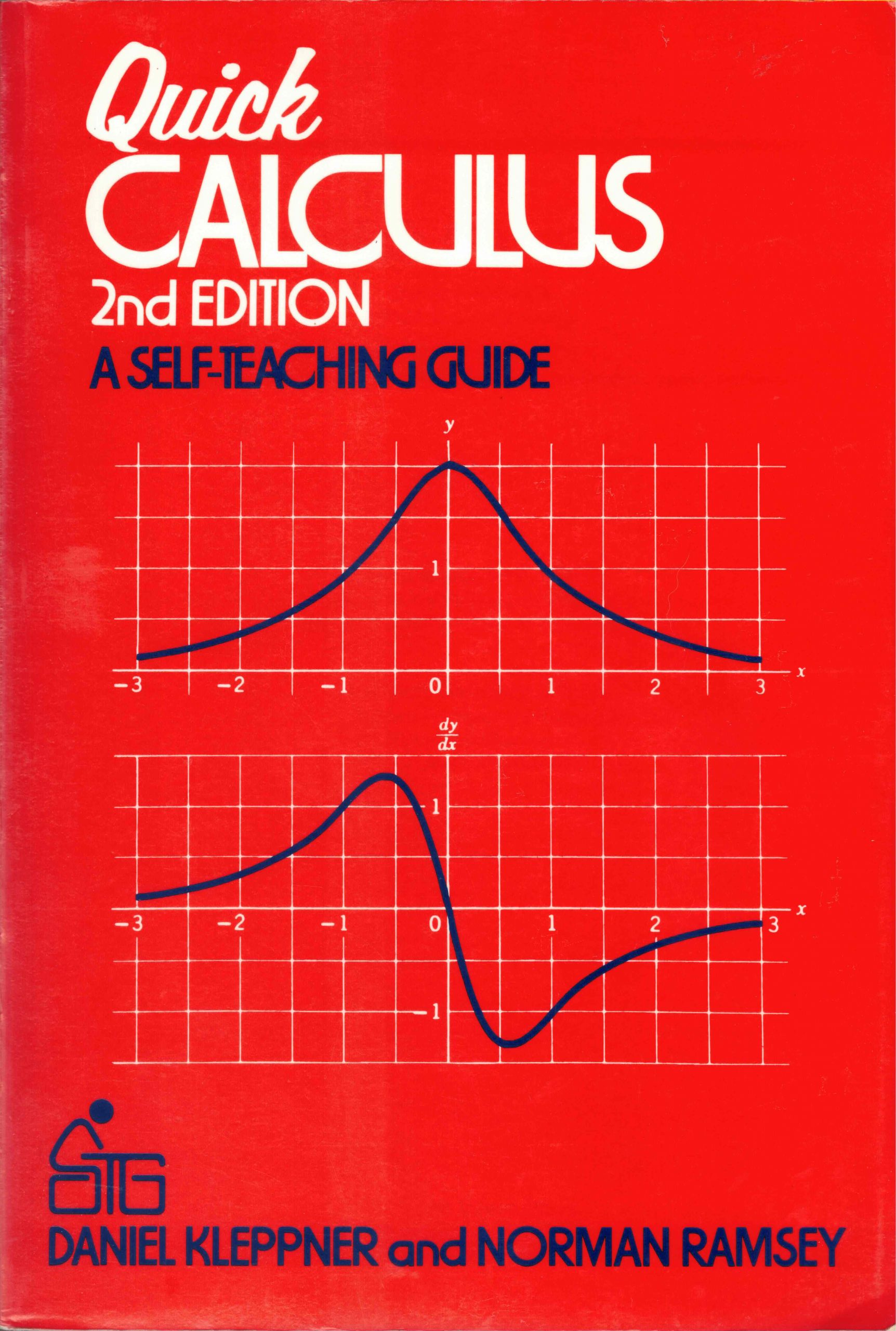
Note to self (and everyone else who reads this page (so … Note to self)): The Calculus really is drop-dead easy. And Quick Calculus: A Self-Teaching Guide by Daniel Kleppner & Norman Ramsey is the easiest, best guide for quickly learning the basics of the most powerful mathematical tool invented after Pythagoras and Euclid started messing about with plane figures. Sure this self-guided book is short on theory and proofs, but if you just want to learn to really use your basic derivatives and integrals—or just remind yourself what those words mean—you cannot find a better, nor quicker, course anywhere. This is the book I learned calculus from my first time around, later supplementing with the also excellent Schaum’s Outline. Of course, you can go on from here to almost infinite levels of complexity, but the mere fact that this subject can be so simply codified shows its potency in a very persuasive way … as opposed to, say, *shudder* Set Theory.

Among the many excellent books in this third decade of the last hundred (Who knew that L. Frank Baum made gender bending central to an Oz book written in 1904? But there you are.), I feel I really have to give a shout-out to Six Problems for Don Isidro Parodi, a half dozen mystery vignettes from the pseudonymous H. Bustos Domecq—a fig leaf author behind which are hiding Jorge Luis Borges and Adolfo Bioy-Casares. The conceit is a fascinating one, an idea I’m surprised has not been copied extensively: the detective Don Isidro Parodi is an inmate imprisoned for a crime he did not commit, who solves mysteries while incarcerated, merely from information given him by visitors to his cell. In fact, Parodi sees beyond the specious ‘facts’ given him by his various interlocutors to easily uncover the ‘real’ tales which usually are unrolling before the very eyes of his visitors, though they often are quite clueless as to the actual happenings until and unless Don Parodi deigns to reveal the truth. The language is difficult, though the translation by Norman Thomas Di Giovanni was excellent (to my untutored and un-Spanish-speaking eyes). I came to these tales after reading an essay by Eco praising them, and am very grateful to the Italian academic for his recommendation.
| # |
Read |
Author |
Title |
Genre |
| 821 |
8/8/22 |
Michael Innes |
Death at the President’s Lodging |
Mystery |
|
8/8/22 |
Cary Bates |
DC Comics Presents No. 11 |
Comics |
| 822 |
8/14/22 |
Daniel Kleppner & Norman Ramsey |
Quick Calculus: A Self-Teaching Guide (2nd Edition) |
Mathematics |
| 823 |
8/14/22 |
Earl Derr Biggers |
Keeper Of The Keys |
Mystery |
| 824 |
8/22/22 |
Jorge Luis Borges & Adolfo Bioy-Casares [as H. Bustos Domecq] |
Six Problems for Don Isidro Parodi |
Fiction |
| 825 |
8/22/22 |
Louis Relin |
A Doctor Discusses Narcotics and Drug Addiction |
Drugs |
| 826 |
8/25/22 |
Åke Edwardson |
The Shadow Woman |
Mystery |
| 827 |
8/27/22 |
Umberto Eco |
The Limits of Interpretation |
Linguistics |
| 828 |
9/1/22 |
Boris Akunin |
Murder on the Leviathan |
Mystery |
| 829 |
9/1/22 |
L. Frank Baum |
The Land Of Oz |
Children’s |
| 830 |
9/9/22 |
E. Kamke |
Theory of Sets |
Mathematics |
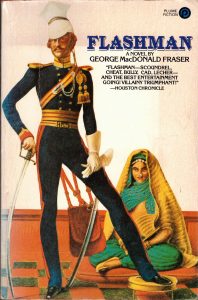
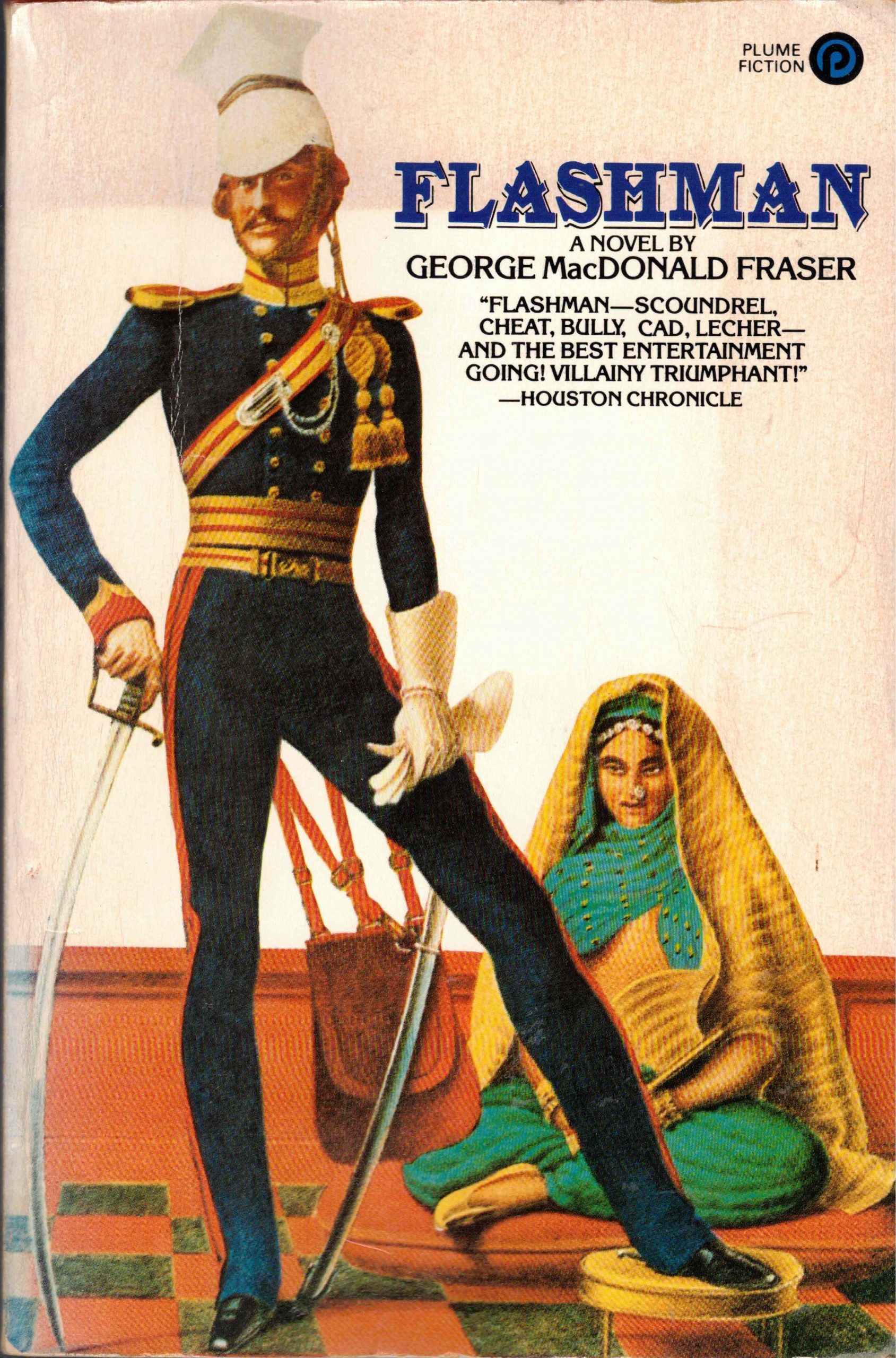
Too often, it seems, one finally gets around to reading a series that rabid fans have been promoting ad nauseum to such an extent that perhaps one is bound to be disappointed, for nothing could possibly live up to the hype of an army of hype-men and -women. I often disdain almost all book recommendations, in fact, because I have odd tastes (if taste it can be called) and also because I just never know …. How happy I was, then, to discover the ribald wonder of George MacDonald’s Flashman, the first volume of the putative “Flashman Papers”. Somehow this historical fiction of an unrepentant coward and rapist manages to be quite engaging and entirely believable. (Which is perhaps merely an anachronistic view of our more ‘modern’ age gazing at the British disaster that was the retreat from Kabul.) My view of military biography and history will never be the same.

Here’s an example of the sort of thing I mean in the last paragraph. I know that many many people love Inspector Morse, both on the telly and in his original incarnation in the Colin Dexter novels. But … well, he’s always left me a bit cold. I get it that he’s ridiculously smart, that he has had abysmal luck in his love affairs, that he desperately wants to not be non-U and all that, but …. I mean, after all, you don’t actually have to have a reason to be a harsh-talking heavy drinker, so I suppose that’ll do as well as any other. But I persevere, especially if I’ve already stocked up on the books, and so I was happy to find that with The Wench Is Dead I finally found a Morse mystery that I enjoyed thoroughly from start to finish. This is the eight in the series. Caveat lector.
| # |
Read |
Author |
Title |
Genre |
| 831 |
9/10/22 |
George MacDonald |
Flashman |
Fiction |
| 832 |
9/13/22 |
Isaac Asimov |
Tales Of The Black Widowers |
Mystery |
| 833 |
9/21/22 |
Chris Abani |
The Secret History Of Las Vegas |
Mystery |
| 834 |
9/22/22 |
Willard Van Orman Quine |
Elementary Logic |
Philosophy |
| 835 |
9/24/22 |
Colin Dexter |
The Wench Is Dead |
Mystery |
| 94* |
9/28/22 |
Tony Hillerman |
Listening Woman |
Mystery |
| 836 |
10/2/22 |
David Dodd, annotator |
The Complete Annotated Grateful Dead Lyrics |
Music |
| 837 |
10/3/22 |
Will Cuppy |
How to Be a Hermit, or a Bachelor Keeps House |
Humor |
| 838 |
10/8/22 |
Manning Coles |
Drink To Yesterday |
Mystery |
| 839 |
10/12/22 |
Philip Kerr |
Berlin Noir: March Violets / The Pale Criminal / A German Requiem |
Mystery |
| 840 |
10/13/22 |
Georg Cantor |
Contributions to the Founding of the Theory of Transfinite Numbers |
Mathematics |
* I re-read this book to refresh my memory and persuade myself that the novel was unencumbered by the many problems which plague the AMC miniseries based upon it, Dark Winds.

For some time now I’ve been telling you how incredibly good Gavin Black (pseudonym for Oswald Wynd) is. I’m not going to stop now. In The Eyes Around Me, his fourth thriller featuring Paul Harris, the anti-communist businessman who seems to attract trouble just as his boat engines attract customers and competition, Black evokes a long-gone Southeast Asia where mysterious motives hide behind every glance and no one is quite what they seem to be. Once again Mr. Harris finds himself accused of a crime he didn’t commit (I’m beginning to sense a theme here), and has to find the actual killer while avoiding the legal consequences of that other evildoer’s actions. It’s a fun, quick read, and proves once again Joan Kahn’s ability to pick great writers and nurture them. Top marks.
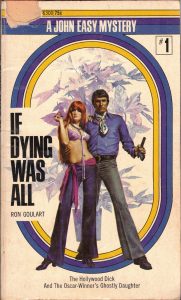
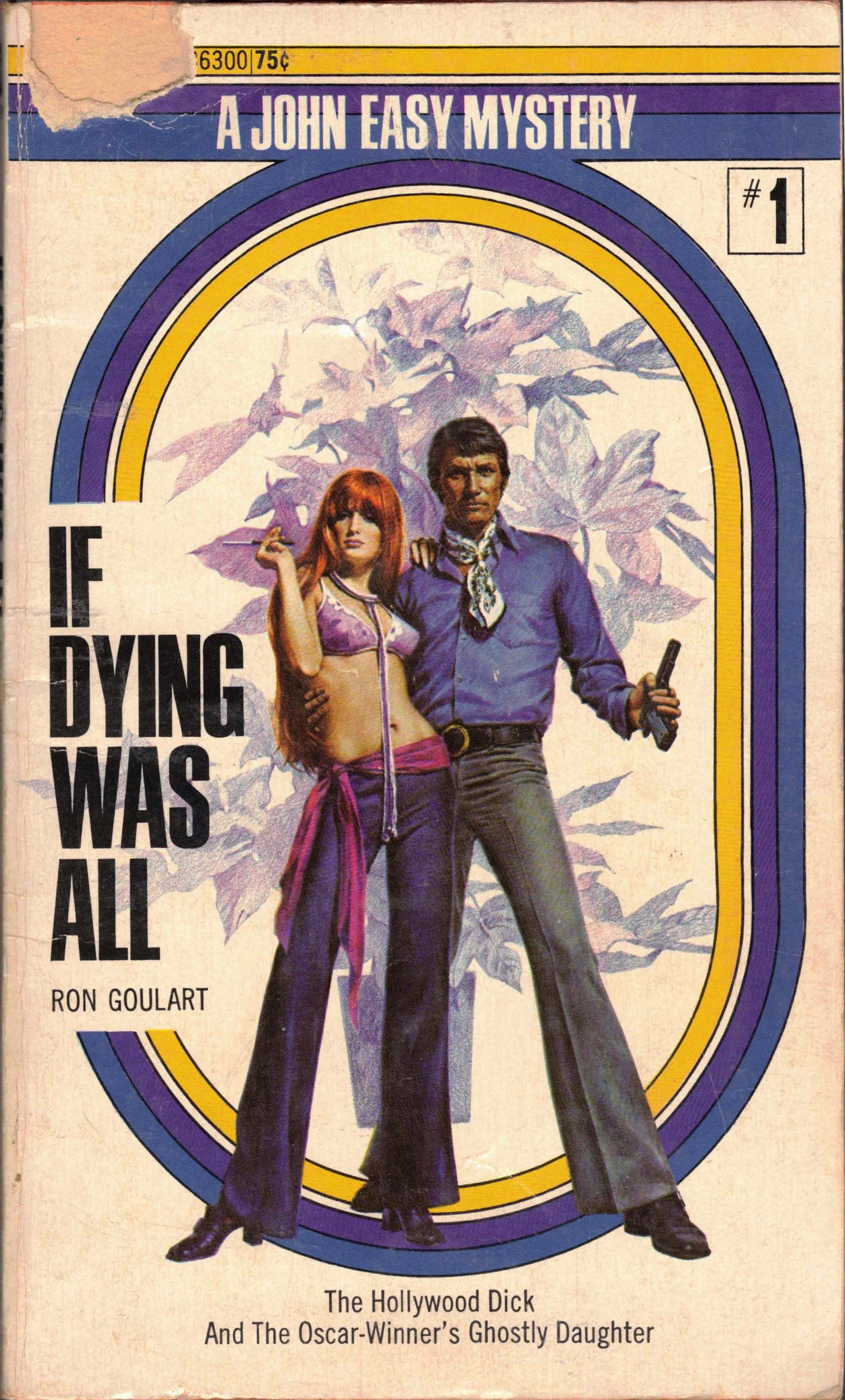
Like me, you probably know Ron Goulart most for his science fiction stories, especially those great (if overly pun-filled) tales in the DAW paperback series. Heck, I think After Things Fell Apart is definitely among the top 10—maybe Top 5—post-apocalyptic California SciFi novels. (Do not confuse with Achebe’s book of almost the same name.) But Goulart also writes mysteries (seems to be what he mostly writes nowadays, when he’s not ghosting for Shatner et al.), and wrote them even back in the wild crazy days of the ’70s. In the case of If Dying Was All, the cover does really tell you most of what you need to know (at least the cover of my version; it’s not all that often that you see a man and a woman modeling the same pants). It’s a perfect little quick read with almost no pretensions save the strange mise en scène of 1972 Los Angeles. Oh, yes, and those puns. Goulart just can’t help himself, I suppose.
| # |
Read |
Author |
Title |
Genre |
| 841 |
10/14/22 |
Gavin Black |
The Eyes Around Me |
Mystery |
| 842 |
10/15/22 |
Ron Goulart |
If Dying Was All |
Mystery |
| 843 |
10/17/22 |
August Derleth |
The Return Of Solar Pons |
Mystery |
| 844 |
10/19/22 |
R. T. Campbell [Ruthven Todd] |
Unholy Dying |
Mystery |
| 845 |
10/23/22 |
Robert Barnard |
A Little Local Murder |
Mystery |
| 846 |
10/23/22 |
Leslie Charteris |
Enter The Saint |
Mystery |
| 847 |
10/24/22 |
Erle Stanley Gardner |
The Case Of The Sulky Girl |
Mystery |
| 848 |
10/27/22 |
Erle Stanley Gardner |
The Case Of The Stuttering Bishop |
Mystery |
| 849 |
10/29/22 |
Josephine Tey |
The Man In The Queue |
Mystery |
| 850 |
10/30/22 |
Jack Vance |
Son Of The Tree / The Houses Of Iszm [Ace Double 77525] |
SF & Fantasy |

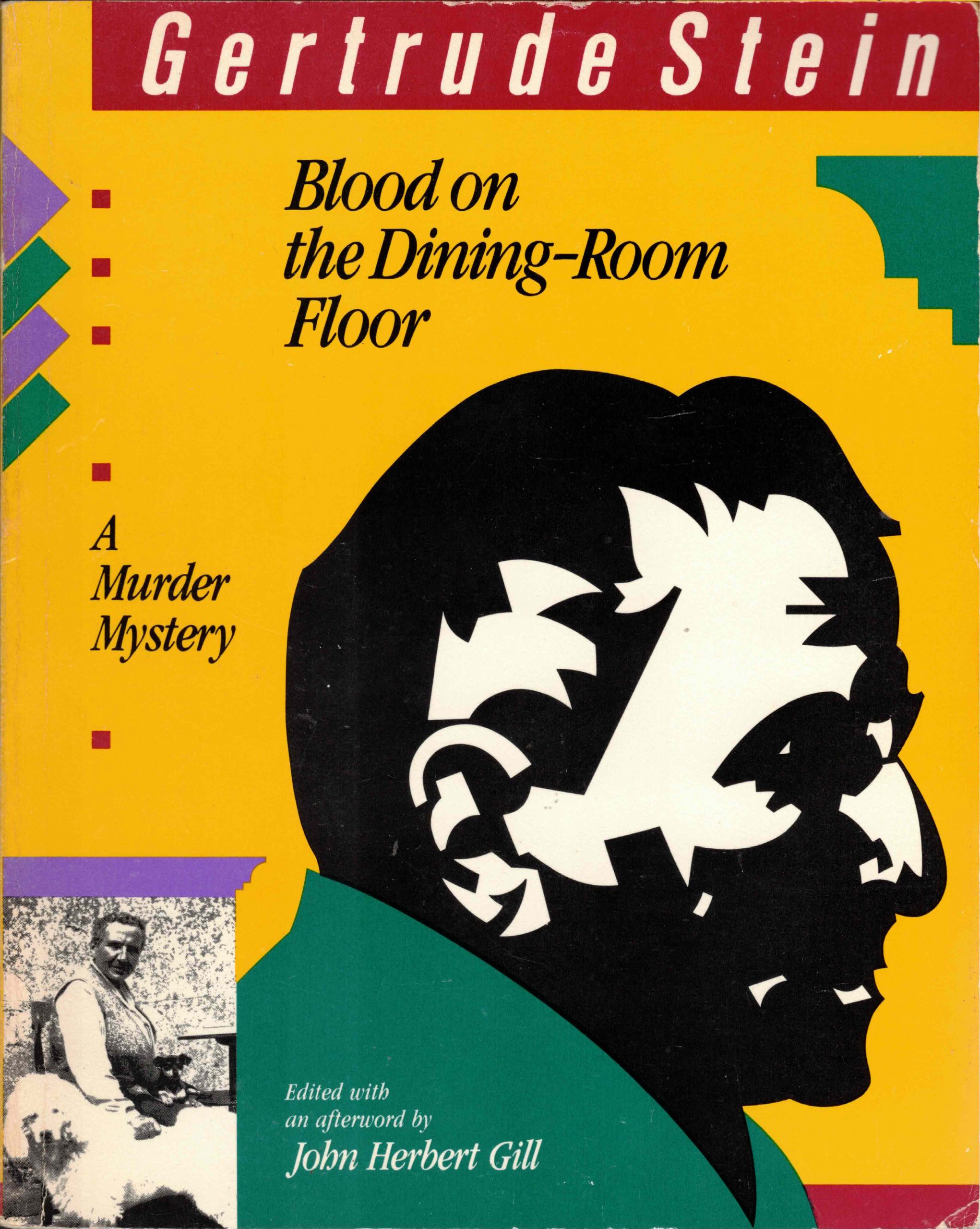
You probably noticed in that last set of ten books that I’ve been heavily reading mysteries (9 out of the last ten), and I didn’t stop in this second half of the hundred books. But one of these still sticks and sticks in my mind, and perhaps the mystery is whether it’s a mystery at all. I’m speaking, of course, of Gertrude Stein’s posthumously published Blood On The Dining Room Floor, which is … something. I originally bought it because I was filling out some of the Black Lizard titles I was missing, and I read it because it claimed to be a mystery, and was short, and …. Do I like Gertrude Stein now? Not exactly. But this little set of words is one of the most intriguing befuddling and deep artifacts I’ve immersed myself in in quite some time. She really is a genius, and like many geniuses, I have a hard time understanding her without a guide to dumb it down for my plebian brain and taste. (The afterword by John Herbert Gill is a big help.) I know that I must read this one again, preferably aloud this next time. And so I invite all y’all (ha!) to read this as well, so that you can join me in rereading it some time in the future.

Possibly one of the most fascinating books in the entire last hundred is Confessions Of A Trivialist, by Samuel Rosenberg. Originally published as The Come As You Are Masquerade Party, which terrible name is explained but not expiated in the book itself, this volume is a beguiling and original set of essays by a strange polymath who takes a subject and runs with it to all sorts of interesting places, just as Greil Marcus took punk and delved deep into Dada in his Lipstick Traces. I can do little better to describe the scope of this book than to quote the blurb on the cover, that it consists of “Investigations of Santa Claus, Frankenstein’s monster, Herman Melville, Lot’s wife, Albert Schweitzer, and the world’s greatest peridromphile”. Rosenberg’s ‘investigation’ of Frankenstein is one of the most original pieces I’ve read on Mary Shelley’s creation, save the original itself. And the “peridromophile” essay is one of the most heartbreaking insights into the world of true genius that I’ve ever stumbled upon. Even the weakest essay, that on Schweitzer, manages to bring a fresh perspective to what was once an overdone subject, and all of the other essays are excellent excellent excellent.
| # |
Read |
Author |
Title |
Genre |
|
10/30/22 |
Bob Haney |
Worlds Finest Comics No. 241 |
Comics |
|
11/3/22 |
Edmund Hamilton, Bill Finger, & Dave Wood |
World’s Finest Comics: Archives Vol. 2 (DC Archives Edition) |
Comics |
| 851 |
11/4/22 |
C. R. Wylie, Jr. |
101 Puzzles in Thought and Logic |
Mathematics |
| 852 |
11/7/22 |
Freeman Wills Crofts |
The Pit-Prop Syndicate |
Mystery |
| 853 |
11/9/22 |
Robert Baden-Powell |
Rovering To Success |
Nature |
| 854 |
11/13/22 |
Erle Stanley Gardner |
The Case Of The Roving Bones |
Mystery |
| 855 |
11/17/22 |
Gertrude Stein |
Blood On The Dining Room Floor |
Mystery |
| 856 |
11/18/22 |
Erle Stanley Gardner |
The Case Of The Dangerous Dowager |
Mystery |
| 857 |
11/20/22 |
Paul Anthony Jones |
The Accidental Dictionary: The Remarkable Twists and Turns of English Words |
Language |
| 858 |
11/25/22 |
Stephen King [as Richard Bachman] |
The Running Man |
SF & Fantasy |
| 859 |
11/26/22 |
Erle Stanley Gardner |
The Case Of The Lame Canary |
Mystery |
| 860 |
12/3/22 |
Samuel Rosenberg |
The Confessions Of A Trivialist |
Essays |

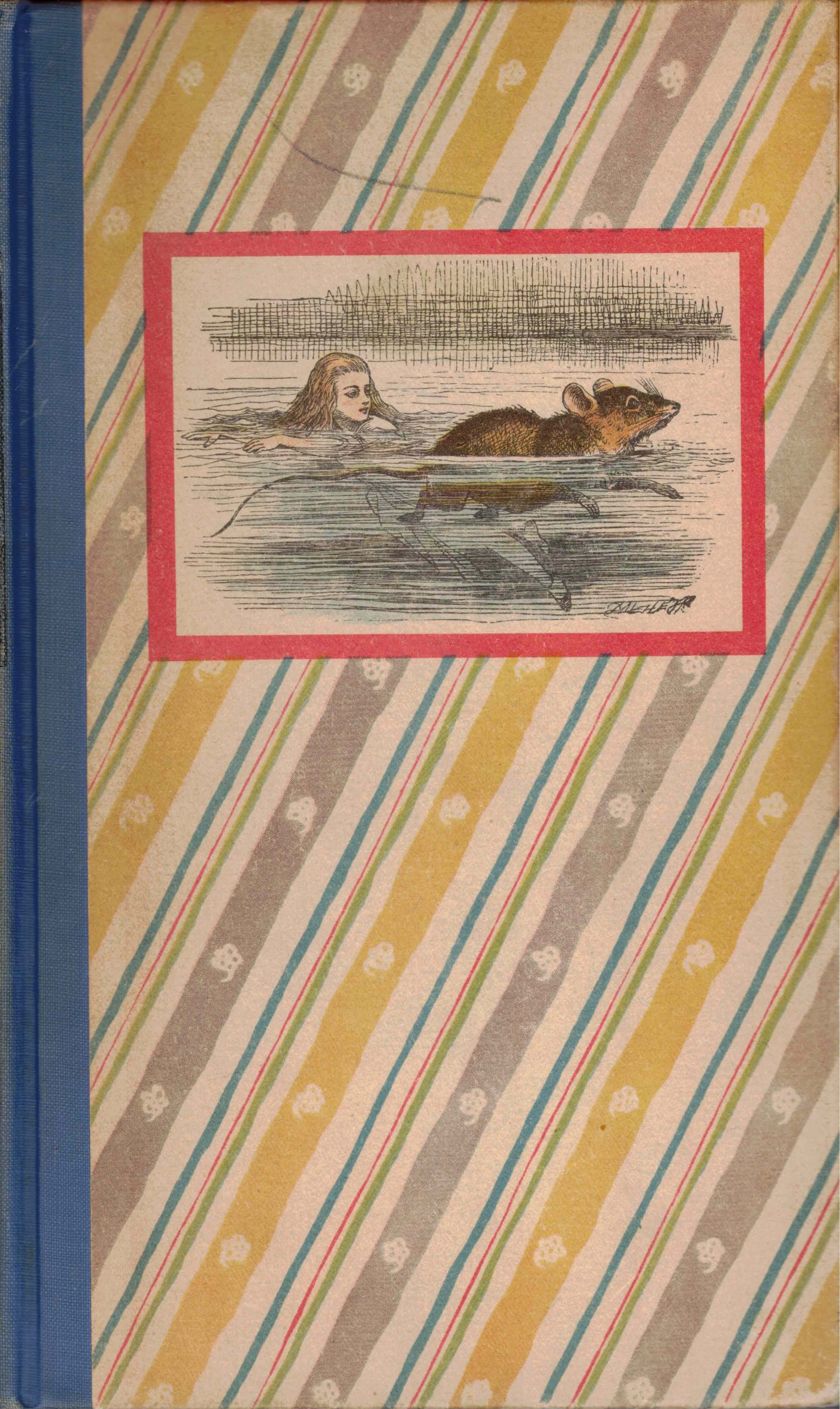
Though I often say (seriously; it’s exactly the sort of thing that I often say) that I re-read the Alice books every hundred books or so, I recently did the math and realized that in fact I’ve been returning to those most delightful pastoral dreams of youth only every 200 books or thereabouts. All the same, I once again found much joy returning to Alice’s Adventures In Wonderland and Through The Looking Glass. I suppose if you don’t ‘get’ these books … well, nothing I can say can ever change that. But for those of us who love this best creation of the sorta weird math professor at Oxford, I can only say that I’m already looking forward to reading these books again!

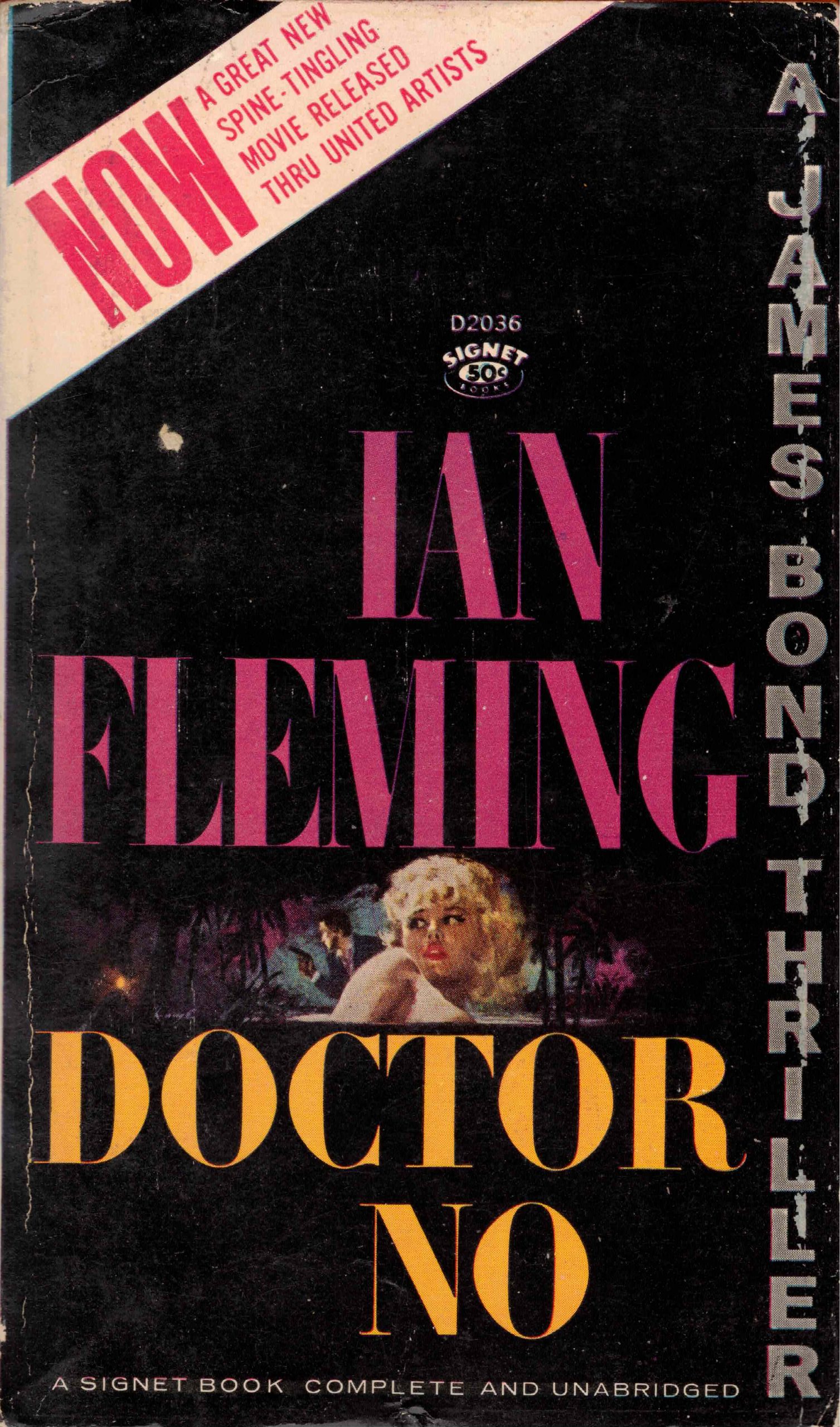
Moving from the sublime to the not quite ridiculous, Doctor No is almost the perfect James Bond book, or as perfect as Fleming’s strange hero is ever likely to be. Although the classic first film in the eternal string of movies replicates much if not quite almost all of the book’s plot and action, I found myself wishing that we had a film of just this version, straight from these pages. The strangely tender chauvinism, the sado-masochist bent, the casual racism (“Chigroes” for Chinese negroes? Seriously?), it’s all here, along with a story devoid of explosions, a pacing that includes two lengthy ocean journeys in a canoe—though one only happens in [spoilers] flashback. Both thumbs up.
| # |
Read |
Author |
Title |
Genre |
| 861 |
12/6/22 |
Chu Hsi |
Learning To Be A Sage |
Philosophy |
| 862 |
12/8/22 |
James McNeill Whistler |
The Gentle Art Of Making Enemies |
Essays |
| 863 |
12/11/22 |
Lawrence Block |
The Girl With The Long Green Heart |
Mystery |
|
12/11/22 |
Bob Kahn, ed. |
Silver Age Classics Detective Comics 225 |
Comics |
| 864 |
12/14/22 |
Brad Warner |
Zen Wrapped in Karma Dipped in Chocolate: A Trip Through Death, Sex, Divorce, and Spiritual Celebrity in Search of the True Dharma |
Religion & Spirituality |
| 865 |
12/14/22 |
Lewis Carroll |
Alice’s Adventures In Wonderland |
Fiction |
| 866 |
12/17/22 |
Lewis Carroll |
Through The Looking Glass and What Alice Found There |
Fiction |
| 867 |
12/18/22 |
Erle Stanley Gardner |
The Case Of The Substitute Face |
Mystery |
| 868 |
12/27/22 |
Ian Fleming |
From Russia With Love |
Mystery |
| 869 |
12/31/22 |
Ian Fleming |
Doctor No |
Mystery |
| 870 |
12/31/22 |
Karen McCosker & Nicholas Albery, eds. |
A Poem A Day |
Poetry |
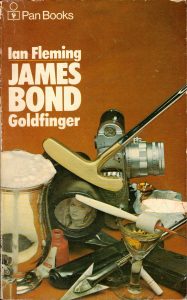
After the sublimity (if that’s what it has) of Doctor No, a book like Goldfinger makes us realize that Ian Fleming had very little idea of what an actual secret agent actually does. The whole plot bounces from happenstance to coincidence and so on to improbable blind luck. Does the trope of having the villain explain the otherwise inexplicable machinations to our hero originate here? (Dr. No does detail his nefarious scheme, but reluctantly and much more plausibly.) In this story, Bond survives merely because Goldfinger has no trustworthy henchmen with rudimentary secretarial skills. And of course the evil plot is ludicrous, as Sean Connery points out in the movie. (Not to mention that the counterplot, involving wholesale acting by a cast of thousands with even the slightest mistake revealing all to our criminals, is even more implausible, if such a thing can be imagined.) However, Bond is Bond, and the moments of conceited foodie snobbery, or nostalgically quaint sexual fantasizing, or his ‘insights’ into the issue of gays and lesbians, not to mention the mostly interesting golf and card games, make it still worth reading, get it over the middle-of-the-road hump to just barely achieve (for this reader) real likability.
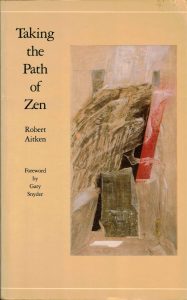
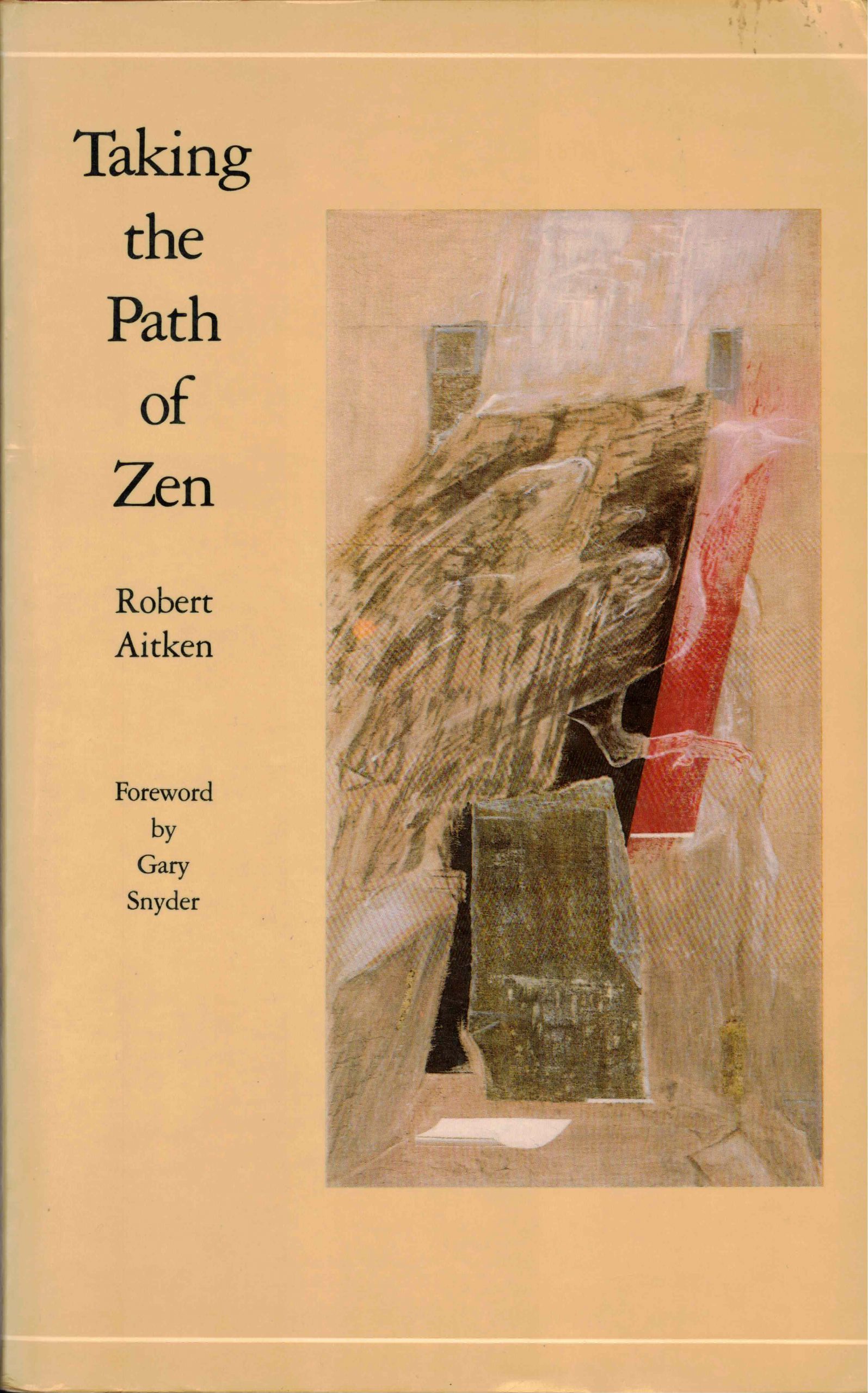
Also during this stretch of reading I finally finished Robert Aitken’s wonderful Taking The Path Of Zen, which to my mind (assuming I have one) is one of the best introductory books on the nuts and bolts of Zen practice, which is to say stupid sitting. I had read the first few chapters many many years ago, when first I attempted to sit stupid for a few minutes each day, only to stop cold once I hit the chapter on sangha. (My current sangha consists of one guy I’ve seen twice, plus the two people on the video call introduction to … ah, sorry to digress.) Aitken’s real mastery is to make simple what is at its core very simple indeed, which sounds so simple as to be tautological, but …. Well, I’ve read quite a few books on Zen, and Buddhism, and some other stuff, and I can say that the lucidity Mr. Aitken brings to the printed page is a very rare commodity indeed.
| # |
Read |
Author |
Title |
Genre |
| 871 |
1/8/23 |
Ian Fleming |
Goldfinger |
Mystery |
| 872 |
1/12/23 |
Robert Aitken |
Taking The Path Of Zen |
Religion & Spirituality |
| 144* |
1/13/23 |
Camden Benares |
Zen Without Zen Masters |
Religion & Spirituality |
| 873 |
1/13/23 |
Chuck Palahniuk |
Fight Club |
Fiction |
| 874 |
1/15/23 |
Chuck Palahniuk |
Invisible Monsters |
Fiction |
| 875 |
1/15/23 |
Jorge Luis Borges |
Ficciones |
Fiction |
|
1/15/23 |
Mike Baron & Steve Rude |
Nexus: Two |
Comics |
|
1/16/23 |
Mike Baron |
Badger #5 [First] |
Comics |
|
1/17/23 |
Hergé |
The Shooting Star |
Comics |
| 876 |
1/17/23 |
Chuck Palahniuk |
Diary |
Fiction |
|
1/18/23 |
Hergé |
The Secret Of The Unicorn |
Comics |
| 877 |
1/19/23 |
Chuck Palahniuk |
Choke |
Fiction |
| 878 |
1/20/23 |
Sharon Wegscheider |
Another Chance: Hope & Health for the Alcoholic Family |
Alcoholism |
| 879 |
1/21/23 |
R. T. Campbell [Ruthven Todd] |
Death For Madame |
Mystery |
| 880 |
1/22/23 |
The Research Department of the White Power Movement |
China, The Jews, and WWIII |
Wacko |
* I re-read this book not realizing I’d already read it as part of my stupid book-tracking project, and am glad I did, because re-reading it allowed me to part with it forevermore.

One of my last year’s projects was to read the Holy Bible from start to finish, mostly so I could say I had done it, but also because the King James Version is not only one of the fundamental sources of our shared literary heritage in English, but also because so much of it is breathtakingly beautiful in its own right. I highly recommend the project for anyone who has even the slightest inclination, though I have to confess that it took me more than a year, reading a few pages each day and then some. As well, I’ll admit that there are long stretches where beauty is in short supply, but I do have a full notebook now of quotes I grabbed along the way. (My favorite Bible quote remains, however, Job 6:6, to wit, “Is there any taste in the white of an egg?” Truly a question for the ages.) What strikes me most about the King James Bible, though, is that it must be the most beautiful work in any language which is the product of a large committee. Something must have been magic in the air of early 17th Century England to permit such wonderful language to flow so easily from the pens of earnest academics.

Why is it that sociologists (with some rare exceptions who go on to become giants (viz. Durkheim, Mauss, etc.)) as a group are some of the worst writers ever? Why is there no sociological study of this? Alas, this sociological study of drunk driving sucks in many of the usual ways, though also in some ways of its own. Take, for example, the neologism Joseph R. Gusfield coins to cover the act his book is about with a veneer of objectivity, seen in the title (or is it the subtitle?), Drinking-Driving And The Symbolic Order. Gusfield then spends hours of our time telling us about the ‘themes’ of the work, and also has pretensions to being ‘literary’. The entire last section claims to be homage to Kenneth Burke (may his name be ever blessed), but instead is a very defensive attempt to define ‘irony’. Oh, the irony. Certainly the idea of … well, whatever is meant by ‘drinking-driving’ … has changed since this book was released in 1984, and a study could certainly be made of how we as a society have made the idea of driving even after just ‘one for the road’ strictly taboo. That study, however, is not this book.
| # |
Read |
Author |
Title |
Genre |
| 881 |
1/22/23 |
Joseph R. Gusfield |
The Culture of Public Problems: Drinking-Driving and the Symbolic Order |
Sociology |
| 882 |
1/25/23 |
Åke Edwardson |
Sun And Shadow |
Mystery |
| 883 |
1/26/23 |
August Derleth |
The Reminiscenses of Solar Pons |
Mystery |
| 884 |
1/26/23 |
|
The Holy Bible in Giant Print – King James Version, Red Letter Edition |
Bibles |
| 885 |
1/27/23 |
Chuck Palahniuk |
Lullaby |
Fiction |
| 886 |
1/29/23 |
Chuck Palahniuk |
Make Something Up: Stories You Can’t Unread |
Fiction |
| 887 |
1/30/23 |
Hodding Carter |
Robert E. Lee and the Road of Honor |
Children’s |
| 888 |
1/31/23 |
Raymond Chandler |
Marlowe [The Little Sister] |
Mystery |
|
2/1/23 |
Andrew Galitzer |
Torah Comics: Comic Strips Summariaing the Weekly Parsha |
Comics |
| 889 |
2/2/23 |
Åke Edwardson |
Never End |
Mystery |
| 890 |
2/3/23 |
Elizabeth Linington |
Greenmask! |
Mystery |

Well, I’ve already recommended a James Bond book in this listing, though For Your Eyes Only, one of Ian Fleming’s collections of short stories, was more literate and literary than most other Bond tales. And I’ve also mentioned the Gavin Black thrillers about Paul Harris, the businessman in southeast Asia who keeps getting into trouble. So I won’t go on about the 898th book in this list, A Wind Of Death, which sees my favorite anti-communist in another excellent adventure. So once again I find myself breaking my rule of calling out only the ‘good’ books I’ve read, and will instead implore you not to read Starship Orpheus #1: Return from the Dead, by the pseudonymous Symon Jade [Michael Eckstrom]. I would love to give you some delicious cutting remarks about its many (I’m sure) failings, but all I find in my notes is the following comment: “Just not very good.”

Terrible in quite a different way is Changed, a self-published (and distributed) tract about how one Jewish man found escape from degradation through his encounter with a good Christian woman. To call it a Christian tract may be bending the language a bit far, because I’m not so sure how doctrinally sound some of his musings are. But then again, the great tragedy in his life is that his wife-to-be was assaulted before they met. The book was mailed anonymously to me, and … well, I can’t pass up reading something like this, and … it exceeded my (extremely low) expectations immeasurably. If you get a copy (you can actually read the whole thing online, though it seems as if somebody with some skills in using English as an actual language has cleaned up and edited some of the most egregious errors in syntax et cetera), you might want to read it alone, else you’ll find yourself importuning your friends with this or that terrible extract, and likely end up just reading almost the whole thing out loud. It belongs in that “So Bad It Almosts Becomes Good” category. I laughed very hard and very often, especially at the end—though likely that’s just me—which end I totally did not see coming.
| # |
Read |
Author |
Title |
Genre |
| 891 |
2/3/23 |
Symon Jade |
Starship Orpheus #1: Return from the Dead |
SF & Fantasy |
| 892 |
2/5/23 |
Dick Francis |
Smokescreen |
Mystery |
| 893 |
2/8/23 |
Dick Francis |
Knockdown |
Mystery |
| 894 |
2/8/23 |
Ian Fleming |
For Your Eyes Only |
Mystery |
| 895 |
2/10/23 |
Chaung Tzu; Burton Watson, trans. |
Chuang Tzu: Basic Writings |
Religion & Spirituality |
| 896 |
2/12/23 |
Tom Cantor |
Changed |
Christian |
| 897 |
2/15/23 |
Michael Crichton |
The Venom Business |
Mystery |
| 898 |
2/17/23 |
Gavin Black |
A Wind Of Death |
Mystery |
| 899 |
2/18/23 |
Robin Williams |
The PC Is Not A Typewriter |
Computers |
|
2/18/23 |
Sergio Cariello, illus. |
The Action Bible: God’s Redemptive Story |
Christian |
| 900 |
2/24/23 |
A. E. Stallings |
Hapax: Poems |
Poetry |


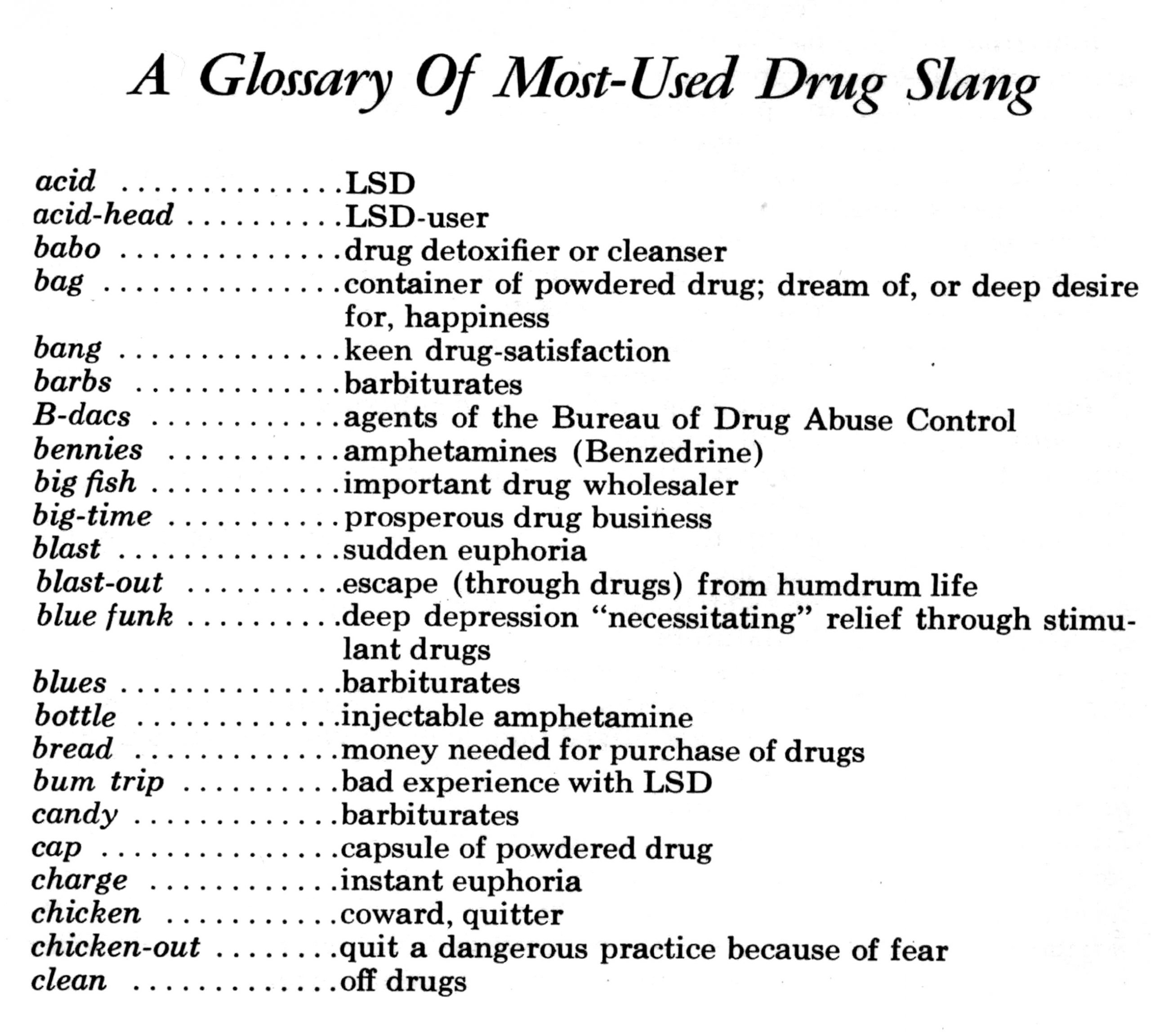
One last book before I go, a favorite, A Doctor Discusses Narcotics And Drug Addiction, a work I’ve carried with me close to my heart since I was first given it by my father in the early ’70s. Reading this over-the-top work as a pre-teen sparked a lifelong interest in the world of dangerous drugs. So to speak. My favorite part of the book is the Glossary at the back of common drug slang. Keep an eye out for the B-dacs until my next listing when I finally finish my next hundred books—which won’t be that long now, as I only have sixteen books left to go!
The lists of previously read books may be found by following the links: