1. truncheon — broken off piece; fragment of spear or lance
I must have the aid of a leech, for this truncheon causes me more pain that all the other blows I have suffered in this tourney.
2. sago — starch made from the pith of the trunks of several palms and cycads, used particularly in preparation of puddings
Your stout-hearted Scotsman prefers the homely pleasures of oatmeal to such modern innovations as sago or tapioca.
3. bunting — open worsted fabric used for making flags; thus, a flag or flags
The privateers never dared sail under their own bunting, preferring both the anonymity and potential surprise from their false flags.
4. tylectomy — removal of tumor or cyst by surgery, esp. from the breast; lumpectomy
Personally I had little hope that the tylectomy would completely solve the problem, though this may have been prejudice based upon my own painful experiences.
5. integument — covering; natural covering of a body, animal, plant; skin, husk, shell
Though once required, the artificial integument of stylish men’s headwear has fallen from favor, with only boring baseball caps seen on the pates of most men.
6. lappet — flap or loose fold of garment
The toga for daily use usually included a lappet which the wearer could use as a rude umbrella when it rained.
7. sward — surface of earth, usu. covered with herbage; grassy turf
Fans of the Teletubbies were disheartened to learn that the original hilly sward of the Warwickshire farm used as a set for the beloved children’s show was flooded and turned into a pond by the owner who was tired of trespassing fans.
8. rutilated — (of minerals) having tiny needle-shaped crystals of titanium dioxide (rutile) embedded within
Prominent upon his desk was a carved obelisk of rutilated quartz, which he had said held especial meaning that he had always promised to tell me one day, but would now never reveal, unless he were to speak to me from beyond the grave.
9. Uniate — member of one of the Christian churches in eastern Europe or the Middle East which acknowledges papal supremacy but retains its own liturgy
The Maronites dispute that they were ever monothelites, though obviously this important Uniate church, still one of the most important in Lebanon, firmly eschews that 7th-century heresy today.
10. volatile salts — smelling salts
A physician of the Victorian Age would be careful to have volatile salts always at hand, for ladies fainted then at the slightest provocation.
1. metonymy — rhetorical figure in which a thing or concept is used to refer to a thing with which it is associated or related
Technically speaking, “BMWs are assholes” is metonymy rather than synecdoche, since the drivers are the assholes, and the cars are separate from the drivers.
2. fust — to grow moldy or stale-smelling
Shall our hard-won rights fust due to disuse in these dark times?
3. nociceptor — pain receptor
Though detection of potentially harmful stimuli by nociceptors creates a signal to the brain, the brain does not necessarily generate a pain response, much as a soccer referee reviews a potential penalty on video before the kick is given.
4. hackamore — halter with a bitless bridle, often used for breaking horses
I hiked alone back to that box canyon, carrying only a lariat and hackamore, confident that this time I’d get that chestnut mare.
5. revanchist — of or follower of political stance to overturn territorial losses of a state
The strange blend of Cold Warriors and revanchist Cuban exiles in New Orleans engendered the murky world from which Lee Harvey Oswald was to emerge so fatally years later.
6. qoph — nineteenth letter of Hebrew alphabet*, also spelled ‘qof’
The word ‘qoph’ only comes up in the context of Scrabble™, where it is a valid word, though the more common spelling ‘qof’ is not.
After skiing it became our habit to stop at the local stube for a lager and the cheese plate, which is where we grew accustomed to find Herr Heinrichs wearing his faded navy turtleneck, propping up his full leg cast on a low stool.
8. knap — to chip; to break off
He had the useless ability, shared by other anthropology majors, to knap Folsom Points if you would provide him with flint, which I suppose might be useful after the next world war.
9. photosensitivity — condition wherein the skin reacts to sunlight exposure, usu. producing a rash
Certain drugs such as tetracyclines can cause photosensitivity in users who are cautioned to avoid direct sunlight where possible and to cover all skin when outside.
10. coxcomb — conceited fool
Certainly, you may object, I should not be bothered and troubled by the inane prattling of such a coxcomb, but I defy you to suffer a fool even half as foppish and stupid.
He finally had a regular schedule and they began going out for dinner every Tuesday night, each of them looking forward to their hebdomadal outing.
2. piebald — having two-color patches, usu. black and white
His chin had a piebald appearance due to his use of hair dye inappropriate for his coarse beard.
3. pergola — open latticework supported by columns upon which climbing plants may be trained, often placed so as to create a walkway
The modern lines of the small house were entirely ruined by the cheap pergola of poor knotty pine that had been slapped together as an afterthought just before the party.
4. calenture — tropical fever with delirium that often affected sailors
Jonathan Swift likens those who lost in the South Sea Bubble to sailors misled by a calenture (though the latter term has been supplanted in modern parlance by heat illness, yet another example of how infinitely superior in reason we are nowadays).
5. souse — to immerse or plunge something in water, etc.; to drench; to pickle in brine, etc.
“What’s that, Lassie, you soused Timmy into a well?”
6. ectogenesis — production or development outside the body
Athena’s birth does not technically qualify as ectogenesis, since springing forth from Zeus’ forehead still uses the god’s body from which the goddess of wisdom enters the world.
7. ell — measure of length equal to 45 inches in England (the Scotch = 37.2 in., the Flemish = 27 in.)
Instead of splintering, the knight’s lance was impaled a full ell through the shield of Sir Blois, carrying it out of his hands.
8. purvey — to provide or to supply (now usu. food); to make provision for something
What shall it boot thee if you fail to purvey for the fate of your eternal soul?
9. bosk — thicket of bushes
The rodent dragged the knapsack into a thorny bosk that thwarted our attempts at entry.
10. port — (Archaic) carriage, bearing
Her frank and healthy port was accompanied by a gentle smile which made me love her from the moment I first saw her.
I decided both that the actual lists of books read is my favorite part of this tracking nonsense, and that I cannot wait until an entire new century of books has been read before updating you, my impatient readers. Thus, I herewith present the most recent twenty-five (25) books read, #301 – #325 if you’re keeping score at home. (As usual, I do not include comics and graphic novel books in my count, though they are listed below.)
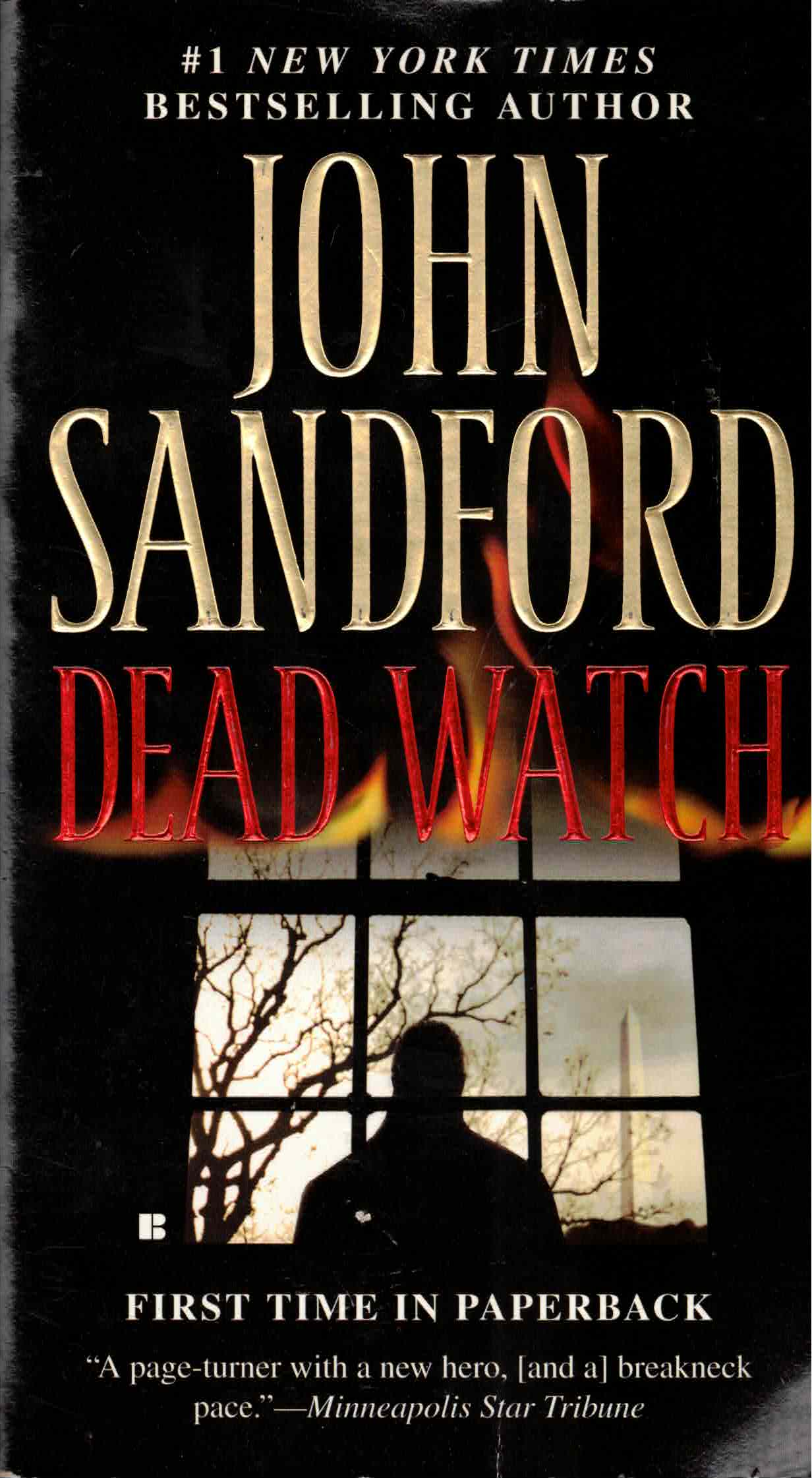
Book read #301 is the almost-forgettable thriller Dead Watch by John Sandford, about which I’ll say no more, save that I only remembered reading it previously when I had already gotten through 2/3rds of this airport novel.
My fourth century of books started out pretty poorly, overall, and included the so-called “scrapbooking mystery” Bound For Murder, about my disdain for which I’ve written here. The delightful Cold War indoctrination manual for future Apollo scientists, aka Tom Swift on The Phantom Satellite, was probably my favorite of the first five books in this list.
#
Read
Author
Title
Genre
301
3/31/19
John Sandford
Dead Watch
Mystery
302
4/8/19
U.S. Army Medical Research Institute of Infectious Diseases
USAMRIID’s Medical Management of Biological Casualties Handbook
The Best of Analog anthology from 1979 was my favorite of the next five books (though the children’s books were really quite swell), with the powerful “A Thing Of Beauty” by Norman Spinrad still a nostalgically morose Jeremiad forty years later. Other standout stories by Vonda McIntyre and George R.R. Martin show Ben Bova’s strong editorial vision. I finished this collection and later that same day sped through Margery Allingham’s The Case Of The Late Pig, which was fun, mostly.
#
Read
Author
Title
Genre
306
4/20/19
Anne H. White
Junket
Children’s
307
4/24/19
Joseph L. Baron, ed.
Stars and Sand: Jewish Notes by Non-Jewish Notables
History
308
4/27/19
Ben Bova, ed.
The Best of Analog
SF/Fantasy
309
4/27/19
Margery Allingham
The Case of the Late Pig
Mystery
310
4/28/19
Lilla M. Waltch
Mystery of the Inca Cave
Children’s
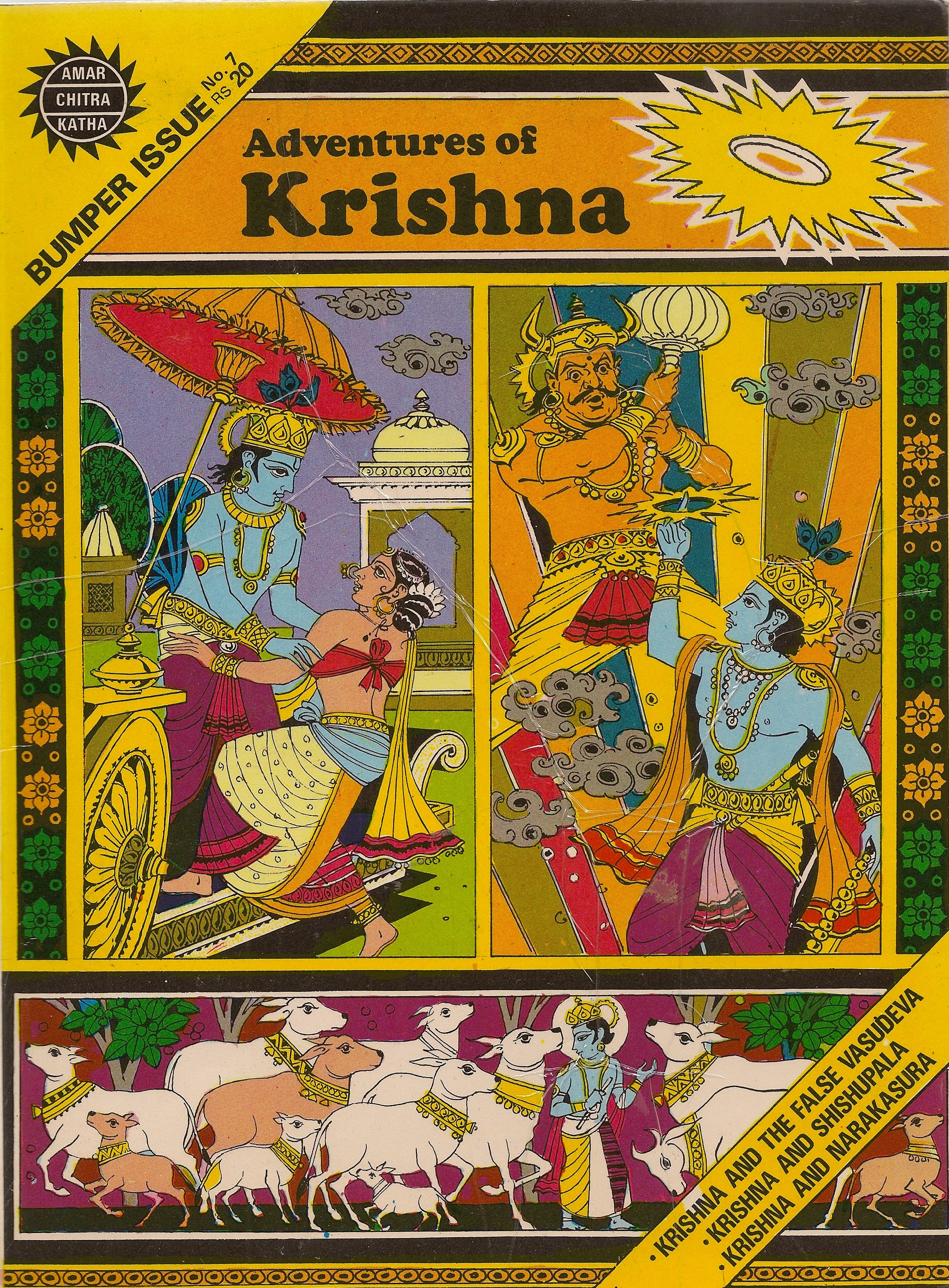
The Amar Chitra Katha bumper issue (a 3-in-1 comic book) Adventures of Krishna was the first comic read in this new century of books, and the best through the first quarter. Also of note was The White Flag Principle which I pulled out of humor but returned to the Militaria section after reading its earnest pages. I had thought that a book about why losing wars makes more sense than winning them had to be a joke, but the polemic tone hides a quite reasonable argument from this Israeli dissident.
#
Read
Author
Title
Genre
311
4/30/19
Page duBois
Torture and Truth
History
312
5/1/19
Jerome Beatty, Jr.
Matthew Looney’s Voyage to the Earth
Children’s
5/3/19
Kamala Chandrakant
Adventures of Krishna: Krishna and the False Vaasudeva / Krishna and Shishupala / Krishna and Narakasurua
Comics & Graphic Novels
313
5/5/19
Shimon Tzabar
The White Flag Principle: How to Lose a War (and Why)
Militaria
314
5/8/19
Jerome Beatty, Jr.
Matthew Looney’s Invasion of the Earth
Children’s
315
5/9/19
Maan Meyers
The Dutchman’s Dilemma
Mystery
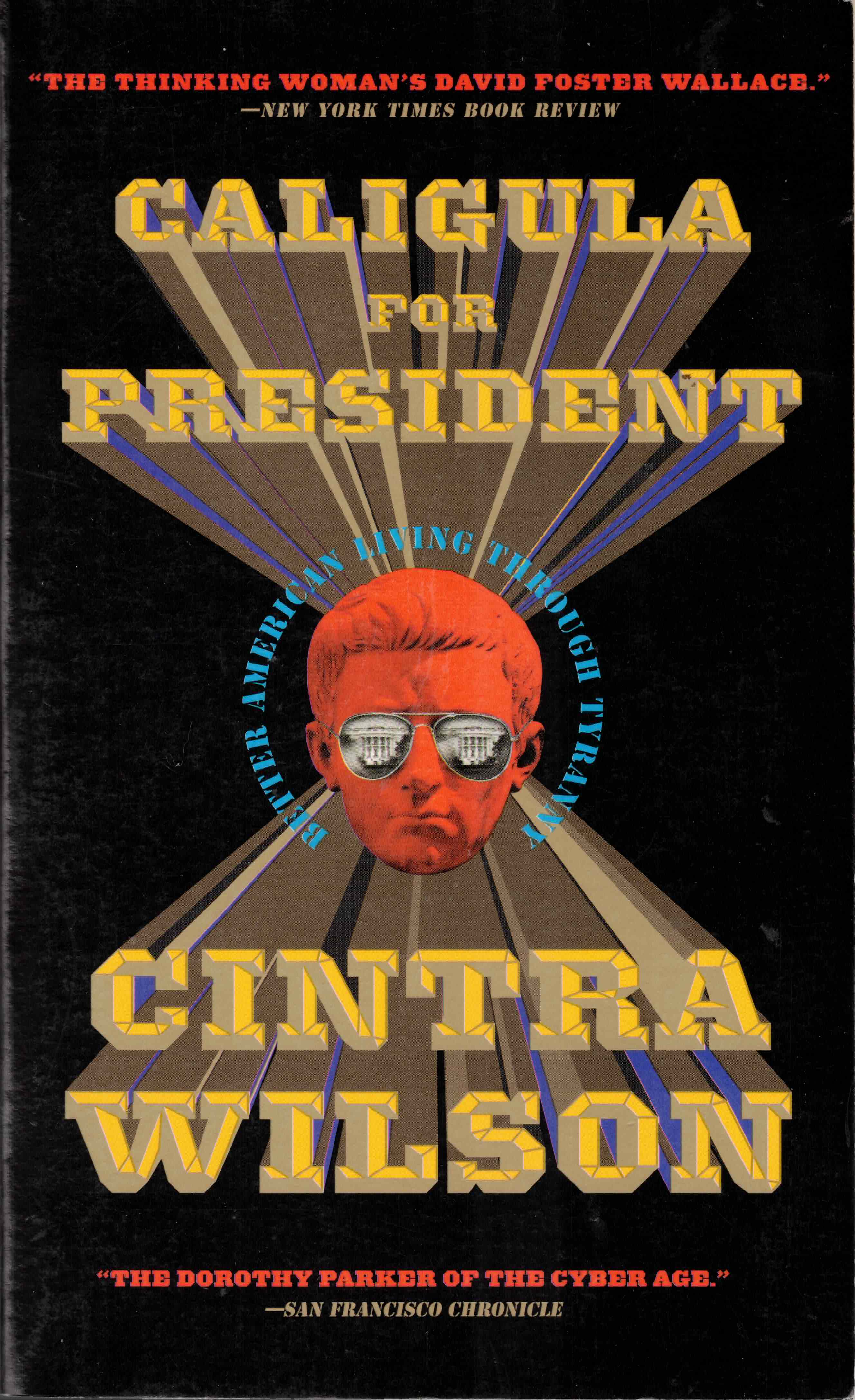
I really cannot say enough about Caligula For President, though I tried to say ‘Bravo! Brava!’ to Cintra Wilson’s tour de force before. You can read my meagre words and insufficient praise, if you like, or you could just get the book and enjoy the savage brilliance yourself. I recommend the latter.
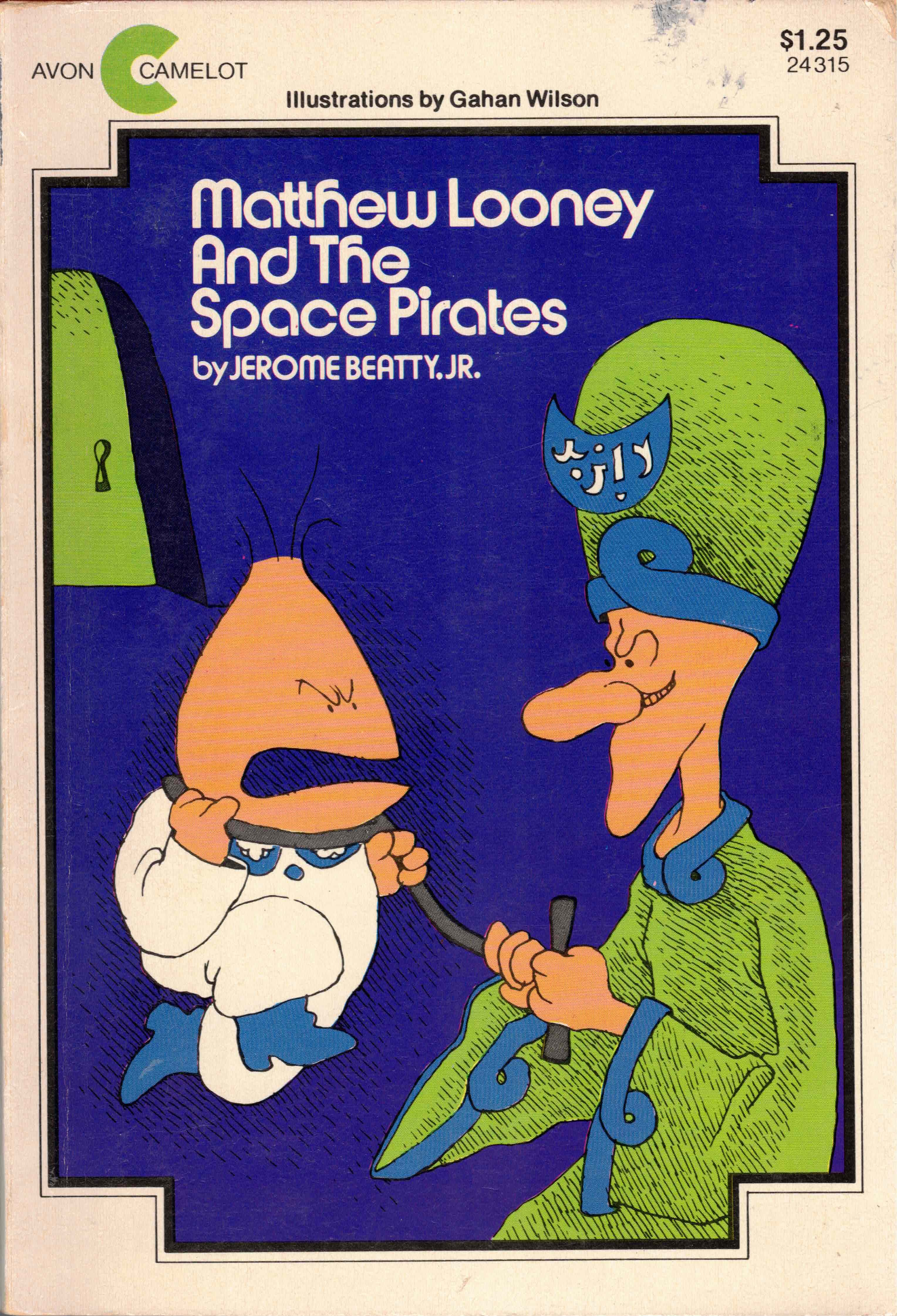
The only real reason to read the Matthew Looney series of kids’ books (except perhaps for the first volume) is for Gahan Wilson’s slightly off-kilter illustrations. ‘Nuff said.
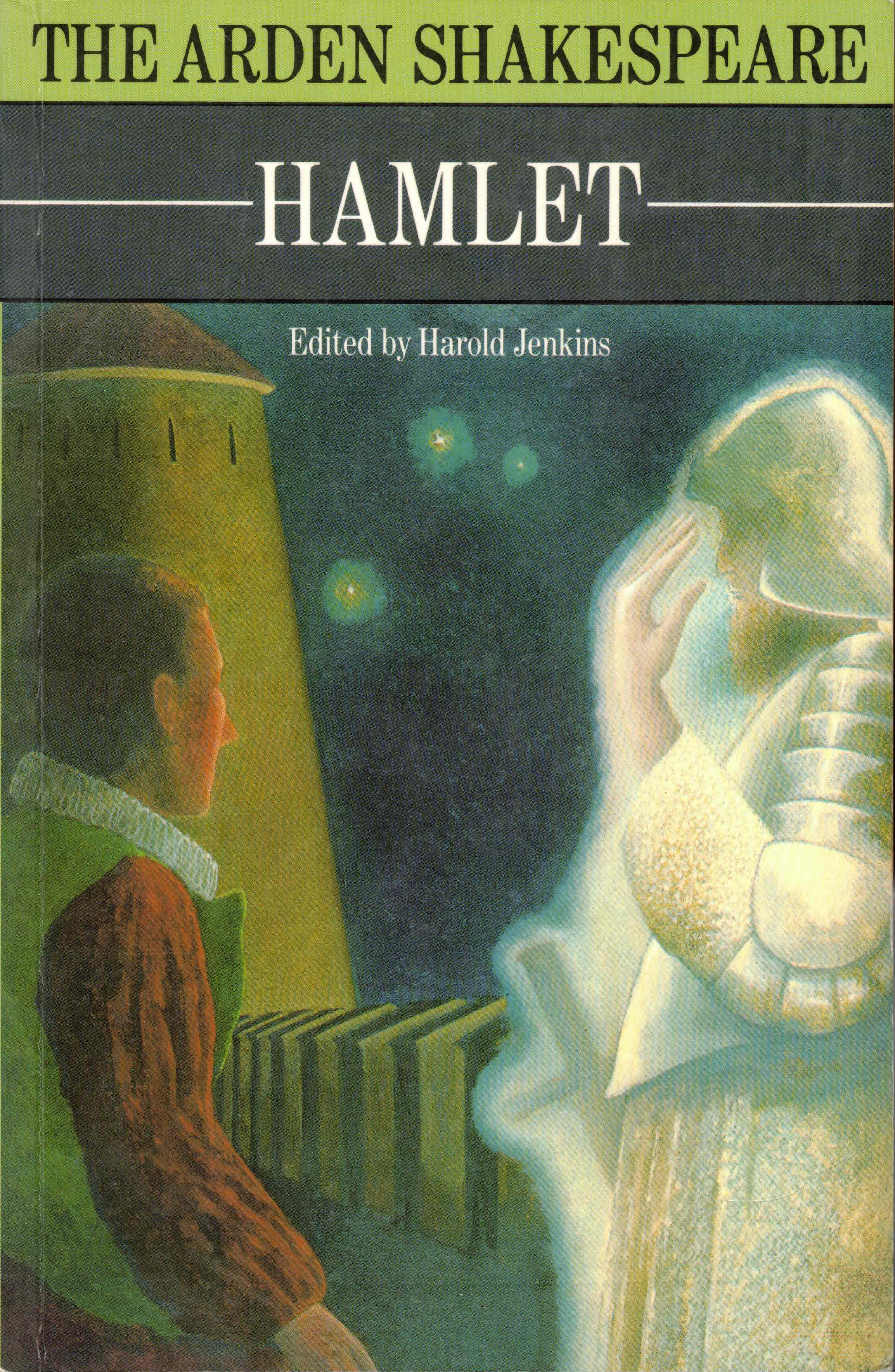
The real winners in the quarter-century of books just completed came at the end, though I hesitate to admit just how long I had been slogging through the Harold Jenkins edition of Hamlet. Of course, though the play is a problem (har-har), it was the critical apparatus that slowed me down so. So much, in fact, that I had to take a turn through John Dover Wilson’s simultaneously insightful and outdated What Happens In Hamlet before reading the last half of Shakespeare’s play. That guy was a freaking genius. (Shakespeare, that is.)
#
Read
Author
Title
Genre
321
5/29/19
John Dover Wilson
What Happens in Hamlet
Shakespeare
322
5/31/19
Eric Grzymkowski
The United States of Strange/em>
Reference
323
6/5/19
John Hollander
Rhyme’s Reason: A Guide to English Verse
Poetry, Drama & Criticism
324
6/15/19
Cecelia Holland
Jerusalem
Fiction
325
6/18/19
William Shakespeare; Harold Jenkins, ed.
Hamlet (Arden Shakespeare)
Shakespeare
You’ll have noted that I’ve been hitting the kids’ books lately, and this is because I have recently regained some access to those. I have a few odds and ends on my on-deck circle, and am also trying to purposefully attack that pile which sits next to my bed, and which is slightly lower today than it was yesterday. Until next time….
The lists of previously read books may be found by following the links:
Lost and friendless in the fog’s smother, how pleasant it was to come upon the hanging ale-bush above a dark wooden door.
2. surcingle — girth for horse or other animal that passes around belly and over pack, blanket, etc. to keep it in place
What I first had taken for a large tentroll I now saw was a human body beneath a blanket held by a surcingle to the donkey’s back.
3. isonomy — equality of persons before the law
No matter if professions of isonomy are mere lip service, the custom must still be followed.
4. prosody — the study of poetic meter and versification
A poulter’s measure is now only of interest to students of prosody as no one uses the meter anymore, and no one even writes poetry.
5. apophasis — rhetorical figure in which speaker brings up the very subject he or she pretends to deny
“I’m not going to mention the rumors that he likes to rub midgets,” she said in a fine apophasis, “because you can’t believe everything you hear, and I suppose what a man likes to rub is his own business.”
6. supernal — of heaven; belonging to higher plane of existence
I thought once that those “Not Of This World” stickers on cars indicated the driver’s supernal inclinations, so you can imagine my disappointment when I discovered they were merely promoting a clothing line.
7. percutaneous — through the skin
Recently a sound engineer suffered an accidental percutaneous dosing while cleaning a LSD-encrusted synthesizer made during the heyday of the psychedelic era.
8. catachresis — improper use of words
At one time, spoonerisms and malapropisms were clever rhetorical figures in their own right, but now catachresis is merely another symptom of our meaningless universe.
9. shrive — to impose penance upon; to hear confession of; to make confession
Fighting alongside a priest means he can shrive me before each battle, which is almost as good as extreme unction.
10. boot — to improve; to profit, to avail
It boots thee well to study the word of God daily.
111,000 unique tracks makes up 715.07 GB of data, with a total duration of 454 days, 12 hours, 49 minutes, and 23 seconds (ignoring multiple plays). Left unplayed in my iTunes collection at the moment of impactful milestone crossing were 80,865 songs, which is 966 less than last report (meaning that a net 34 songs were added since last report). The unplayed tracks comprise 557.67 GB of data (↓ 9.5 GB) with a playing time of 314 days, 13 hours, 54 minutes, and 9 seconds (↓ 12 days).
To reach the 111,000th unique track, I listened to 1,222 songs (from track #110,000), which total 10.95 GB of data, and laid end-to-end comprise 12 days, 17 hours, 59 minutes, and 26 seconds of audio.
It took 58 days to listen to the last thousand songs, meaning 17.2 new songs per day were heard.
17.24 New Tracks Heard per Day
If we include the previously heard songs, we find that I heard 21 tracks per day.
21.1 Tracks Heard per Day
With this report we recommence data tracking from our newly established baseline, as outlined here and here.
As promised, herewith begins the data analysis of my first 110,000 songs heard through iTunes.
Top Level
Saving the caveats for later, we dive in with the statement that I have listened at least once to 110,000 tracks in iTunes. Crossing this milestone occurred just before 5PM on April 17, 2019. Remaining to be heard at that point were 81,831 audio tracks, meaning 57.34% of my listenable* collection has been heard. The heard files occupy 705.21 GB of data, and span 442 days, 10 hours, 37 minutes, and 36 seconds in length. The unheard tracks take up 567.17 GB of disk space, and would take 326 days, 13 hours, 38 minutes, and 42 seconds of uninterrupted time to hear in total. Dividing the total time to hear the 110,000 tracks (a little over a year and two-and-a-half months) by the number of tracks gives us an average track length of 5 minutes and 48 seconds, thought that summary average is a trifle deceptive, as we shall see.
Average Track Length: 5:48
The average file size is 6.57 MB, though these have an even wider variance than the length of the files in question.
The average song rating for those tracks which I have rated is 3-2/3 stars, using iTunes much-deprecated rating system.
Average Track Rating: 3.67
Not all songs have been rated: I do not rate tracks designed to impart instruction in a foreign language (including Old English), and I have only begun consistently rating songs in more recent years (see caveats for issues with this datapoint). Only 142 tracks fall into the Language genre, leaving 32,830 songs I’ve heard without rating them.
Total Songs Rated: 77,028
The vast majority of the eleven myriad† songs here were listened to only one time. 91,172 tracks were heard only once. Of the remaining 18,828 songs, the majority (10,881) were heard twice. The numbers drop off drastically after that as the play count increases, with only 760 songs being heard more than 12 times. (There are some issues with the higher play counts, explained in caveats below.)
With all due caveats about the earliest play dates, it took 5,935 days to listen to these 110K tracks, that is to say, 16 years and 3 months (plus 3 days as change). Thus, I listened to, on average, eighteen-and-a-half songs per day. As will be seen, this listening rate fluctuated drastically over the course of the past sixteen years, though the overall rate is remarkably similar to the rate for the most recent 10,000 songs heard.
18.53 New Songs Heard per Day
Conversely, although only 442 days worth of music were listened to during that 5,935 day period, when we summarize based on the number of plays, we find that I’ve listened to just under 600 days of sound files of one species or another. (The actual figure is 599 days, 2 hours, 39 minutes, and 5 seconds, but who’s counting?) This means that I listened to iTunes (on average) just over two hour and thirty-five minutes each day.
2 hours, 35.33 minutes per day Listening to Stuff
Top Level Genre Information
Though I tried to scrub this data as effectively as possible (see caveats below), I found that my Genre information contained much garbage, and then found as I tried to correct that problem that this was and is an endless task, so I decided to end the task, and present you with the information as I have it now. You may feel free to object all you wish to the stuff presented here, and I look forward to your vicious attacks upon this and any other useless data.
That said, the songs or other audio already heard fall into 89 different genres. Fully one quarter of all tracks are classified as Rock (27,639 files). The next two most populated genres are Radio Show and the bipolar and not quite useful Alternative & Punk categories, each making up approximately 6% of all tracks already heard (6,773 and 6,567 examples, respectively). I am endeavoring to separate ‘Alternative’ from ‘Punk’, and hope to complete that before another ten thousand songs are heard; currently 4,421 files are classed as simply Punk, while another 3,009 are labeled as Alternative. If those were added to the almost pointless ‘Apples & Oranges’ category mentioned before, that would make the combined weight of these tracks equal to over 12.5% of all heard files. Also of note are 3,109 files for which no genre information is attached. Looking at those files for which at least 1,000 examples are found, the breakdown by genre is as follows:
Genre
Count
%
Rock
27,639
25.13%
Radio Show
6,773
6.16%
Alternative & Punk
6,567
5.97%
Pop
5,771
5.25%
Jazz
4,614
4.19%
Punk
4,421
4.02%
Folk
4,314
3.92%
Country
3,985
3.62%
Classical
3,589
3.26%
World
3,191
2.90%
(blank)
3,109
2.83%
Blues
3,066
2.79%
Alternative
3,009
2.74%
Soundtrack
2,341
2.13%
Electronica/Dance
2,315
2.10%
Hip Hop/Rap
1,998
1.82%
R&B
1,864
1.69%
Latin
1,767
1.61%
Easy Listening
1,340
1.22%
Analog CyberPunk
1,193
1.08%
Spoken Word
1,114
1.01%
Metal
1,093
0.99%
Gospel & Religious
1,092
0.99%
And of course there’s a picture for those visually-minded among you:
Top Level Popular Artists
One way of determining the most popular artists is by looking at the number of songs played during the eleven myriad tracks I’ve listened to. Doing so give us the following breakdown:
Most Popular Artists by Number of Songs Played
Artist (#1-#25)
Songs
%
Artist (#26-#50)
Songs
%
Bob Dylan
3,439
3.13%
Theater Five
253
0.23%
{unknown}
1,435
1.30%
Emmylou Harris
251
0.23%
CBS Radio Mystery Theater
1,049
0.95%
Ella Fitzgerald
249
0.23%
The Beatles
1,023
0.93%
Led Zeppelin
247
0.22%
The Grateful Dead
1,021
0.93%
Pink Floyd
242
0.22%
Wanda Jackson
774
0.70%
{sound effects}
239
0.22%
Johann Sebastian Bach
756
0.69%
Eric Clapton
238
0.22%
Lux Radio Theatre
670
0.61%
Green Day
235
0.21%
Jerry Garcia
560
0.51%
Duke Ellington
232
0.21%
Johnny Cash
518
0.47%
Frank Sinatra
231
0.21%
Neil Young
494
0.45%
Leonard Cohen
231
0.21%
The Rolling Stones
481
0.44%
The Bevis Frond
226
0.21%
Wolfgang Amadeus Mozart
335
0.30%
Radiohead
216
0.20%
David Bowie
327
0.30%
Ludwig van Beethoven
215
0.20%
The Byrds
326
0.30%
Pete Seeger
204
0.19%
The Clash
313
0.28%
R.E.M.
200
0.18%
The Ramones
308
0.28%
Talking Heads
200
0.18%
Jimi Hendrix
296
0.27%
Lloyd Cole
199
0.18%
The Green Hornet
281
0.26%
Richard Wagner
197
0.18%
William Conrad
278
0.25%
The Simpsons
186
0.17%
The Who
276
0.25%
Jack Webb
183
0.17%
Suspense
274
0.25%
Electric Light Orchestra
181
0.16%
Bruce Springsteen
263
0.24%
Jethro Tull
181
0.16%
The Beach Boys
254
0.23%
Tom Waits
181
0.16%
Elvis Costello
253
0.23%
Earle Graser
180
0.16%
There are, however, other ways of looking at this data. We can, for example, look at the total number of plays for each artist to garner a different view of my biggest faves, for there are bound to be some I love but for whom I don’t have lots of tracks, or simply for whom there were never that many songs released to begin with, but which I listen to over and over again. When I looked upon this data from this perspective, malhéreusement, I found that the issues surfaced above and noted in the caveats regarding higher play counts washed away any useful information. I next attempted to use ratings as a guide (despite the caveats), but that merely rearranged the data already given in the table above without surfacing any really new insights. I also tried using these same factors with an additional weighting by length of each track, but that merely promoted the radio shows and other artists with longer songs (or at least longer noodling; I’m looking at you, Jerry).
There were a few more revelations to come when we looked at the popular artists over time, which data are presented in the next section.
The View Over Time
The revelations of these 110,000 datapoints of sound attain sharper perspective when viewed over time. Here we learn some surprises and also see how drastically my listening habits have changed over the past 20K tracks. Three main factors appear: consistent average song length until the past few years, increasing file size, and widely varying listening rates until recently. The following chart gives a high-level overview (broken out by successive groups of ten thousand songs heard) of these and other aggregate data.
Summary Data Over Time
Total Songs Played
Data Size
Avg Track Length
Begin/End Dates
Days to reach 10K Songs
Avg Songs per Day
10K
49.28 GB
3:36
1/15/2003, 2:43 AM
803
12.45
3/28/2005, 11:35 PM
20K
49.44 GB
3:43
3/28/2005, 11:38 AM
252
39.68
12/5/2005, 9:32 AM
30K
49.83 GB
3:51
12/5/2005, 9:47 AM
446
22.42
2/24/2007, 1:46 PM
40K
46.84 GB
3:54
2/24/2007, 1:53 PM
1278
7.82
8/25/2010, 7:32 PM
50K
49.61 GB
3:51
8/25/2010, 7:42 PM
962
10.40
4/13/2013, 1:33 PM
60K
56.91 GB
3:46
4/13/2013, 1:33 PM
370
27.03
4/18/2014, 7:20 PM
70K
68.35 GB
3:51
4/19/2014, 7:28 AM
187
53.48
10/23/2014, 3:11 PM
80K
63.52 GB
3:57
10/23/2014, 3:16 PM
334
29.94
9/22/2015, 11:38 AM
90K
66.1 GB
4:19
9/22/2015, 11:40 AM
180
55.56
3/20/2016, 10:42 AM
100K
104.71 GB
11:57
3/20/2016, 10:54 AM
577
17.33
10/18/2017, 2:45 PM
110K
100.61 GB
16:58
10/18/2017, 3:13 PM
546
18.32
4/17/2019, 4:51 PM
Totals
705.21 GB
5:48
1/15/2003, 2:43 AM
5,935 (for 110K)
18.53
4/17/2019, 4:51 PM
The primary change to my listening habits, which is apparent in the chart above, has been the introduction of large swathes of radio shows to my listening budget. These old shows are freely available on Archive.org and many other sites, and you can find them easily by searching on the term “OTR” (for “Old Time Radio” — although all radio narrative content is now ‘Old Time’, since ‘New Time Radio’ is now called “podcasts”). Several factors impelled the addition of this material to my frequent listening, the primary one being the material changes to my conditions of existence on this vale of tears some few years back. Naturally, these tracks have added substantially to the Average Track Length of my songs heard, as most shows are at least a half hour in length, with some exceptional cases lasting over two-and-a-half hours.‡ Although a very small number of radio shows were heard in earlier years, this category of audio file entered heavy rotation at the end of August in 2015, and has been a consistent part of my iTunes diet since that time.
One other change in — not my listening, but — my ripping habits has been to convert songs into higher bitrate mp3 files. I’ve done this because of the larger hard disks available, as well as the supposed benefits which accrue from the bigger files. I have to confess, however, that my hearing is possibly too poor to notice the difference, though even I can hear the ‘tin can’ effect of a few files I’ve grabbed which were ripped at 32 or even 16 (horrors!) kbps. I generally use 320 kbps, and I do continue to rip as mp3, primarily for ease of portability and future-proofing (to the extent that that is possible).
Lastly, I see that though the aggregate numbers show a remarkable consistency (indeed, the overall value for songs per day matches almost preternaturally well with the same datapoint for the past two tranches of 10K songs), my listening shows long lulls as well as frantic listening. The difference between listening to eight songs a day versus over fifty-five a day, particularly over such a long stretch as 10,000 songs, is quite substantial. A quick back-of-the-envelope (have you considered getting your statements online?) calculation reveals that the last figure, for the 81st-90th thousand songs, multiplied by the average song length during that period of four and a third minutes, means I was listening to four hours of iTunes each and every day. Perhaps not that remarkable to some, but it impresses me, though with what I am still unclear.
Listening Rates
Obviously not only the underlying material but also the environmental factors have changed over this 4/5ths of a score of years. That is, at times I had little ability to listen to my own music in the car, or I was just not driving that much, while at other times I did nothing but listen to my tunes. Or, I listened to iTunes at work, or at times the work was so intricate and involved that music would have been only a distraction. These and many other factors lie behind the differing song rates shown in the table above.
Looking more closely at the data by slicing not at the 10k but at each 1,000 songs presents a more nuanced picture. We see a long stretch where my listening dropped to almost single digits per day. Before and after that lengthy period of time (which lasted from approximately April 2006 through January 2013) the listening rate jumps up and down higgledy piggledy. So says the following chart:
Or, we can look at the inverse of this chart, and view how many days were required to reach each set of 1,000 songs:
(click on either chart for more detail)
Popular Artists Over Time
As mentioned in the discussion of popular artists, the popularity of the various artists changed over the over sixteen year span covered by this data. Though so many disparate artists were heard that any attempt to catalogue the ‘top’ artists seems futile, yet I shall assay that futility, and here below present the Top 25 Artists heard during each tranche of 10,000 songs. I use the same methodology as the Popular Artists in the previous section of general overview, with all the caveats, problems, and sighs inherent to same. For comparison’s sake, the data is presented in a scrollable table so that you can view how the top artists changed over time.
Most Popular Artists by Number of Songs Played per each 10K Songs
(scroll to right to view)
10k Songs Played
20k Songs Played
30k Songs Played
40k Songs Played
50k Songs Played
60k Songs Played
70k Songs Played
80k Songs Played
90k Songs Played
100k Songs Played
110k Songs Played
Rank
Artist
#Songs
Rank
Artist
#Songs
Rank
Artist
#Songs
Rank
Artist
#Songs
Rank
Artist
#Songs
Rank
Artist
#Songs
Rank
Artist
#Songs
Rank
Artist
#Songs
Rank
Artist
#Songs
Rank
Artist
#Songs
Rank
Artist
#Songs
1
Johnny Cash
184
1
Johnny Cash
111
1
Bob Dylan
491
1
Bob Dylan
416
1
The Beatles
201
1
Wanda Jackson
519
1
Bob Dylan
564
1
Jerry Garcia
259
1
Bob Dylan
303
1
Bob Dylan
397
1
CBS Radio Mystery Theater
995
2
Johann Sebastian Bach
170
2
{unknown}
96
2
Yes
110
2
{unknown}
337
2
Bob Dylan
162
2
Bob Dylan
336
2
The Grateful Dead
282
2
Bob Dylan
227
2
{unknown}
191
2
Lux Radio Theatre
325
2
Lux Radio Theatre
345
3
Bob Dylan
122
3
Bob Dylan
90
3
The Grateful Dead
77
3
Sound Effects
81
3
Emmylou Harris
138
3
The Beatles
214
3
Wanda Jackson
219
3
The Beatles
190
3
The Grateful Dead
134
3
The Byrds
140
3
Bob Dylan
331
4
The Beatles
92
4
Johann Sebastian Bach
68
4
KKFS
74
4
The Simpsons
61
4
{unknown}
137
4
{unknown}
122
4
{unknown}
104
4
{unknown}
100
4
Johann Sebastian Bach
126
4
Johann Sebastian Bach
139
4
William Conrad
251
5
The Carter Family
92
5
Duke Ellington
64
5
Johnny Cash
71
5
Johann Sebastian Bach
58
5
Billie Holiday
96
5
De La Soul
112
5
Leonard Cohen
99
5
The Grateful Dead
86
5
Roger McGuinn
93
5
Jack Webb
134
5
Suspense
225
6
Jimi Hendrix
85
6
Martin Luther King, Jr.
63
6
{unknown}
69
6
Yo La Tengo
47
6 (tie)
The Grateful Dead
67
6
The Grateful Dead
108
6 (tie)
The Beatles
98
6
The Beach Boys
84
6
Jerry Garcia
74
6
The Grateful Dead
116
6
The Green Hornet
161
7
{unknown}
81
7
Wolfgang Amadeus Mozart
60
7 (tie)
Neil Young
59
7
The White Stripes
45
6 (tie)
The Rolling Stones
67
7
Ella Fitzgerald
92
6 (tie)
The Everly Brothers
98
7
The Bevis Frond
73
7
Elmore James
67
7
Sears Radio Theater
115
7
Theater Five
150
8
X
77
8
P.D.Q. Bach
53
7 (tie)
The Rolling Stones
59
8
Neil Young
44
8
Johann Sebastian Bach
58
8
Neil Young
90
8
Eric Clapton
94
8
Townes Van Zandt
68
8
John Lennon
60
8
{unknown}
109
8
Earle Graser
137
9
Wolfgang Amadeus Mozart
75
9
Hüsker Dü
52
9
The Ramones
56
9
David Bowie
41
9
Iron & Wine
53
9
Lloyd Cole
68
9
Lloyd Cole
90
9
Schmetterlinge
62
9
The Adventures of Superman
59
9
Theater Five
103
9
Electric Light Orchestra
134
10
The Who
69
10
James Brown
51
10
The Simpsons
54
10
Richard Wagner
40
10
Tom Waits
50
10
Jethro Tull
65
10
Pete Seeger
84
10 (tie)
David Bowie
59
10
The Clash
58
10
NBC University Theater
93
10
The Whistler
129
11
Tom Jones
68
11
The Grateful Dead
49
11
Elvis Costello
52
11 (tie)
Johnny Cash
39
11 (tie)
Radiohead
49
11
Green Day
60
11
Frank Zappa
83
10 (tie)
The Ramones
59
11
Radiohead
57
11
Bruce Springsteen
92
11
Cliff Edwards
99
12
Bongwater
66
12
Enrico Caruso
46
12
The Misfits
46
11 (tie)
Wolfgang Amadeus Mozart
39
11 (tie)
Stevie Wonder
49
12
Elvis Costello
52
12
The Clash
76
12
Friedrich Hollaender
47
12
The Beatles
54
12
The Green Hornet
77
12
{unknown}
89
13
Richard Wagner
64
13 (tie)
The Rolling Stones
44
13
The Bevis Frond
45
13 (tie)
Duke Ellington
38
13
Funkadelic
44
13
Johann Sebastian Bach
49
13
Small Faces
74
13 (tie)
Pink Floyd
44
13
The Rolling Stones
53
13
Church of the SubGenius
74
13
Fred Waring’s Pennsylvanians
69
14
Neil Young
63
13 (tie)
The Velvet Underground
44
14
Soft Cell
43
13 (tie)
Franklin Delano Roosevelt
38
14
Hot Tuna
41
14
Joni Mitchell
48
14
Allen Brothers
68
13 (tie)
The Rolling Stones
44
14
Willie Nelson
49
14
Jerry Garcia
73
14
The Weird Circle
68
15
Willie Nelson
57
15
John Coltrane
43
15 (tie)
Pop Will Eat Itself
42
15
KKFS
37
15
Barenaked Ladies
40
15
Lonnie Donegan
40
15
The Rolling Stones
60
15 (tie)
Kurt Weill
42
15
Graham Parker
43
15
Eugene Ormandy
62
15
John Stanley
65
16 (tie)
Howlin’ Wolf
55
16
Me First And The Gimme Gimmes
42
15 (tie)
The Moody Blues
42
16
The Rolling Stones
35
16
Pavement
38
16 (tie)
Jimi Hendrix
38
16
Led Zeppelin
59
15 (tie)
Neil Young
42
16
Ludwig van Beethoven
42
16
Special Ed
61
16
Bret Morrison
64
16 (tie)
Juan Garcia Esquivel
55
17 (tie)
Charlie Parker
41
17 (tie)
Brian Eno
41
17
The Ramones
33
17
Wolfgang Amadeus Mozart
37
16 (tie)
Primus
38
17
Green Day
58
17 (tie)
Bruce Springsteen
37
17 (tie)
Lou Reed
41
17
CBS Radio Mystery Theater
54
17
John Dehner
58
18 (tie)
Captain Beefheart
54
17 (tie)
Sonic Youth
41
17 (tie)
Duke Ellington
41
18
Wilco
32
18
The Police
36
18 (tie)
Nick Cave
34
18
Bee Gees
55
17 (tie)
D.R.I.
37
17 (tie)
Pentagram
41
18
Bob Bailey
52
18
Bill Johnstone
57
18 (tie)
Drivin’ N’ Cryin’
54
17 (tie)
Tom Jones
41
19
Johann Sebastian Bach
41
19 (tie)
Ludwig van Beethoven
29
19 (tie)
Belle & Sebastian
35
18 (tie)
The Rolling Stones
34
19
Big Audio Dynamite
51
19
The Easybeats
35
19 (tie)
R.E.M.
39
19
Suspense
49
19 (tie)
Bob Bailey
53
20
Gustav Mahler
51
20
Frank Sinatra
40
20
Jethro Tull
40
19 (tie)
The Grateful Dead
29
19 (tie)
Count Basie
35
20 (tie)
Judy Collins
33
20 (tie)
Odetta
48
20
The Clash
34
19 (tie)
Vera Ward Hall
39
20 (tie)
Beth Custer
47
19 (tie)
Neil Young
53
21 (tie)
Elvis Presley
49
21 (tie)
The Beatles
39
21 (tie)
Peterson Field Guides
34
21 (tie)
The Who
28
19 (tie)
Frank Sinatra
35
20 (tie)
Wilco
33
20 (tie)
U2
48
21 (tie)
The Circle Jerks
33
21
Leatherface
37
20 (tie)
John Dehner
47
21 (tie)
Jack Webb
49
21 (tie)
P.D.Q. Bach
49
21 (tie)
They Might Be Giants
39
21 (tie)
Wolfgang Amadeus Mozart
34
21 (tie)
Winston Churchill
28
22
R.E.M.
34
22
Original Broadway Cast
32
22 (tie)
Jerry Garcia
47
21 (tie)
Tom T. Hall
33
21
Townes Van Zandt
36
22
Work Of Saws
44
21 (tie)
The Beatles
49
23 (tie)
Comedian Harmonists
48
23 (tie)
Belle & Sebastian
38
23 (tie)
Frank Sinatra
33
23
CBS
27
23 (tie)
Subhumans
33
23 (tie)
Carole King
30
22 (tie)
Pink Floyd
47
23 (tie)
Davie Allan & The Arrows
32
23
Elton and Betty White
35
23
Earle Graser
43
23 (tie)
Betty Hutton
46
23 (tie)
They Might Be Giants
48
23 (tie)
Vera Lynn
38
23 (tie)
John Cale
33
24 (tie)
The Doors
26
23 (tie)
The Beach Boys
33
23 (tie)
Guided By Voices
30
22 (tie)
The Bevis Frond
47
23 (tie)
Depeche Mode
32
24
Neil Young
34
24
Neil Young
42
23 (tie)
Walk Softly, Peter Troy
46
25 (tie)
The Grateful Dead
47
25 (tie)
Count Basie
37
23 (tie)
The Clash
33
24 (tie)
They Might Be Giants
26
25
Gang Of Four
32
23 (tie)
The White Stripes
30
25
Lou Reed
42
23 (tie)
The Kinks
32
25 (tie)
Drive-By Truckers
32
25
Space Patrol
41
25 (tie)
Ludwig van Beethoven
45
25 (tie)
The Rolling Stones
47
25 (tie)
Jimi Hendrix
37
24 (tie)
U2
26
25 (tie)
Gene
32
25 (tie)
Mr District Attorney
45
Unsurprisingly, Bob Dylan features prominently in all eleven (11) slices of these 110,000 songs, never falling any lower than the 3rd position. The last two myriads show the rise of Radio Show in my listening diet. There may also be evidence of increased data capture, as the ‘{unknown}’ artist entry falls below 10th place for the first time in the most recent set of 10,000 songs heard. Looking closely at each tranche reveals my interests over time; for example, the set ending with 40k songs heard includes FDR, Winston Churchill, and CBS among the Top 25, indicating this was when I was listening to old news broadcasts from World War II (‘CBS’ here refers to the progenitor of the World News Today program).There are a few other surprises and oddities in the data — 112 De La Soul tracks!?! — but I’ll leave most of those as an exercise for the reader.
Sample Tracks Over Time
Flying over sixteen years of data means that no meaningful detail can really be seen at the most granular level, so permit me to provide that meaningless detail. Without (much) further ado, I present 0.1% of all the songs heard in this set of 110,000 tracks, randomly chosen by grabbing the 1000th, 2000th, etc.
Each 1000th Song Heard
#
Track
Artist
Album
Genre
Last Heard
1,000
“I’m Stick In A Pagoda (With Tricia Toyota)”
The Dickies
Still Got Live, Even If You Don’t Want It
Rock
4/19/03
2,000
“Think Again”
Minor Threat
Complete Discography
Alternative & Punk
8/13/03
3,000
“City Of New Orleans”
Willie Nelson
Revolutions in Time…the journey 1975-1993
Country
2/2/04
4,000
“Funny How Time Slips Away”
Tom Jones
26 Country Hits
Easy Listening
5/16/04
5,000
“I Can’t Get Started”
Charles Mingus
Mingus Three
Jazz
7/11/04
6,000
Brandenburg Concerto No. 3 in G Major, BWV 1048, I. Allegro
The Swingle Singers
Bach Hits Back & A Cappella Amadeus
Classical
12/8/04
7,000
“7 AM”
Dirty Vegas
Dirty Vegas
Electronica/Dance
1/13/05
8,000
“She’s Too Much”
Johnny Littlejohn
Chess Blues Guitar, Two Decades of Killer Fretwork 1949-1969
Blues
1/31/05
9,000
“Pink Champagne”
Joe Liggins
Specialty Sampler
Blues
3/2/05
10,000
“Luck Be a Lady Tonight”
Frank Sinatra
Vocal
3/28/05
11,000
“Grandma”
Mari Boine
Radiant Warmth
Folk
4/10/05
12,000
“Hold On I’m Comin'”
Voltage
GS I Love You : Japanese Garage Bands Of The 1960s
Rock
4/24/05
13,000
“Blue Lines”
Massive Attack
Blue Lines
Electronica/Dance
5/19/05
14,000
“Maggie May”
A.L. Lloyd
English Drinking Songs
Folk
6/30/05
15,000
“People of the Sun”
Rage Against The Machine
Evil Empire
Metal
7/29/05
16,000
“Tina”
Camper Van Beethoven
2003-02-28 – Santa Cruz, CA, The Catalyst
Alternative
8/17/05
17,000
“Swan”
Andersens
Songs For Nao: Fourteen Bands From Japan
World
9/13/05
18,000
“Scatterbrain (As Dead As Leaves)”
Radiohead
Hail To The Thief
Alternative & Punk
10/2/05
19,000
“Why Theory”
Gang Of Four
100 Flowers Bloom
Alternative & Punk
10/21/05
20,000
“Ecce Gratum”
Carl Orff
Carmina Burana
Classical
12/5/05
21,000
“Making People Normal”
bis
Social Dancing
Rock
1/11/06
22,000
“Death Is A Star”
The Clash
Rat Patrol from Fort Bragg
Rock
1/23/06
23,000
“A Lot Of Living To Do”
Johnny Adams
There Is Always One More Time
Blues
2/2/06
24,000
“To Forgive Is To Suffer”
Death
The Sound of Perseverance
Metal
2/17/06
25,000
“Hell Yeah”
Beck
Bootleg
Rock
2/26/06
26,000
“Last Match”
The Aislers Set
The Last Match
Alternative & Punk
3/8/06
27,000
“Jack Goes to School”
Denis Leary
Merry Fuckin’ Christmas
Comedy
3/20/06
28,000
“Chromatic”
Mouse On Mars
Deutscher Funk
Rock
4/6/06
29,000
“Wild Horses” (Live Stripped Version)
The Rolling Stones
Rarities 1971-2003
Rock
7/14/06
30,000
“Throwaway Style”
The Exploding Hearts
Guitar Romantic
Rock
2/24/07
31,000
“Higher And Higher”
The Moody Blues
To Our Children’s Children’s Children
Rock
5/28/07
32,000
“Pedro Navaja”
Rubén Blades & Willie Colon
20th Anniversary Of The NY Salsa Festival: 1975-1995
Latin
9/20/07
33,000
“Scissors & Glue”
Conceit
Wasted Talent
Hip Hop/Rap
3/3/08
34,000
“If I Could Be Anything”
Casper The Friendly Ghost
Musical Adventure In Make-Believe
Children’s
6/20/08
35,000
“Love You To Death”
400 Blows
Angel’s Trumpets And Devil’s Trombones
Punk
10/2/08
36,000
“The Sound Of Life Today”
Super Furry Animals
Guerrilla
Alternative & Punk
1/13/09
37,000
“Mas Fuerte”
CuCu Diamantes
Mas Fuerte – Canción de la Semana
Pop
4/25/09
38,000
“Do You Have A Strategy”
Unihabitable Mansions
Live on WFMU Sept 2008
Rock
11/20/09
39,000
“What We All Want”
Gang Of Four
Return The Gift
Alternative & Punk
5/17/10
40,000
“Unburden Unbound”
Gang Of Four
100 Flowers Bloom
Alternative & Punk
8/25/10
41,000
“Blitzkrieg Bop”
The Ramones
No Thanks! The ’70s Punk Rebellion
Punk
12/26/10
42,000
“Aaron & Maria”
The American Analog Set
Know by Heart
Indie
6/19/11
43,000
“Shitty City”
Gluecifer
Respect The Rock America
Rock
12/8/11
44,000
“Move Along”
The All-American Rejects
Move Along
Alternative
4/3/12
45,000
“Everything Is Broken” (Alternate Mix)
Bob Dylan
Exclusive
Rock
7/26/12
46,000
“Watch What Happens”
Count Basie
On The Road
Jazz
11/11/12
47,000
“Rain Dance”
Andy Andrews
Timeless Wisdom From The Traveler
Spoken Word
1/22/13
48,000
“The Last Time”
The Rolling Stones
London Singles
Rock
2/21/13
49,000
“Like Sonny”
John Coltrane
Coltrane Jazz
Jazz
3/26/13
50,000
“When I Fall”
Barenaked Ladies
Born On A Pirate Ship
Alternative & Punk
4/13/13
51,000
“Beer:30”
Reverend Horton Heat
The Full-Custom Gospel Sounds of The Reverend Horton Heat
Rock
4/30/13
52,000
“Oh, Lady Be Good”
Ella Fitzgerald
Ella: The Legendary Decca Recordings
Jazz
5/28/13
53,000
“Hanging On Too Long”
The Sinceros
The Sound Of Sunbathing
Pop
7/1/13
54,000
“Strange New Cottage in Berkeley”
Allen Ginsberg
Howl and Other Poems
Spoken Word
9/15/13
55,000
“That Great Day”
T.C.I. Women’s Four
Goodbye, Babylon
Gospel & Religious
1/6/14
56,000
“Burst”
Magazine
Definitive Daze
Punk
2/18/14
57,000
“Just The Motion”
Richard & Linda Thompson
Complete Radio Sessions 1980-1981
Pop
3/5/14
58,000
“Baby” (Stephen Street mix)
Lloyd Cole
Cleaning Out The Ashtrays
Pop
3/23/14
59,000
“Row Jimmy”
The Grateful Dead
Dick’s Picks Volume 7
Rock
4/3/14
60,000
“Lovesick Blues”
Wanda Jackson
Sundsvall (Live In Sweden)
Country
4/18/14
61,000
“I’ll Never Forget To Remember”
Watt Wilfong
Songwriter Demos
Other
5/5/14
62,000
“Konna Kaze ni Sugite iku no Nara”
Asakawa Maki
Darkness IV
World
5/22/14
63,000
“Ship of Fools”
The Grateful Dead
1982-12-31 – Oakland, CA, Oakland Auditorium
Rock
6/5/14
64,000
“Gates Of Urizen”
Bruce Dickinson
The Chemical Wedding
Metal
6/18/14
65,000
“Don’t Ask My Name”
Korean People’s Army
Beautiful Music of North Korea
World
7/2/14
66,000
“Walk Slow”
Little Willie John
Little Willie John: All 15 of His Chart Hits from 1953-1962
Blues
7/17/14
67,000
“Broken Hearted, Ragged & Dirty Too”
Sleepy John Estes
The Early Blues Roots of Bob Dylan
Blues
8/2/14
68,000
“I Like PIe, I Like Cake”
The Four Clefs
Those Dirty Blues, Vol. 3
Blues
9/6/14
69,000
“Drum Solo”
Frank Zappa
The Mystery Box
Rock
10/1/14
70,000
“clouds”
Fat Hed
The Jump Room
Hip Hop/Rap
10/23/14
71,000
“Rip Van Winkle”
The Nutmegs
Herald 574
Vocal
11/11/14
72,000
“Nebul”
Matthias Koeppel
Alles Lalula 2: Songs & Poeme von der Beat-Generation bis heute
Spoken Word
12/10/14
73,000
“First Shall Be Last And The Last Shall Be First”
Peetie Wheatstraw
Decca 7167
Blues
1/27/15
74,000
“Apple Suckling Tree” (Take 2)
Bob Dylan & The Band
The Basement Tapes Complete: The Bootleg Series, Vol. 11
Rock
3/12/15
75,000
attencion 3 finals irdial
The Conet Project
The Conet Project
Other
5/23/15
76,000
“They Love Each Other”
Jerry Garcia Band
1977-08-07 – Berkeley, CA, The Keystone [SBD]
Rock
7/8/15
77,000
“The Six Wives of Henry VIII”
Buena Vista High Symphonic & Show Band
Buena Vista High Symphonic and Show Band (Sierra Vista, AZ)
Rock
7/20/15
78,000
“Give Peace A Chance”
Plastic Ono Band
Live Peace in Toronto 1969
Rock
8/3/15
79,000
“DOOM DADA”
T.O.P
DOOM DADA – Single
Hip Hop/Rap
8/17/15
80,000
“Sit and Wonder”
Prince Buster
200% Dynamite!
Reggae
9/22/15
81,000
“Gimme Danger”
Iggy & The Stooges
Raw Power
Alternative & Punk
10/12/15
82,000
“Freiheitskämpfer”
Floh De Cologne
1974 Mumien
Rock
11/3/15
83,000
“Medley”
Foster Brooks
Foster Brooks “Sings”
Novelty
11/23/15
84,000
“Fucked”
Partly Cloudy
Analog CyberPunk Third Series X
Analog CyberPunk
12/8/15
85,000
“They’ve Got Me In The Bottle”
Brian Brain
Analog CyberPunk Addendum IX
Analog CyberPunk
12/20/15
86,000
“Breath”
Pierre Henry
Le Voyage Tibetan Book Of The Dead
Avant-Garde
1/8/16
87,000
“Submarine Bells”
The Chills
1990-06-09 – Melbourne, Australia, The Club
Rock
1/23/16
88,000
“François Villon”
Boulat Okoudjava
Le Soldat en papier
World
2/6/16
89,000
“Lomir Sich Iberbeten”
Martha Schlamme
The Yiddish Dream
Folk
2/23/16
90,000
“Show Biz Kids”
Steely Dan
Live At The Rainbow May 20, 1974
Rock
3/20/16
91,000
“Eviction”
London PX
Orders EP
Punk
4/23/16
92,000
“Doll”
Moaning Lisa
Wonderful
Rock
6/12/16
93,000
“Color Him Father”
Linda Martell
Plantation Gold
Country
6/28/16
94,000
“The Cheating Line”
Paul Martin
Plantation Gold
Country
7/28/16
95,000
“This Little Girl of Mine”
Ray Charles
Ray Charles
R&B
10/22/16
96,000
01 Xmas 2005 edit
Special Ed
Xmas 2005
Holiday
1/6/17
97,000
“Sadats (Saints of Marrakesh)”
Cheb I Sabbah
La Kahena
World
3/28/17
98,000
“(I’m Going To Sit Right Down and) Write Myself A Letter”
Johnny Mercer
Capitol 141
Pop
6/24/17
99,000
“Sinyaro”
Brikama
Jali Kunda – Griots of West Africa and Beyond
World
9/3/17
100,000
“The Nemesis” (1/10/43)
The Whistler
The Whistler
Radio Show
10/18/17
101,000
“Stay A Little Longer, Santa”
Shemekia Copeland
The Perfect Christmas
Holiday
12/25/17
102,000
“Went to See the Gypsy” (Demo Version)
Bob Dylan
Single
Rock
2/21/18
103,000
“To The Future” (5/27/50)
Ray Bradbury
Dimension X
Radio Show
4/18/18
104,000
“Doo Wacka Doo”
Tony Randall
Vo Vo De Oh Doe
365 Days Project
6/10/18
105,000
“That’s Alright Mama”
Bob Dylan
The Freewheelin’ Bob Dylan Outtakes
Folk
8/7/18
106,000
“Idiot Prayer”
Nick Cave & The Bad Seeds
The Boatman’s Call
Indie
9/26/18
107,000
“Hickory, Dickory, Doom” (2/26/79)
CBS Radio Mystery Theater
CBS Radio Mystery Theater
Radio Show
11/9/18
108,000
“Down where the Swanee River flows”
George Wilton Ballard
Edison Blue Amberol 2969
Pop
1/23/19
109,000
7. Recitative: “Behold, A Virgin Shall Conceive”
George Frederic Handel
Handel: Messiah
Classical
3/6/19
110,000
“Fly Me to the Moon”
B. Howard
Customusic AC “Sampler”
Pop
4/17/19
Concluding Remarks
§ (see footnotes)
Given the fact that the underlying data analysis terms have changed (see my earlier post on this subject), I am presenting this information more as a baseline for future reports rather than as continuing commentary on my listening habits. Of course, the underlying dataset presents all manner of wonders for the enthralled searcher, but I confess that I am looking forward at this point to just shoving this turkey out the door and getting back to listening to iTunes. (I cannot listen to audio while typing anymore, another resentment I have against my teenaged self.) The plethora of data I have is, as I have said before, pointless — doubly so because I am not selling anything based upon it, which seems to be all data may be used for in our New New World.
I wish all of you well, and will report back when I have listened to another 1,000 tracks (I am about halfway there since I began compiling this information on April 17th [UPDATE:Now less than 50 tracks away as I finally hit the ‘Publish’ button]). I am primarily going to use the information I have to clean up some of the cruddier parts of my data, which is harmless enough I suppose, though pointless. For now I look forward to closing out the stupidly large files I’ve been messing with to gather this information for your perusal.
Good Day
Technical Notes
All data generated using Excel for Mac 2011, based on iTunes library and playlist export text files. For certain calculations I used the i41CX+ app for the iPhone as well as a Pickett N803-ES Log Log Speed Rule Dual Base slide rule. All audio files managed through iTunes, now on version 12.8.2.3, with additional file manipulation with Audacity as well as brute force tweaking of filetypes to generate ring tones, etc. The iTunes Library is maintained on an external hard drive, with two other hard drives for backup using rsync. Most (though not all) files are also kept separately in physical formats that will likely become obsolete along with so much else.
Caveats
Song Ratings
Some problems exist in the data available to me, as some glitch between my iPhone (used to listen to most tracks) and iTunes causes intermittent ratings to be applied to whole albums, which I never do. Those ratings get translated as individual song ratings for songs which have no explicit rating, and it is not possible to distinguish between the two (explicit vs. induced) in the data export file I used for this analysis. It is an annoying problem, and one could add it to the heap of complaints that people seem to have about iTunes as a piece of software. I say, in contrast, however, that I know of no other program that could give me data about what I had listened to for the past 15 years, unless I wrote it myself, which I am not capable of doing. Of course, it may be objected that who would want to do so? I can only submit myself as the proof of the rule you would seek to impose.
I should also point out that I do not use 1-star ratings for anything save as a placeholder for possibly corrupt files. This is because I use the actual description associated with the star ratings in iTunes, and 1 star supposedly means in this system that “I hate it” — and I have not hated any track I have listened to. I have come close (looking at you, U-God), but thus far I have found that “I don’t like it” expresses my feelings well enough. Thus the ratings curve is skewed, but isn’t that true of all modern grade curves?
Play Counts
The highest play counts are somewhat suspect, as these are almost all songs which were tracked during a period in which my iTunes was being shared for my daughter’s iPod usage as well as my own. Thus certain Green Day and My Chemical Romance tracks (which I love) have plays which I cannot swear are all mine. And the most played track is Florence + the Machine’s “Howl”, which I can aver has not been heard by me 157 times, though that is what the data says. Perhaps the only track having more than 70 plays for which I can claim all those plays is the iTunes special version of John Cage’s 4’33” (I do not quote the song title for clarity), which I have heard 75 times — whatever that statement means.
Early Dates
The ability to track information about large datasets always comes with a cost. In general this cost is to be seen in the sheer difficulty of maintaining internally consistent datapoints across the entire set, a difficulty which can only grow as the number of entities tracked becomes greater. While the overall makeup, trends, and detail of the aggregate information will only become more precise as the number of points becomes larger, there will always be database inconsistencies which threaten to hobble complete understanding of the full dataset. This is due to three primary factors: mistaken, incomplete, or corrupt information in the original data capture; inconsistent data entry, especially with multiple sources; and changes to noted data points, schema, or methodology over time. There will always be certain outliers in any sufficiently large set of data that have missing, incorrect, or otherwise inconsistent information stored for particular datapoints. These outliers will surface to plague analysis once a ‘deep dive’ into the data is begun, and how these are handled determines much of what is possible in a complete analysis. Bottom line: You can never know everything in your data universe, unless the number of points in your data is so small as to be worthless for statistical purposes.
With that ridiculously overstated preface, I note that the set of 110,000 songs heard has a small number of songs which are missing one vital statistic: Date Played. The set was generated by looking for a value for ‘Number of Plays’ greater than one, and for 127 tracks the database contains no data for the ‘Date Last Played’ datapoint. Since this last bit of information is used to generate the view of when I listened to these files over time, we have a small (just over 0.115%) set of files for which I can’t tell you when I heard them, although iTunes assures me that I did. A very small number of these files simply do not exist anymore, lost in the great 20GB hard drive crash back in the earliest days of my iPod usage. (I’ll always miss you, variants of Blondie’s “Rapture” from that long lost EP.) It appears from a cursory examination of the two other datetime datapoints (‘Last Modified’ and ‘Date Added’) that none of these files was messed with or was created before the earliest date seen for plays: January 13, 2003. Thus I use this date for the earliest information given in the time sequence analysis. However, petulant perfectionists should note that there may be something wrong with the earliest dates given for song plays, as most of the 127 items missing this factoid seem to be from the beginnings of time — at least as concerns my iTunes tracking.
Also note that I don’t have any information about song usage — or even existence — before the cataclysmic hard drive failure mentioned above, where I lost the entirety (at that time) of my iTunes collection when my 20GB external hard disk failed utterly. Since that tragedy I have, of course, instituted a rigorous backup program, and since that time, also of course, no such failure has recurred.
I also note that the inconsistency between the datapoints ‘Number of Plays’ and ‘Date Last Played’ means that a different view of my data could give a different value for the total number of files heard, as should be obvious. What is not as obvious is that this particular inconsistency seems to to preponderate over the opposite; that is, the number of entries in the database which have a ‘Date Last Played’ value but no value for the ‘Number of Plays’ field is minuscule, with only eight (8) instances found. It seems likely that the original issue is or was caused by problematic data capture between iPods and iTunes through the various OSes and app versions used. Emerson!
Data Scrubbing
Besides the issues with date datapoints mentioned above, many other inconsistencies and outright errors exist in the full dataset. One of the main issues noted immediately at the beginning of my analysis was genre information, which was often either missing or so specific as to be useless. (It is not clear, for example, how useful such putative ‘genres’ as “Dylanesque”, “Meditative”, or “The Camera As Pen” actually are.) Though I have attempted to modify this and other entries in the underlying data, it soon became clear that to wait until all 110,000 song files had been completely reviewed and updated with so-called ‘correct’ information would both be pointless (see note about inherent inconsistency above) and take such a long time as to obviate any information I might care to impart about this ‘milestone’, as I could keep massaging the data long past the point where I have heard 120, 130, or even 150,000 tracks. I have decided to call a halt to the massive effort to impose some order upon all my iTunes files, though I have greatly modified the genre information, and hope to continue to do so in the future.
Thus whereas I originally had over 98 entries which were assigned a Genre for which they were the single example, I now only have 89 Genres all told in the set of music already played. I still have three categories containing only a single exemplar, but feel those Genres are reflective of my own musical taste and hope to add other songs to them as I continue my ad hoc data scrubbing. Thus I cannot promise that the underlying data will not be changed in the backend before the next full-scale analysis; I can only promise that I will attempt to play fair with you and let you know just how I’ve munged the information I have.
Footnotes
* The term “listenable” refers only to the type of file, and does not imply that the sounds contained therein are worthy of being heard.
† Taking “myriad” to mean “ten thousand”, as its original Greek root word does in most cases.
‡ The longest radio show tracks are actually composites of separate daily shows concatenated into single files for ease of listening. Thus, for example, the heyday of the great radio show Yours Truly, Johnny Dollar consisted of daily 15-minute shows which (generally) told a single story over the course of a single week. I took the individual shows and generated a single mp3 file of the complete story arc. (This led to certain needed tweaks to such parameters as Track Number etc., which you almost certainly don’t care about, assuming you’ve even read this far to find these words in this throw-away section of this meaningless report.)
§ If you see an connection between this self-indulgent data analysis and the known association of this Cyndi Lauper tune with masturbation, you are much more clever than I.
1. resomation — disposal of dead bodies through alkaline hydrolysis, using lye and heat
Resomation is being touted as an ecologically friendly alternative to cremation, but in the United States the process is legal only in sixteen states.
2. shambles — slaughterhouse; scene of carnage
“It smells like a shambles,” said Joseph as we descended further into the fetid tunnel through the thickly rooted earth.
3. stridor — (pathology) harsh respiratory noise indicative of obstruction in breathing passages
My worse fears were realized when I heard the distinctive creaking stridor as Larry tried to talk, and I knew he had not swallowed the bug after all.
4. hough — hollow behind the knee joint (in man), joint in rear leg above fetlock (in horses, cows, etc.)
Don’t get in a huff
though you may receive a shock
when you feel blows rough
hitting on your hough.
5. sedevacantist — believer in idea that the Holy See has been vacant since death of Pope Pius XII, due to mainstream Catholic embrace of modernist ideas, epitomized by the Second Vatican Council
You can’t please everybody, and even the sedevacantists cannot agree on a replacement pope.
6. stolid — dull and impassive, unexcitable
Everyone thought him a boring and stolid fellow, though his few close friends knew this was only true as long as one avoided the subject of endangered weasels.
7. dysphagia — difficulty of swallowing
The time traveler from the 1950s suffered from political dysphagia and so was unable to endure any news programs on television.
8. vatic — prophetical
Many still give credence to the vatic quatrains of Nostradamus.
9. costard — large apple
Modern tastes tend towards apples smaller than the old English costard, which was so large it became slang for the head.
10. whither — to where? to what place?; to what end?
Teleology is the study of whither we go, though we moderns tend to ask ‘whether’ instead.
Once I lowered my expectations from Senior Vice President to dogsbody I finally found a job opportunity.
2. pyogenic — pus-producing
As if an antibiotic-resistant staph infection was not enough of a worry, now we learned that Larry was also in the throes of pyogenic meningitis.
3. bumbailiff — low-rank bailiff
He held the job of bumbailiff as a sinecure and was quite surprised Harry expected him to serve the writ.
4. elenchus — Socratic method of argument by cross-examination; refutation of syllogism by another syllogism
Epicurus famously turned the Eleatic elenchus on its head, arguing from the proofs of ever-present motion that a void was a necessary complement, thus positing null space as a requirement for his atoms to move through.
5. ween — to think, believe, conjecture
The wounds are much too large for even a large wolf, as I ween, but seem to indicate some monstrous beast is at work.
6. hale — to draw, pull
If he will not do the honorable thing I shall demand the sheriff hale him to the Justice of the Peace to make an honest woman of my daughter.
7. blear — dim from tears or inflammation
She seemed unshaken by the terrible news, as if one more travesty no longer had power to hurt her, and so she sat with her shoulders hunched and eyes blear from either hunger or past tears.
8. nosocomial — acquired because of hospitalization
Disgustingly, the most common nosocomial infection in the United States is that of the urinary tract.
9. sublunary — worldly, earthly, terrestrial
No longer will I bother with sublunary things, for I am now concerned only with heaven and the music of the spheres.
10. obstupefy — to stupefy, esp. mentally
It was not the fact that the poodle talked in plain English that left me obstupefied, but my realization that the small dog was wearing a tiny NASCAR jacket featuring a Taco Bell logo.
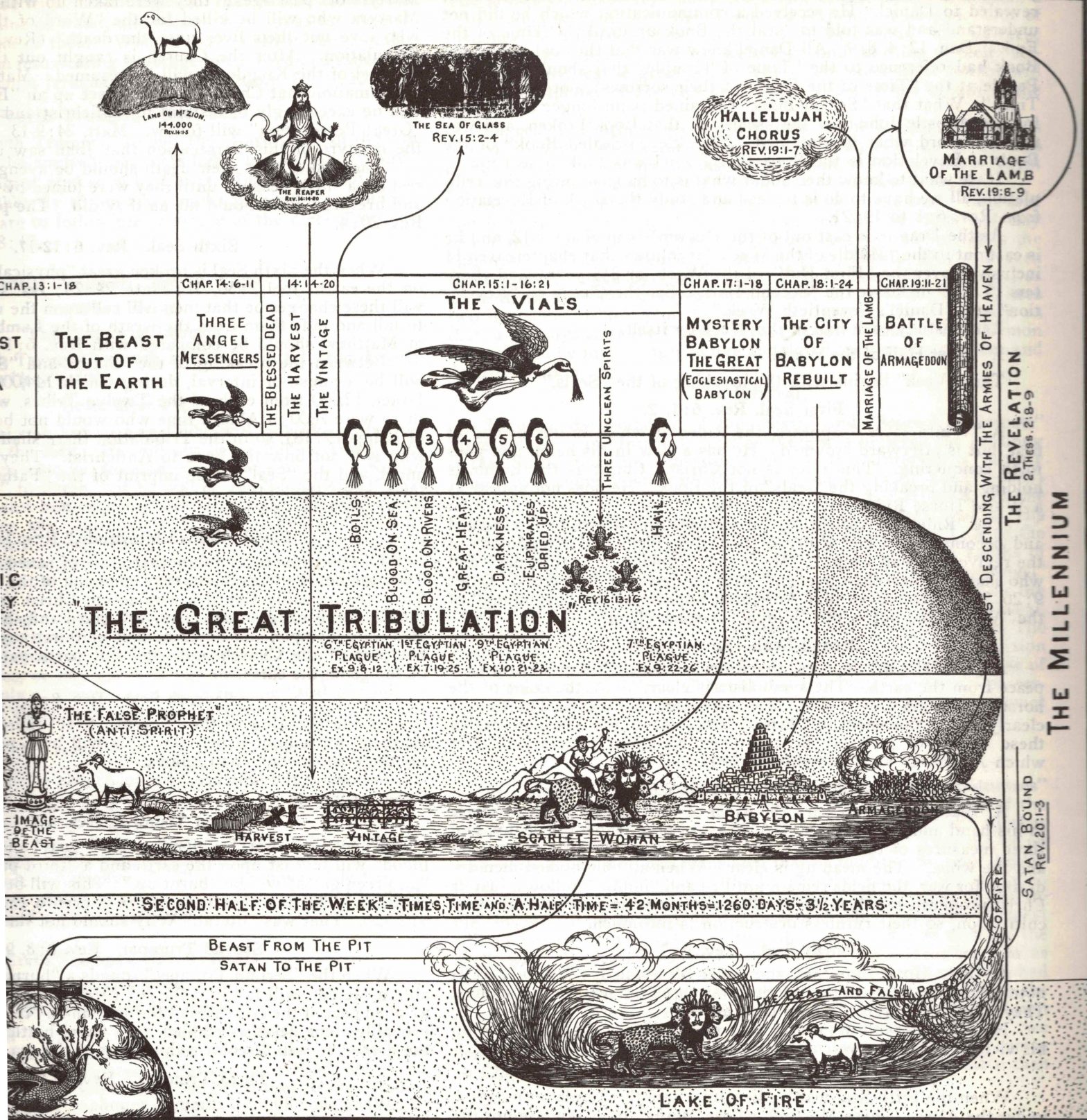
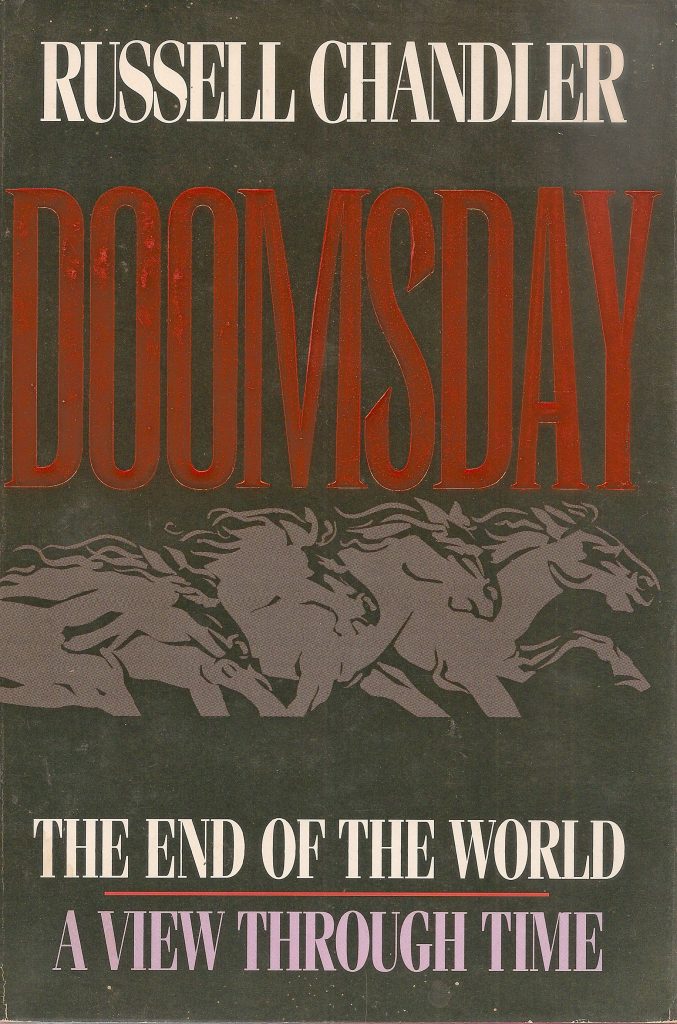
Doomsday: The End of the World–A View Through Time by Russell Chandler is a meandering, badly held together set of essays about human ideas and experiences with the end of all things. The book is strongest when it dives into modern Christian apocalyptic thought and history. It is weakest when it surveys all aspects of End of the World ideas in the human record, which unfortunately is what this book purports to do.
Until I reached Chapter 18 I fully intended to sell, donate, or otherwise dispose of this book in an appropriate manner. It is not a “bad” book per se, just rather bland and imprecise, as might be expected from a Christian author residing in Solvang, California. There are better books about the End of the World out there, and Russell Chandler quotes and cites many of those better books in his survey course on eschatology which he titles twice as Doomsday: The End of the World–A View Through Time. The inability to choose between “doomsday” or the “end of the world” is symptomatic of this inoffensive volume collecting tertiary research gleaned from the betters mentioned just above. The author proves unable to choose between insights into modern Christian views of Judgement Day (his strong suit), or an overview of Last Days fears, thoughts, and experiences.
I pulled this book from my shelves as part of my ongoing ‘read and release’ program, wherein I am winnowing my books by reading them and then letting go of those books I do not need. Chandler’s book seemed to be just such a volume as I plodded through the early disjoint chapters through which one could easily discern the outline the author had probably typed out in WordPerfect as he sat down to wrangle his disparate material into a single book. The first two-thirds of the book reads much like most grade school book reports: topic sentence, paragraph about topic sentence, and then this happened, and then this other thing. Done. Next topic. He purports to frame his book by referencing the Roman god Janus (he is careful to mention that Janus is a “mythological” Roman god, in case you were wondering), who, Chandler says, as “the patron of beginnings and endings, is a perfect symbol for this endeavor”, i.e., his book, “a hybrid book, a combination of history and futurology.” But the book is less hybrid and more a flawed combination of mismatched parts, oil and water in the hands of the workmanlike religion editor for the Los Angeles Times.
During the current era of the “big-bangers,” the idea of cyclic cosmology has attracted some stellar proponents.
I see what you did there…
The Janus frame is used to transition from reflections on historical catastrophes and doomsayers to contemplation of modern scientific disasters and ends which may come to pass, and then is left to go hang for pretty much the rest of the book. What truly irks me about this frame is not the fact that it is a jerry-rigged bailing wire structure used to tie together his not-quite-random chapters, but that Chandler misses or is ignorant of the most salient fact about the (mythological) Roman god Janus: In ancient Rome his temple’s doors were open during wartime and closed (quite infrequently) in times of peace.* This startling ignorance is matched by his uncritical view of most of the non-Biblical, non-Christian content he reviews in his book. Along the way he seems to reveal a more mercenary vision of truth than his Christian ideals might support.
That could take nearly forever, however—about 1033 years. That’s ten billion plus another twenty-three zeros.
No. No it’s not. That’s not right. Not right at all. What if anything does that last sentence even mean?
Mr. Chandler is credulous and also easily impressed by strong book sales. For example, though he is quite strident against the inanities and the superstitious nonsense of the New Age (Chandler even wrote a book about it, which he cites in his endnotes), the author fawns almost shamelessly over one of history’s all-time great conmen (present company excluded, of course): Nostradamus. An entire chapter is devoted to — ahem — spent on the Jeanne Dixon of Catherine de Medici’s reign. After reporting the most credulous accounts from true believers and popularizers seeking to sell books, Chandler gives a fair and balanced two paragraphs to the debunker James Randi, who tore apart the perhaps purposely abstruse quatrains of Nostradamus in a 199o book. The second paragraph, however, only points out that “bookstores couldn’t keep Nostradamus books in stock; Randi’s languished on the shelves.” Chandler then quotes an apologist for the vague and confusing language of Nostradamus, who then pleads for a core of accurate predictions that “no one has been able ‘to dismiss out of hand'” — this only three paragraphs (comprising five sentences) after Randi was quoted doing just that.
In essence, scoffs Randi, just say Nostradamus—a takeoff on the line urging youth to “just say no” to drugs.
Explaining jokes is my forte, too
The book is overly cited, though one cannot accuse it of hiding behind footnotes, since it hides all the notes themselves at the end like so many other publications fearing to turn off readers with the evidence of actual research. The works cited are — for the most part — tertiary studies of the doomsday thesis, which Chandler has collated into his book in hopes of cashing in on the fin de siècle interest of the time (the book was published in 1993). Those cited works are almost always better written, though you’ll have to hunt and peck to find them, as Chandler makes up for copious endnotes by failing to provide the reader with either a bibliography or an index. The endnotes themselves show how the author skimmed his own survey sourcebooks to craft his own, for turning to the endnotes often reveals that that telling quote from original sources is merely cribbed, excuse me, “quoted in”, another’s work. Chandler even feels the need to add an endnote citation for T.S. Eliot’s classic line “not with a bang but with a whimper”, perhaps meaning that the Los Angeles Times religion editor only stumbled upon the poetry in “21. Quoted in [Daniel] Cohen, Waiting for the Apocalypse, 183.”†
I’m reporting on only a few from my Apocalypzoid File here. I’m saving my extensive—and growing—collection of personal predictions from sign-hoisting apostles of future fright for another book I want to write someday. That is, if—or as long as—their predictions are wrong.
They were, but he didn’t
On the other hand, Russell Chandler was writing before the Internet made it easy to garner information from Wikipedia and thousands of other flower-like blooms of information now readily available at our finger tips at the mere cost of incessant advertising and the loss of byte-sized nibbles from our souls. On the other other hand, as a reasonably well-read Christian writing about religion news, one assumes that Chandler would own several editions of the Bible, making it surprising that his actual Bible citations reference a slumgullion stew of different versions, including the New American Standard Bible, the Revised Standard Version, and the New English Bible — though he prefaces his work with the boilerplate assertion that, unless otherwise indicated, Bible quotes in his book are from the New International Version. (Most quotes seem to be from the King James Version, for what it’s worth.)
He is at his best when writing about what he knows most about,‡ the history of and bases for modern Christian apocalyptic thought. In particular, Chandler’s chapter on John Nelson Darby and his eschatological heirs is one of a few that saved this book from my donation pile; the history of Dispensationalism is fascinating to me as a son of the Bible Belt. And in eight pages in his chapter on fundamentalist End of the World views, he very clearly lays out the so-called ‘thinking’ behind talk of the Rapture and the Tribulation, as well as the differences between various millenarian Christian sects. Anyone who is curious to uncover from just where those strange prophecies of a final battle in the Middle East arose will find the explication with accompanying list of relevant Bible verses to be invaluable.
These “signs” are more “perceived” than “believed,” more empirical than prophetical. We don’t have to read them back into the words of the biblical prophets to know that ours is a different era; these times cannot be confused with prior times.
But we must not retreat into escapism. It’s irresponsible to sit back, believing that doomsday is right around the corner, so come hell and high water: Let the bad times roll. We’ll all be rescued before the End really comes.
If you are confused, check your watch … or your iPhone
Straight Outta Solvang
I’m sure Mr. Chandler is a nice guy. He certainly comes across as one in his writing. He appeals for respect for one another amid strident calls for schism and divisiveness. His language is calm and well-mannered — or, to put it another way, bland. Thus it is a surprise when he describes the conservative preacher Tim LaHaye§ as “short of stature but long on invective”, and this reader found himself searching for the endnote that seems to accompany every other creative turn of phrase.
Year 2000 is drawing Christian mission groups like particles of steel to a megamagnet.
Like sands through the megahourglass, so are the days of our lives
Of course, we also have to remember that this book and author were a product of their times. The work is written in response to a demand caused by the (then) upcoming chronometrical rollover to 2000 A.D. It may be hard for us living on the gristle of the 21st Century to recall or realize just how much fascination still existed in human hearts for the promise and terror of the upcoming Millennium. The New Age was no longer quite new, being another one of those poorly parented children of the 70s, but was still turning its stoned attention weakly to the next bright shiny thing (something it was to continue doing after the year 2000 until the Mayan end of the world failed to materialize in 2012, instead gifting humanity with yet another mediocre John Cusack movie).
as God’s hand has gradually disappeared from the aimless handwriting of secular historians, the prophecy writers have leaped into the gap.
Most of the aimless handwriting now done on fancy word processors, natch
But Chandler’s ultimate failure is that he draws no conclusions from his material. He does conclude his book, having forgotten almost entirely his conceit about the Roman god Janus, with a personal statement of belief about the End of Days. His belief, however, like many other beliefs in our current age, seems entirely unaffected by the wide-ranging material he has just researched. He has taken a Cook’s tour of the end of time, dragging us along with him, but we end the trip with only a few snapshots and postcards, and very little learning. Look elsewhere if you wish to learn about topics such as the roots of apocalyptic thought (try Norman Cohn’s masterful Cosmos, Chaos and the World to Come or Paul D. Hanson’s The Dawn of Apocalyptic), or what happens in a social group on the day after doomsday (the classic study is When Prophecy Fails by Leon Festinger, et. al.), or just why humans seem innately drawn to predicting the future (even the old popular account Science, Prophecy and Prediction by Richard Lewinsohn is superior, which may be why Chandler cites it frequently).
Admittedly, it’s hard to discern the meaning of Bible prophecy. From the mainline and liberal perspective, that’s a built-in “given.” And that in itself may be a prime reason why eschatology receives little attention in most mainline circles.
Written when “liberal” was not a dirty word, and could be used publicly to describe (as here) Christian churches
All societies have had their seers, prophets, and prognosticators. We call ours pundits, pollsters, or economists. But to recognize this truism is to overlook the salient fact about prophecy, which is that prophecy (like apocalypse itself) is a literary construct — nothing more, nothing less. Only in literature can all the elements of prophecy be fulfilled. When a wise woman or a native shaman or a “magic black man” makes a prediction, it is only in literature that things can come to pass just as predicted. All other prediction seems to involve shoving round pegs into the square holes left by the past. If you recall that most prophecies were written after the events they predict, you will know a great secret.
The times we live in at this moment, though plagued by powerful gadflies who seek to create the Armageddon they (perhaps) fervently believe in, seem less inspired by Nebuchadnezzar’s magic four-layer statue and more by Genesis 11. Anyone who spends any amount of time reading social media or news not tailored specifically to his or her own political beliefs will recognize that our language has been confounded, and that we do not understand one another’s speech. One hopes that our Balkanization of speech will slow before it becomes entirely impossible to communicate, but only time will tell.
“now nothing will be restrained from them, which they have imagined to do.
“Go to, let us go down, and there confound their language, that they may not understand one another’s speech.”
Genesis 11:6-7 [KJV] (some may see the hand of Putin rather than the jealous Yahwist God)
* I know that the building in Rome is supposedly “not a temple” or “not a normal temple”. Whatever, Wikipedia.
† Even his first mention of the Daniel Cohen book is fraught with this problem, as the first citation of Waiting for the Apocalypse notes that the quote Chandler uses is “cited in” some random article from the now-defunct Omni magazine. Which is strange, as it seems clear that Chandler had the Cohen book when he was writing his own.
‡ Another insight from The Book of Duh.
§ Tim LaHaye is now best known as the co-author of the successful Left Behind series of during-the-Apocalypse Christian thrillers, featuring the action-packed adventures of the Tribulation Force. He only receives a single paragraph in Chandler’s book, as LaHaye was still a few years away from discovering his coauthor in the sprawling empire that the Left Behind series and spin-offs have become.